 look news india

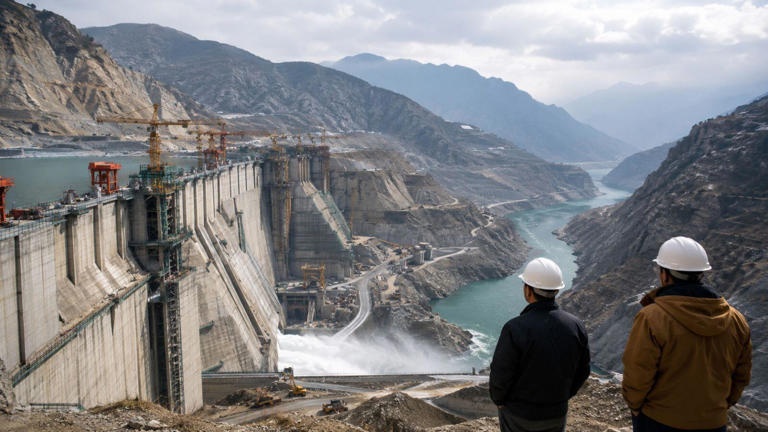
Amidst the ongoing tension between India and China on the Line of Actual Control (LAC), the strategic movement regarding water has become very intense. China has started the construction of the world’s largest hydropower dam in Tibet, just 50 kilometers from the Indian border (Arunachal Pradesh). The Indian government has also geared up to give a befitting reply to this dangerous move of the dragon. India is now preparing to launch the biggest hydropower project in its history in Arunachal Pradesh, which will not only foil China’s conspiracy but will also strengthen the security of North-East India.
China’s 60,000 MW ‘Medog Project’ just 50 KM away from Arunachal
According to a media report, China has started work on the ‘Medog Hydropower Project’ in the lower part of the Yarlung Tsangpo river (which becomes the Brahmaputra in India) flowing in the Tibetan region. The total capacity of this megadam is estimated at 60,000 MW. This project is considered to be the world’s largest hydropower project in terms of size and power generation. Being very close to the Indian border, it is being considered a major threat to India from a strategic point of view.
India’s counterattack: 11,000 MW ‘SUMP’ project will stop the dragon’s path
To respond to this bullying by China, the Government of India is planning to quickly give green signal to ‘Siang Upper Multipurpose Project’ (SUMP) in Upper Siang and Siang districts of Arunachal Pradesh. This very ambitious project with a capacity of 11,000 MW will be developed by the Indian government company NHPC. When this project is ready, it will be the largest hydropower project in the history of India.
Budget of Rs 1.5 lakh crore: Along with electricity, floods will also be controlled
The estimated cost of this mega project of India is around Rs 1.5 lakh crore (about 13 billion US dollars). This project will generate approximately 47 billion units of electricity every year, which will illuminate the entire North-East India. However, India’s aim is not just to generate electricity. Through this dam, the water suddenly released by China can be stored, which will help in controlling the devastating floods that occur every year in Assam and Arunachal Pradesh.
Impact and Challenges: China ahead in construction, India still in initial phase
If we compare the ground reality of the projects of both the countries, then China seems to be slightly ahead in this race. China’s Medog Dam has reached the construction phase, while India’s SUMP project is currently in the pre-feasibility study (initial feasibility study) phase.
When Yarlung Tsangpo river comes to India from Tibet, it is called Siang and later on it takes the huge form of Brahmaputra in Assam. Defense and environmental experts believe that if China diverts or stops the water of this dam as per its own, then farming, environment and biodiversity in North-East India can be completely destroyed. At the same time, in case of war or tension, if China releases water simultaneously, then there may be a danger of artificial flood in the low-lying areas of India.
National security issue: Every activity is closely monitored through satellite.
Considering the sensitivity of this matter, the Government of India has made it clear in the Parliament that Indian security agencies and satellites are continuously monitoring every small and big activity of China in the Brahmaputra River Basin 24 hours a day. The Government of India has reiterated that all necessary steps are being taken to protect the safety and livelihood of border civilians. India has been continuously demanding China to share hydrological data and adopt a transparent approach in international forums.
Till this huge dam of India is ready, the central government has started strengthening the advance flood forecasting system and river monitoring network in the north-eastern states. Experts clearly say that now the water of Brahmaputra has become not only a means of development but also the biggest front for India’s sovereignty and national security.