 look news india

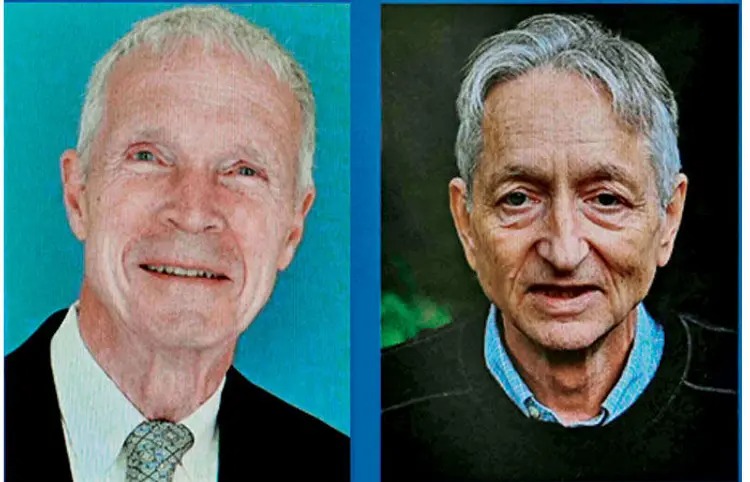
STOCKHOLM: John Hopfield and Geoffrey Hinton, two pioneers of artificial intelligence (AI), have been awarded the 2024 Nobel Prize in Physics for their contributions to machine learning, which have revolutionized industry and daily life. His work laid the foundation for artificial neural networks, a key component in modern AI. It is used in areas such as facial recognition and translation. Hinton, known as the Godfather of AI, is associated with the University of Toronto while Hopfield is a professor at Princeton University.
The Nobel committee said Hopfield and Hinton used fundamental principles of statistical physics to develop AI methods that enable machines to recognize patterns in large data sets and act as associative memories. Ellen Moons, a member of the Royal Swedish Academy of Sciences, said her work has influenced not only research but also everyday technology used by people.
However, with the rapid development of machine learning, questions have also arisen about its ethical use and potential risks. Moons said society must ensure AI is used responsibly for the benefit of all. Hinton himself echoed these concerns and left his position at Google to speak out about the dangers of AI, such as the potential for systems to surpass human intelligence and spin out of control.
Despite his concerns about the future of AI, Hinton expressed surprise and gratitude upon receiving the Nobel Prize. He predicted that AI would have a profound impact on society and culture. He compared AI to the Industrial Revolution and expressed hope that it would improve manufacturing as well as healthcare.
The Nobel Prize, including a cash prize of approximately 10 million Swedish kronor, will be awarded to the Nobel laureates on December 10, 2024.