 look news india

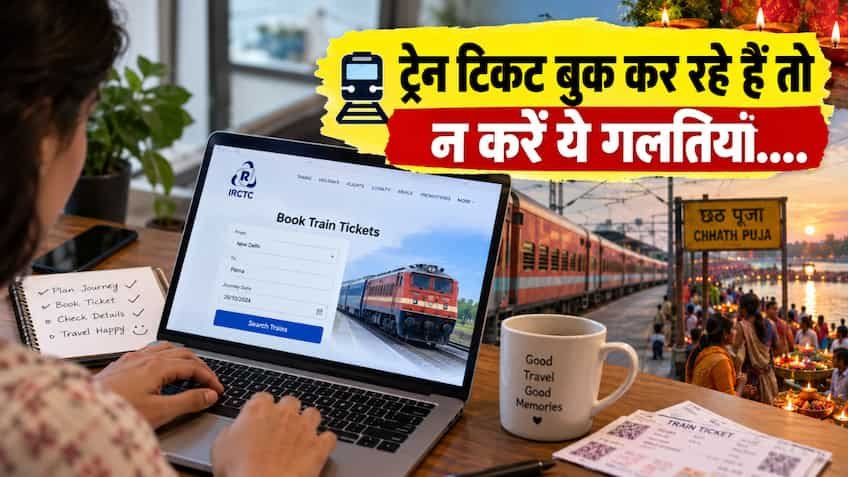
For crores of people of North India, especially Uttar Pradesh, Bihar, Jharkhand and West Bengal, Diwali and Mahaparva Chhath are not just festivals but the biggest emotional occasion of returning home. Lakhs of travelers from metropolitan cities like Delhi, Mumbai, Surat, Bengaluru, Chennai and Kolkata start booking train tickets months in advance to go to their native villages and towns. 120 days in advance As soon as advance reservation (ARP) opens, within a few seconds the seats in major trains like Sampoorna Kranti, Bihar Sampark Kranti, Purva Express, Vaishali Express and Magadh Express get filled and ‘Regret’ or heavy waiting is seen.
In such an environment of chaos, panic is natural. Passengers rush to the booking window in a race to get tickets. But in this haste, small technical and procedural mistakes become the cause of huge economic losses. Many times, thousands of rupees are deducted from the bank accounts of passengers, even tickets are not issued and the refund money remains stuck in the banking maze for 15 to 20 days. If you are also planning to travel in this festive season, then avoid these 4 fatal mistakes while booking tickets on IRCTC servers.
During the festive season, when Tatkal or general booking opens, there are lakhs of hits per minute on IRCTC website and Rail Connect app. In such a situation, due to traffic load, most of the failures occur at the payment gateway level. Most travelers opt for normal net banking or normal debit card, where there is a delay of 30 to 60 seconds in receiving the bank’s OTP. By the time the OTP comes, the session has timed out or the seats have been sold out.
The result is that money is deducted from your account, but PNR is not generated. In this situation, it takes at least 3 to 7 working days for reconciliation between the bank and IRCTC. Many times, if a transaction goes into ‘pending’ status due to a technical glitch, the money remains stuck for weeks and the passenger is left struggling with the lack of sufficient liquid cash to book the ticket again.
Surefire method of prevention: Never rely on third-party payment gateways or slow net banking during urgent or heavy rush bookings. Use IRCTC e-Wallet, iPay, Autopay or Direct UPI ID. If money is pre-loaded in IRCTC e-wallet, there is no hassle of OTP and payment is completed in 2 to 3 seconds. If the ticket is not booked, the e-wallet money is immediately credited back on the same day.
The biggest confusion during Chhath and Diwali is regarding waiting list tickets. Many passengers book e-tickets online assuming that if the ticket is not confirmed by the time the chart is prepared, they will travel in sleeper or third AC on the same ticket.
As per railway rules, a fully waitlisted e-ticket booked online is automatically canceled by the system as soon as the chart is prepared. Traveling on such invalid ticket is considered as ticketless and if caught, heavy fine can be imposed by TTE.
But the real loss occurs when the ticket is in ‘Partial Waiting’ – that is, tickets of two passengers are confirmed on the same PNR and two are left waiting. In such a situation, the railway system does not automatically cancel the ticket. If all four passengers do not wish to travel, it is mandatory to file an online TDR (Ticket Deposit Receipt) at least 30 minutes before the departure of the train or before chart preparation.
If you do not file TDR within the deadline, the Railways assumes that the confirmed passengers have traveled, and you do not get a single rupee refund. The entire fare is lost.
When direct trains are not available during festivals, passengers often adopt the break-journey strategy. For example, a ticket from Mumbai is first taken up to Prayagraj or Pandit Deendayal Upadhyay Junction (Mughalsarai) and from there a plan is made to take another train to Patna, Muzaffarpur or Bhagalpur.
The biggest mistake that passengers make here is that they usually book tickets for both the trains on two separate independent PNRs. If your first train gets delayed by 4 to 6 hours due to fog or festival rush and you miss your connecting second train, the Railways will flatly refuse to give a full refund for your second train. As per normal rules, if you cancel another ticket after the train leaves, you will get zero refund after deducting the cancellation charge.
Solution: Use the ‘Connecting Journey Booking’ feature on the IRCTC portal. Once you have booked the first train, add the second train as a connecting PNR linking it to the same. Under this rule, if the first train runs late and the passenger misses the second train, then on filing TDR at the destination station, 100% fare of the second train is refunded without any cancellation penalty.
Every millisecond counts when the booking starts at the server exactly at 10:00 (for AC) and 11:00 (for non-AC). Many people sit down to type the passenger’s name, age, gender and berth preference after the booking starts. Even the slightest mistake or delay in typing causes the captcha to expire and the seats reach ‘waiting 150+’.
Moreover, many passengers forget to tick ‘Vikalp Scheme’ (ATAS) while filling the form. This is a facility of the Railways under which if the ticket is not confirmed in the original train chosen by you, then the Railways allots you a confirmed seat in other clone, special or Humsafar trains running on the same route without any extra charges. By not choosing this option, passengers lose a huge opportunity to get a confirmed seat.
Checklist for Secure Booking:
-
Keep the ‘Master List’ ready in your IRCTC profile 24 hours before the start of booking, so that details of all passengers are auto-filled at the time of booking in just one click.
-
Carefully tick the checkbox ‘Book only if confirm berths are allotted’. If you only want confirmed tickets and do not want waiting, then this option saves your money from wasting in waiting lists.
-
Must activate Vikalp scheme and select all possible alternative trains on the route.
During the festive season, in the name of confirmed tickets, unauthorized brokers become active on social media, telegram and local markets, who claim to provide instant tickets through software and bots.
If you take a ticket cut from a private personal ID of an unauthorized agent, such ticket is blocked without any prior notice in the anti-touting drive of Railway Protection Force (RPF). If caught while traveling in a train on such a ticket, one can face both jail term and fine under Section 143 of the Railway Act.
Additionally, if a ticket booked through an unauthorized agent gets canceled for any reason, the refund goes directly into the agent’s bank account, which passengers have to spend weeks trying to get back. Always book tickets through IRCTC Authorized Principal Service Providers or through your own personal ID and use OTP based refund cancellation system only. By following these precautions, you can not only make your journey safe, but also completely prevent wastage of your money.