look news india

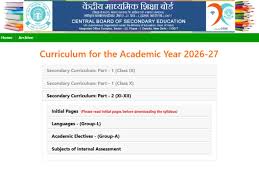
News India Live, Digital Desk: The Central Board of Secondary Education (CBSE) has announced a revolutionary change in the structure of school education. The new syllabus and assessment pattern is going to be implemented for class 9th and 10th students from the academic session 2026-27. The purpose of these changes made in accordance with the National Education Policy (NEP 2020) is to reduce the study burden on students and prepare them for future challenges. Now students will have to study not just two, but three languages.
Three-language formula: Now third language will also be necessary
According to the new rules, it has now been made mandatory for students of class 9th and 10th to study three languages (3rd Language). Out of these three languages, at least two must be Indian languages. Earlier students had the option of studying only two languages, but now this big step has been taken to promote linguistic skills. This will give students a better chance to understand their mother tongue as well as other regional languages.
‘Two level’ option in Maths and Science, students will get relief
CBSE has taken a historic decision to eliminate the fear of subjects like Mathematics and Science. Now in the Class 10th board exam, along with Mathematics, there will be two levels of papers in Science – Standard and Basic. Students who do not want to pursue further studies in these subjects can choose ‘Basic’ level. This will not only reduce the stress of the students, but they will also have more freedom to choose subjects as per their interest.
Changes in assessment pattern and credit system
There are preparations for major changes not only in the syllabus but also in the passing criteria. Under the new curriculum, students will now have to pass a total of 10 subjects, whereas earlier this number was less. The credit system is also being designed in such a way that the year-long activities, projects and vocational courses of the students also get weightage in the final result. The main focus of the board is on practical knowledge (Competency Based Education) rather than ‘rote learning’.
When will the new rules come into effect?
It has been clarified by CBSE that these changes will be effective from the session 2026-27. That means students who are currently in class 7th or 8th will study in class 9th and 10th under this new pattern. Schools have been instructed to start preparing their resources and teachers as per the new educational framework. Experts say that this change will take the Indian education system closer to international standards.