 look news india

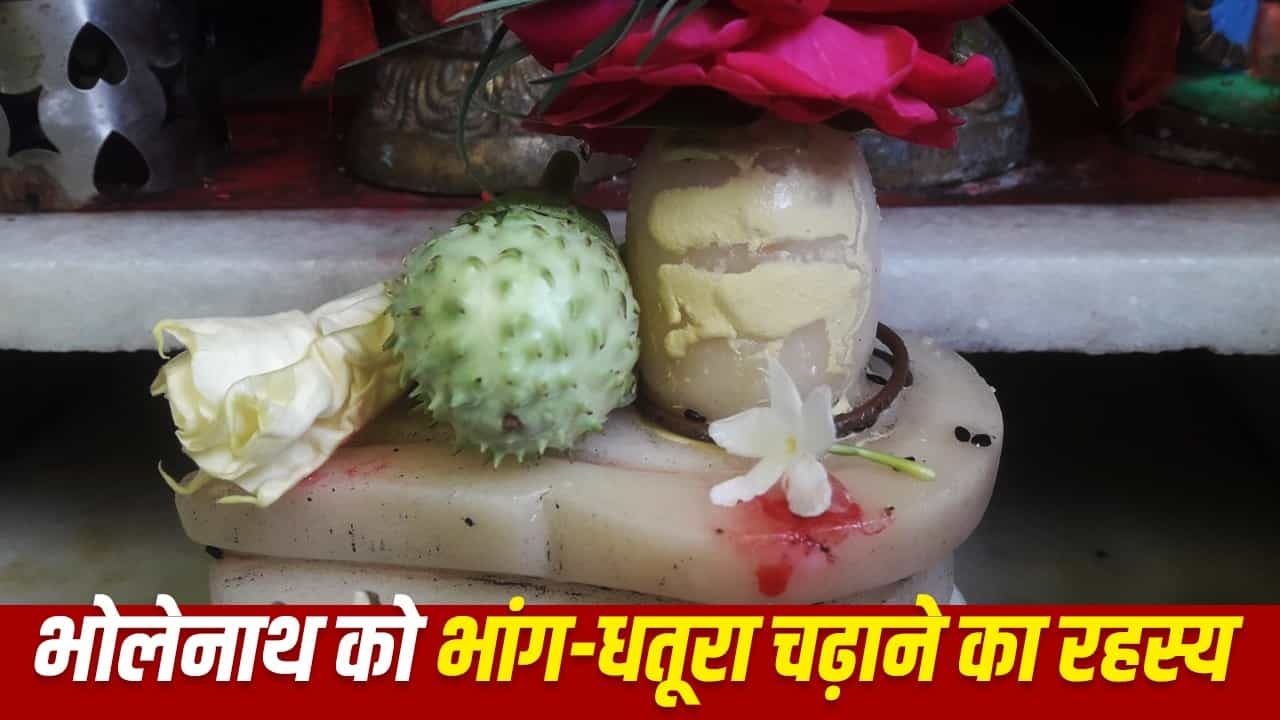
Lucknow. As soon as the holy month of Sawan (Sawan 2026) begins, echoes of ‘Har-Har Mahadev’ and ‘Bam-Bam Bhole’ start being heard in Shivalayas across the country. Devotees of Lord Shiva offer Jalabhishek, Dugdhabhishek as well as many types of worship materials to please him. But in Sanatan tradition, worship of Mahadev is considered incomplete until he is Bhang and Dhatura Should not be offered. According to a special religious report of TV9 Hindi, while Chhappan Bhog and highly fragrant flowers are offered to other Gods and Goddesses, Mahadev, the God of Gods, loves bitter Dhatura and intoxicating Bhang. Many people consider it to be just a folk tradition, but behind it lie very serious mythology and deep scientific reasons related to Ayurveda. Let us know what is the real secret of offering these things to Lord Shiva in Sawan.
Mythology: Samudra Manthan and effect of Halahal poison
According to mythological texts and Shiva Purana, the tradition of offering Bhang-Dhatura in the month of Sawan is directly related to the Dev-Asur conflict and Samudra Manthan:
-
Origin of Halahal poison: When the gods and demons together churned the ocean, along with fourteen gems, an extremely destructive and terrible poison called ‘Halahal’ also came out of it. The universe started burning due to the heat of that poison.
-
Mahadev’s poison: To protect the universe, Lord Shiva took the Halahal poison in his throat, due to which he got the name ‘Neelkanth’.
-
Remedies to soothe irritation: As soon as Mahadev drank the poison, his body and mind became extremely hot and he started feeling distressed due to intense burning sensation. Then, to cool down the heat in the head and body of Lord Shiva, the Gods and the herbal sages offered a continuous stream of water (Jalabhishek) to him and offered cooling medicines like hemp, datura and belpatra. Due to the effect of these medicines the burning sensation in Mahadev’s body calmed down. Since then the tradition of offering these things to him in the month of Sawan started.
Religious significance: Surrender of ego and bitterness
From a spiritual point of view, offering Bhang and Dhatura to Lord Shiva symbolizes renunciation of human vices. Dhatura is a thorny and extremely bitter fruit, which is not used by common people. Offering it to Mahadev means that man should hand over his inner evils like bitterness, jealousy, anger and ego at the feet of God and adopt a virtuous life. At the same time, cannabis gives the message of completely calming and concentrating the mind, so that the devotee can forget the attractions of the outside world and become completely absorbed in the devotion of Shiva.
Scientific and Ayurvedic aspects: extraordinary herbs
Its scientific aspect has also been highlighted in the report of TV9 Hindi. In Ayurveda, hemp and datura have been placed in the category of very powerful and important herbs:
-
Controlling the temperature: Due to rain in the month of Sawan, there are rapid fluctuations in humidity and temperature in the atmosphere, due to which many types of infectious diseases spread. Datura and Bhang are extremely hot and anti-phlegm by nature.
-
Limited quantity of medicine: According to Ayurveda, if used medicinally in very limited and pure form, they prove to be a panacea in relieving joint pain, asthma, skin diseases and mental stress. Since nature grows these plants in abundance during the monsoon season, the ancient sages added them to the ritual of worship as a mark of respect for nature and God.
Necessary precautions for Shiva devotees
Religious experts and doctors clearly say that offering Bhang and Dhatura to Lord Shiva is a completely spiritual activity. Devotees should completely avoid consuming excessive cannabis (intoxication) in the name of worship or misusing it as an intoxicant. The real meaning of Shiva worship is to keep the mind pure, calm and restrained, and not to get intoxicated. This Sawan, worship Bholenath with full devotion and seek his blessings by offering these sacred medicines only at his feet.