 look news india

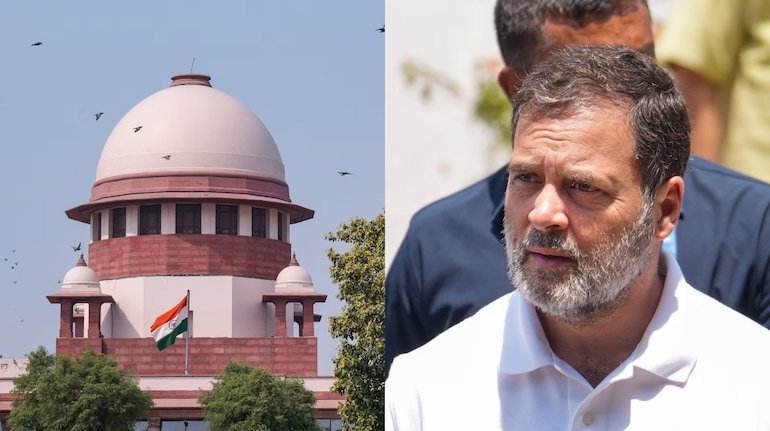
The much-discussed petition filed by the Election Commission and the opposition alliance in the Supreme Court in the capital New Delhi regarding alleged election irregularities has got stuck at the very first stage of the legal process. During the preliminary investigation of the joint writ petition filed in the Supreme Court by Leader of Opposition in Lok Sabha Rahul Gandhi and 11 top leaders of India alliance, the apex court’s registry has found not one or two, but a total of 14 serious technical flaws. These mistakes range from a blurred photocopy of the identity card of Congress President Mallikarjun Kharge to the absence of power of attorney of nine prominent leaders and the lack of court fee of ₹220. After these written objections filed by the Registry, there is currently suspense on the speedy hearing of the case, because as per the rules, unless all these errors are rectified, the case cannot be listed before the bench for hearing.
This entire incident has become a topic of discussion in political circles because before filing this petition, the opposition parties had demonstrated a huge force on the streets of the capital. Under the leadership of Congress President Mallikarjun Kharge and Rahul Gandhi, opposition MPs and leaders took out a foot march from Barakhamba to the Supreme Court. Through this march, the opposition parties had made serious allegations against the Election Commission of bias and irregularities in the name of Special Intensive Revision (SIR) of the voter list. Soon after, the legal team under the supervision of senior advocate Dr. Abhishek Manu Singhvi filed a petition titled ‘Rahul Gandhi vs. Election Commission’ in the Supreme Court. But within a few hours, when the investigation report of the Supreme Court Registry came out, the haste and negligence in paper preparations were clearly exposed.
The first and most important flaw in the list of objections issued by the registry is related to the authorized documents of the petitioners. The second petitioner in the petition is Congress National President Mallikarjun Kharge, but the photocopy of his ID card presented in the court was found to be completely blurred and unreadable. The court has asked to submit clear and readable ID proof. An even bigger legal mistake came to light that out of the 11 leaders included in the petition, only the Vakalatnamas of petitioners number 3 to 11 were missing in the file. Vakalatnama is a mandatory legal document through which a client gives his lawyer the legal right to represent and sign in the court. The leaders whose advocacy papers were found missing include Samajwadi Party chief Akhilesh Yadav, RJD leader Tejashwi Yadav, Saugata Roy of Trinamool Congress, Sanjay Raut of Shiv Sena (UBT), Supriya Sule of NCP (SP), D. Raja of CPI, M. A. of CPI (M). Baby, JMM’s Mahua Majhi and IUML’s E.T. Mohammad Bashir.
The Supreme Court Registry’s report also highlights several fundamental mistakes that are rarely seen in high-profile cases. Investigation of the petition found that there was a shortfall of Rs 220 in the prescribed government court fees. The registry has directed the petitioners to immediately deposit the additional court fee of ₹220. Apart from this, the pages were numbered incorrectly in the drafting, many pages were missing in sequence, the font size was very small and the language of some pages was so blurred that they could not be read. The registry has asked to re-file colored copies of page numbers 57 and 64.
Apart from the documentary deficiencies, the registry has also raised serious questions on the legal structure of the petition. Huge discrepancies were noted in the names and details of the respondents (opposite parties) on page number 9 of the petition. The names recorded in the listing proforma and the defendant numbers given in the prayer clause of the main petition were not matching. The Registry has also sought clarification as to why certain private persons and Election Commissioners have been made personal respondents in this PIL filed against a constitutional body i.e. the Election Commission. Along with this, the official copy of the Election Commission’s order of June 24, 2025, which is said to be challenged in the petition, was not attached. The pen drive containing digital data related to Annexure P-6 of the petition was also not deposited in the registry.
In this detailed petition filed by the opposition, the functioning of the Election Commission was directly attacked. The petition alleged that Chief Election Commissioner (CEC) Gyanesh Kumar issued orders for Special Intensive Revision (SIR) of voter lists in several states without the consensus of other members of the Commission or due process. In the petition, the apex court was demanded to issue 10 major directions. The most prominent demand among these was that until a thorough investigation is completed, the SIR process going on in all the states should be stopped with immediate effect. Apart from this, the name of any citizen should not be removed from the voter list without proper legal notice and hearing the parties and in the upcoming election states, eligible citizens should be allowed to get their names added till the last date of nomination.
Under Supreme Court rules, when the registry marks ‘defects’ in a petition, the petitioner’s legal team is given a stipulated time to remove all those objections. The legal team of Congress and opposition parties is now busy in collecting the signatures of all the nine leaders on the Vakalatnaams, getting a new identity card of Kharge, replacing the missing pages and submitting the challan of the outstanding court fees of Rs 220. According to legal experts, unless the team of lawyers resolves these 14 objections point-wise and re-files the file in the registry, the case will not be mentioned before the Chief Justice or any other bench. In such a situation, after the huge uproar on the streets, it may take some more time for the debate on the merits of the case to begin in the court.