 look news india

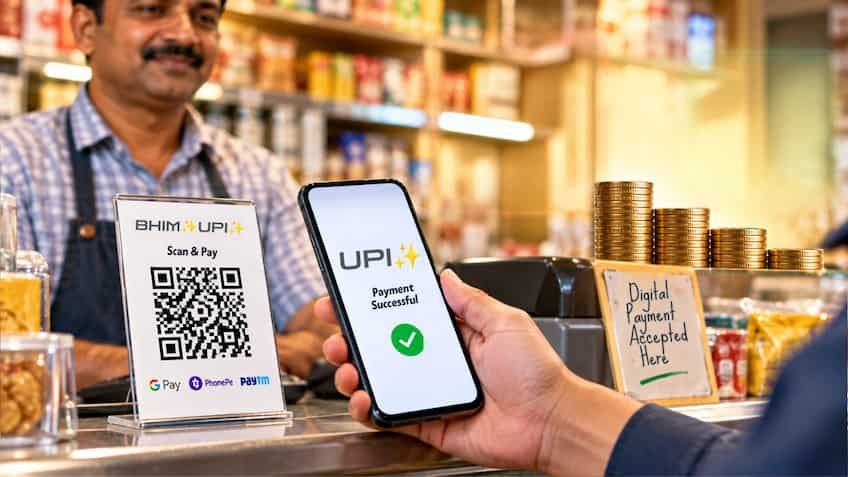
A big update has come out regarding the Unified Payments Interface (UPI), which has become the biggest means of online payment everywhere from tea stalls to big retail malls across the country. In the important meeting of Goods and Services Tax i.e. GST Council, discussion has started on the important proposal of reducing UPI Merchant Discount Rate (MDR) and 18 percent GST on payment services directly to 5 percent. As soon as this news came to light, many questions started arising in the minds of crores of small traders, shopkeepers and ordinary customers who do everyday shopping. The biggest confusion that has spread is whether now anyone will have to pay tax on sending money through Google Pay, PhonePe or Paytm? The government and financial experts have made it clear that this tax can be reduced not on bank transfers of common people, but on the service charge (MDR) imposed by payment gateways and banks on merchants. If the Council gives its final approval to this proposal, it will prove to be a revolutionary relief for the digital commerce of the country and especially for small traders.
In the high-level meeting of the GST Council held in New Delhi, the Finance Ministers and policy makers of the states have seriously brainstormed on making the digital payments ecosystem more sustainable and affordable. In fact, with the increasing scope of UPI, the infrastructure cost of banks, NPCI and payment aggregators is increasing. To make the system financially sound, there was discussion of introducing a proposed marginal merchant discount rate (MDR) on select large merchant transactions (especially commercial payments above Rs 2,000). Under current rules, GST at the rate of 18 per cent is directly applicable on any financial services charges charged by banks or payment companies. Many states and industry organizations have expressed legitimate concern that if the heavy tax slab of 18 per cent on processing fees remains in place, small businessmen may abandon digital transactions and turn to cash. To eliminate this risk and reduce the cost of merchants, a draft has now been prepared to bring this tax to the lowest 5 percent slab.
The biggest and most relieving thing for the general public in this entire draft is that there is neither any charge nor any tax on person-to-person (P2P) money sent by common people to each other’s bank accounts. If you transfer Rs 500, Rs 2,000 or Rs 50,000 to any of your friends, family members or relatives through UPI, it will remain completely free as before. Similarly, if you go to a local grocery store, fruit-vegetable seller, milk dairy or medicine shop and do normal shopping, only the actual price of the goods will be deducted from your bank account. The customer will not have to pay any kind of surcharge or service tax from his own pocket. This relief is entirely covered by the back-end cost of the merchant transaction, hence the customer will not have to face any additional financial burden.
The most direct and biggest benefit of this tax cut will be to the country’s small retailers, MSMEs and those shopkeepers who are registered under the GST Composition Scheme or whose turnover is less than the limit. Big corporates and regular traders registered under GST can claim Input Tax Credit (ITC) on the 18% tax collected by payment companies, but small local shopkeepers are not able to claim ITC. In such a situation, 18% GST becomes a direct loss for their business. Understand this with simple math: If the total monthly processing fee for a merchant was Rs 1,000, then at the rate of 18% he had to pay tax of Rs 180. But if the rate is reduced to 5%, this tax burden will fall to only Rs 50. This means that the tax deducted from the businessman’s pocket will be reduced by more than 70 percent. This will protect the margins of small shopkeepers operating in local markets and they will continue to accept payments through QR codes without any hesitation.
UPI has now become the lifeline of business in all Tier-1, Tier-2 and rural markets of the country including Uttar Pradesh, Delhi-NCR, Bihar, Rajasthan and Maharashtra. From the wholesale markets of Aminabad and Hazratganj in Lucknow to the retail hubs of Kanpur, Noida, Varanasi and Patna, crores of small and big deals are completed every day by scanning QR codes. Local business organizations say that if the government limits the tax rate on service charge to 5%, it will give new strength to the national mission to eliminate dependence on cash. When the tax burden on banks and fintech companies is reduced, they will be able to provide modern facilities like soundbox, POS machines and secure payment gateways even in remote rural areas at very affordable rates. Experts believe that after reaching a consensus with the states, the GST Council can soon issue a formal notification of this historic decision, which will make India’s digital future more inclusive.