 look news india

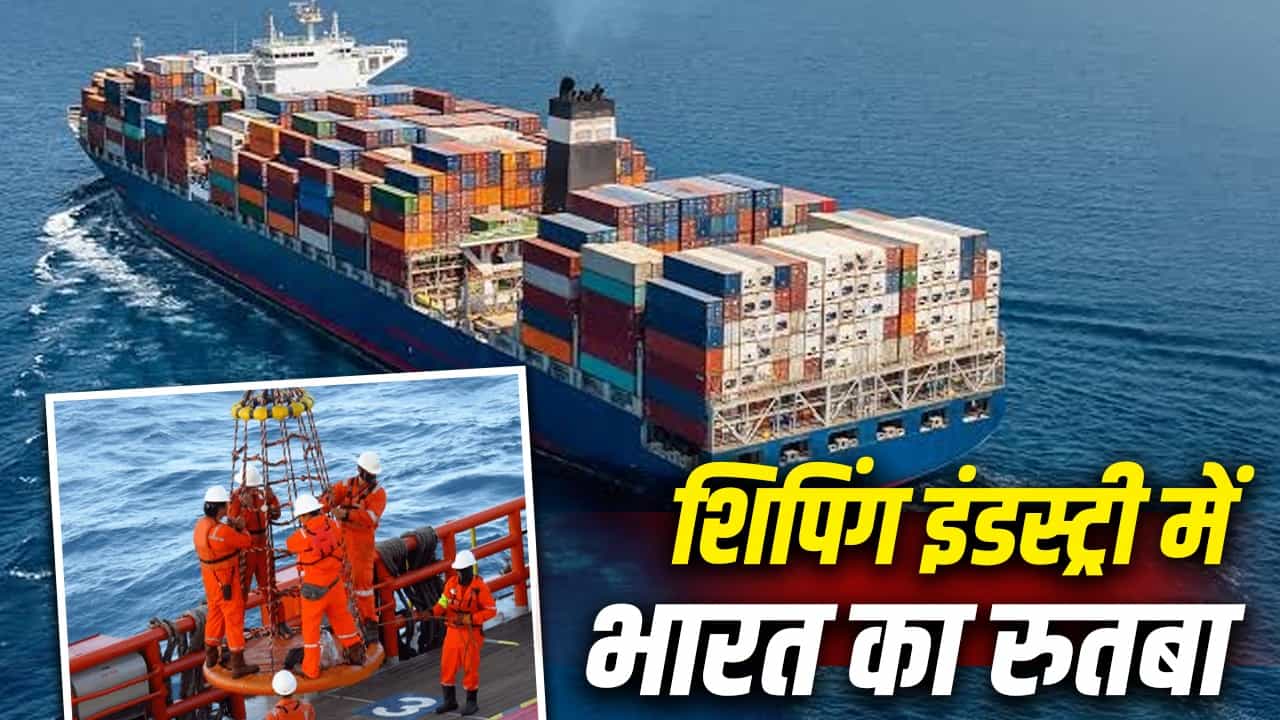
The recent deadly attacks on the commercial vessels ‘MV Omorfi’ and ‘MV Golden Lion’ in the Russian waters of the Black Sea have drawn worldwide attention. After the tragic death of Indian crew members in these accidents, the Indian government has taken a tough stance. India has given a clear warning that if maritime security is not ensured at the international level, the global supply chain may come to a complete standstill.
This incident has once again proved how huge India’s contribution is in running the world’s sea vessels. According to the latest report by Baltic and International Maritime Council (BIMCO) and International Chamber of Shipping (ICS), the Philippines, India, China, Russia and Indonesia alone account for more than 56% of the 25.65 lakh seafarers worldwide. India is the world’s second largest supplier of seafarers after the Philippines. After all, why does Indian talent matter so much in the global shipping industry? Let us understand its main reasons in depth.
1. Vast coastline and ancient maritime tradition
India has a rich coastline of over 7,500 kilometres. Coastal states like Gujarat, Maharashtra, Goa, Kerala, Tamil Nadu, Andhra Pradesh and West Bengal have had deep commercial and social ties with the sea for centuries. Generations in these areas have been associated with fisheries, port work and maritime trade, giving the youth here a natural inclination and courage to work at sea.
2. Enthusiasm of youth and strong hold on English language
-
Huge youth population: India’s biggest strength is its youth power. Despite difficult circumstances, months away from family and challenging sea conditions, Indian youth consider this field as their first choice due to good income and international exposure.
-
Advancement in communication: Captains, marine engineers and crew members on international ships are from different countries, where ‘English’ becomes the only medium of communication. The superior English understanding and communication ability of Indian youth gives them a natural edge over seafarers from other non-English speaking countries.
3. Strong maritime education and advanced technical skills
Modern sea vessels are no longer limited to simple ships; They work on AI, satellite navigation, radar systems, digital automation and complex marine engineering.
The world-class maritime training institutes present in India not only teach navigation and engine maintenance to the youth but also impart rigorous international standard training in emergency management, fire fighting and survival equipment. This is the reason why Indian youth are in highest demand as Marine Engineers and Electro-Technical Officers.
4. Increasing dominance in discipline and captain-level leadership
A small carelessness at sea can lead to a major accident. Indian sailors are known for their strict discipline, team spirit and ability to take calm decisions in adverse situations.
There was a time when the identity of Indians was limited only to low-level crew members, but today Indian Captains, Chief Engineers and Deck Officers are commanding global ships.
Challenges and future path
Even though India is becoming the biggest powerhouse of global shipping, there are still major challenges like rising cost of training, lack of quality in some institutions and mental health of seafarers due to being away from home for long periods. Apart from this, increasing the participation of women seafarers on ships is also a major goal.
If the Central Government and marine companies focus on the safety of seafarers, transparent recruitment process and modern welfare, India has the potential to overtake the Philippines to become the world’s No. 1 ‘Maritime Talent Hub’ in the coming years.