 look news india

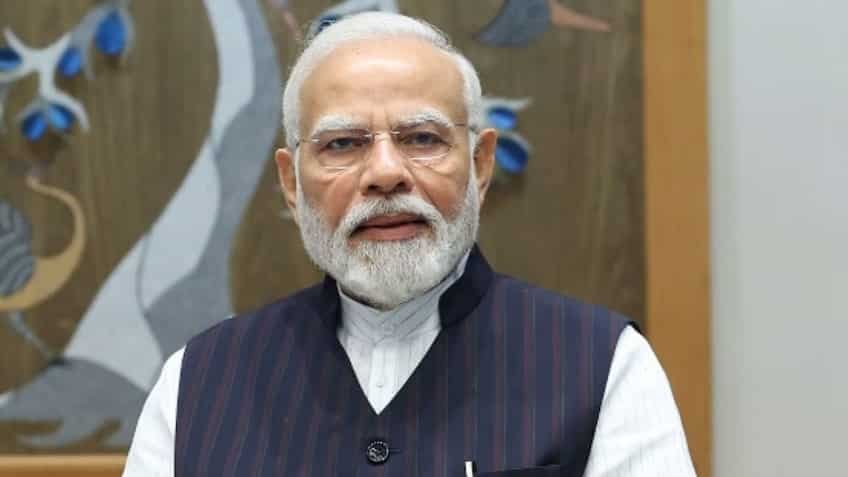
Prime Minister Narendra Modi held an important high-level review meeting with Secretaries of all Ministries and Departments of the Government of India to prepare the country’s administrative system for future challenges and to accelerate the goals of ‘Developed India 2047’. During this detailed brainstorming session held in New Delhi, the Prime Minister gave a clear and strong message to the top bureaucrats that they should completely abandon the traditional and dull working style. The PM said that in this era of Artificial Intelligence (AI) and modern technology, we should never forget the importance of human intelligence and sensitivity. Along with this, he called for ending forever the mentality of ‘chalta hai’ and ‘makeshift’ (Jugaad/Makeshift) in administrative work.
Balancing human sensitivity with AI and modern technology
Emphasizing on administrative reforms and digitalization, the Prime Minister underlined that the need of the hour is to adopt modern technologies like AI (Artificial Intelligence) and Machine Learning to make government services faster, transparent and accurate. However, he cautioned:
-
Technology is the solution, not an option: AI can simplify data analysis and routine processes, but there can be no substitute for human understanding, prudence and sensitivity in final policy decisions, policy formulation and matters of public interest.
-
Access to the last person: The Secretaries were directed to ensure that the policies do not remain limited to mere files or digital dashboards, but bring real and positive change in the lives of the citizens standing at the lowest rung of the society.
-
Sensitive Administration: While delivering the benefits of government schemes to the eligible beneficiaries, no poor or deprived person should be deprived of his rights due to technical complications or technical flaws.
‘Chalta Hai’ and blunt advice to get out of makeshift thinking
During the meeting, the Prime Minister strongly attacked the ‘Makeshift Attitude’ deeply rooted in the administrative system. He said that 21st century India can no longer be satisfied with half-measures or immediate solutions.
-
World Class Quality Standards: While planning any project in infrastructure, health, education and digital services, priority should be given to global standards and sustainability rather than just getting the work done.
-
Timely Delivery: Any kind of red tape, inter-ministerial disputes or procedural delays in government projects will not be tolerated at all. Clear deadlines and accountability should be set for every project.
-
Proactive Governance: Instead of finding solutions to problems after they arise, strategies should be made in time by assessing potential challenges in advance.
Break silo culture: Emphasis on inter-ministerial coordination
The Prime Minister directed the Secretaries to completely eliminate the ‘silo culture’ of working in isolation between various ministries. He said that platforms like PM GatiShakti National Master Plan and PRAGATI have proven that when departments work together in synergy, huge infrastructure projects are completed in record time. All Secretaries were directed to hold regular joint meetings, exchange data and ensure best utilization of each other’s resources.
Roadmap to Developed India 2047 and the next phase of reforms
PM Modi asked to focus on the roadmap to make India a fully developed nation by the centenary year of independence i.e. 2047. He asked the secretaries to set clear and measurable targets (Measurable KPIs) for the next 5 and 10 years. In the meeting, detailed presentations and discussions were made on strategic topics related to economic growth, ease of doing business, ease of living, simplification of non-essential laws and increasing India’s share in global trade.
Encouraging innovation and ideas of young executives
The Prime Minister asked senior bureaucrats to openly encourage innovation and new ideas in their ministries. The ground experiences and suggestions of young IAS/IPS and other civil service officers working in the field should be included in the top policy-making process. He stressed that administrative reforms are a continuous process and the bureaucracy should work for the public service every day with a new energy and dedication.