 look news india

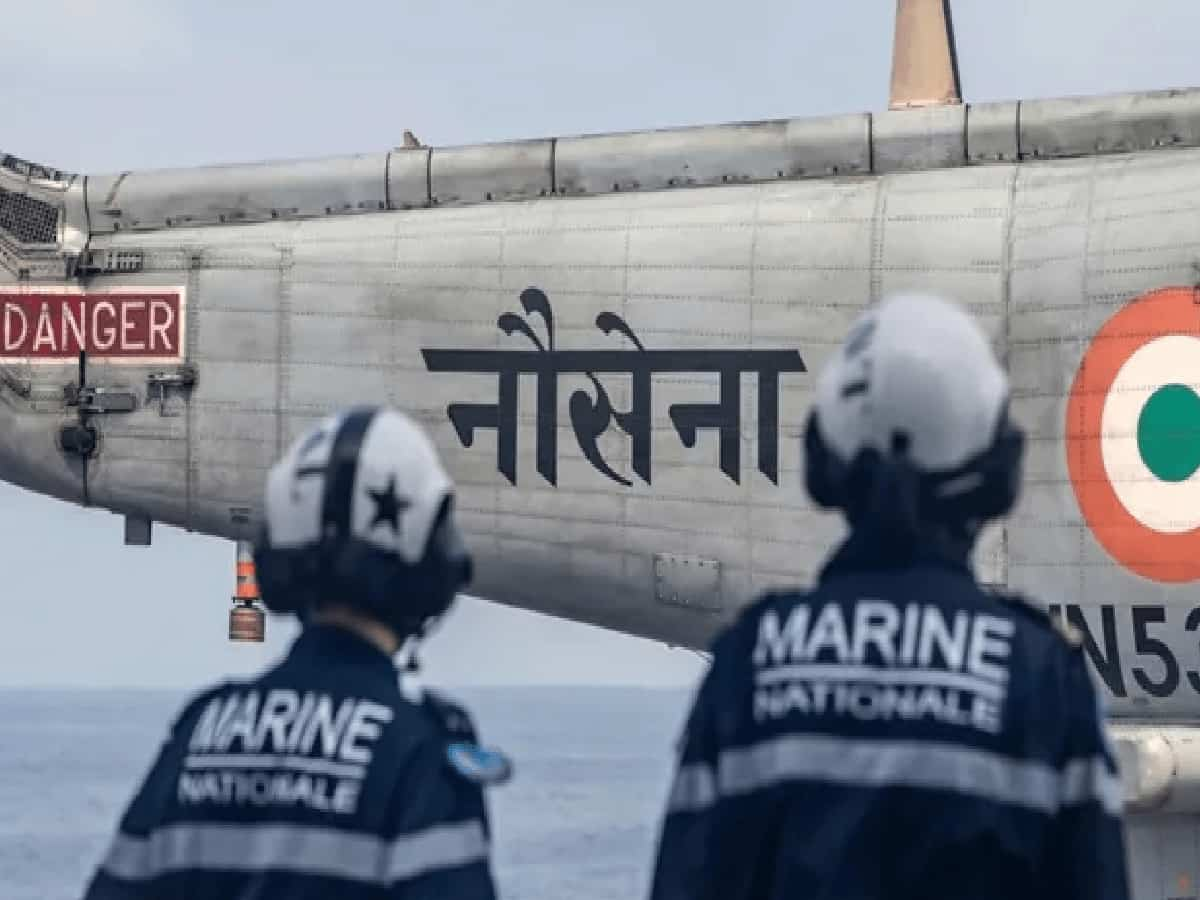
The Indian Navy is fully prepared to give a new direction to maritime security, scientific innovation and ocean governance in the Indo-Pacific region, which is considered to be very strategically sensitive and the lifeline of global trade. Indian Navy’s annual top level international strategic dialogue ‘Indo-Pacific Regional Dialogue’ (IPRD-2026) is going to be a grand event from 3rd to 5th November in the capital New Delhi. In this three-day high-level diplomatic and strategic conference, defense experts, marine scientists, international academics and senior policy makers from 18 countries of the Indo-Pacific Ocean region will gather on one platform. The main focus this year will be on establishing wide-ranging partnerships not just limited to traditional naval security but also on ocean science, academic cooperation, climate resilience and emerging technologies of the future.
According to the official statement issued by the Defense Ministry, two very important ministerial sessions along with two professional strategic sessions will be held on the second day of the conference. The first ministerial session of IPRD will be addressed by Union Defense Minister Rajnath Singh as the keynote speaker. He will underline India’s strong stance on maritime sovereignty, rules-based international order and protection of unimpeded maritime trade corridors as part of India’s vision of ‘SAGAR’ (security and development for all in the region) in the Indo-Pacific region. In the second special session to be organized after this, Union Minister of State for Science and Technology (Independent Charge) Dr. Jitendra Singh will present his special address. Dr. Jitendra Singh will emphasize on sustainable exploitation of ocean resources, Deep Ocean Mission, Blue Economy and inclusion of cutting-edge technologies like Artificial Intelligence and Quantum Sensing in marine research. Special statements from defense ministers, ambassadors and naval chiefs of various countries will also be made during the conference.
The Defense Ministry has clarified that the Indo-Pacific Regional Dialogue is not just a formal discussion, but it is completely a solution-centric international platform. Defense representatives, hydrographic scientists, strategic analysts and think tanks from 18 friendly countries falling within the geographical perimeter of the Indo-Pacific Ocean will be present in Delhi to discuss the common challenges of the region. The focus of this dialogue is to identify practical and concrete measures that can be implemented on the ground through bilateral, trilateral and multilateral mechanisms (such as the Quad or ASEAN-supported forums). The dialogue’s top priorities are to promote interoperability to provide rapid humanitarian assistance in response to piracy, illegal and unregulated fishing (IUU fishing), marine pollution, unresolved border disputes and natural disasters.
The highlight of this year’s conference is to enhance mutual coordination between academic and scientific institutions. The dialogue will seek to build broad consensus among coastal countries of the Indo-Pacific region on joint research, collaborative technology development and responsible governance of the marine environment. It will consider practical ways to ensure open, transparent and fair access to scientific data and oceanographic data to enable accurate predictions of tsunamis, cyclones and storm surges. Additionally, new institutional partnership agreements will be signed between research institutes and navies of different countries for physical and digital security of undersea communication cables, autonomous underwater drones (UUVs) and sharing of satellite based maritime surveillance networks.
This event of the Indian Navy is considered very important from a diplomatic point of view amidst the current global geopolitical tensions, increasing militarization in the South China Sea and risks looming on major maritime trade routes. India has consistently been a strong supporter of a ‘free, open, inclusive and rules-based Indo-Pacific’. The Indian Navy, along with the 18 countries participating in the conference, wants to convey the message that the only way to deal with maritime challenges is not military aggression, but scientific partnership, confidence building and a shared security framework. Experts believe that the roadmap prepared from this three-day long brainstorming will prove to be a milestone in maintaining peace, stability and economic prosperity in the Indo-Pacific region in the coming years.