 look news india

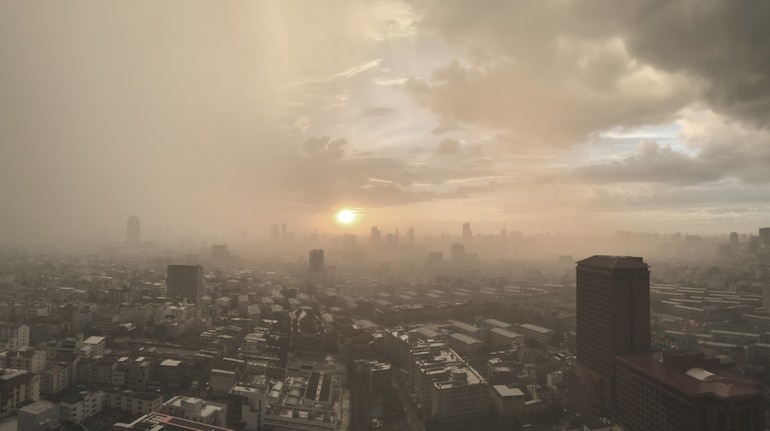
New Delhi/Ghaziabad: A very worrying news has emerged for India on the pollution front. Loni, located in Ghaziabad district of Uttar Pradesh, has been declared the most polluted city in the world in the ‘World Air Quality Report 2025’ released on Tuesday by Swiss air quality technology company IQAir. According to the report, the level of pollution in Loni has become so dangerous that it is 22 times more than the safe limit set by the World Health Organization (WHO).
‘Poison’ in Loni’s air: huge increase of 23%
In this report based on data from 143 countries, the annual average PM2.5 level of Loni has been recorded as 112.5 micrograms per cubic meter. This represents an increase of approximately 23% compared to 2024. PM2.5 are microscopic particles that penetrate deep into the lungs and dissolve in the blood, which increases the risk of stroke, lung cancer and heart diseases.
5 Indian cities in top 10: New Delhi still ‘polluted capital’
India continues to dominate the list of the world’s most polluted cities. 5 cities of India are included in the top 10 cities:
Loni (India): 112.5
Hotan (China): 109.6
Byrnihat (Meghalaya, India): 101.1
New Delhi, India): 99.6 (most polluted capital for the 7th consecutive time)
Ghaziabad (India): in seventh place
In the ranking of countries Pakistan It remains the most polluted country in the world, while India remains at sixth position. The report shows that only 14% of the world’s cities have met WHO’s stringent standards.
Why did pollution increase so much in Loni?
Experts have attributed the rise in pollution in Loni to a lethal combination of geographical and local factors:
Dust storm and stubble: The dust storm in April and stubble burning in the surrounding areas in winter deteriorated the air quality.
Industrial Units: The smoke emanating from the brick kilns and small factories present in Loni is causing poisoning at the local level.
Thermal Inversion: In winter, due to reduced wind speed and falling temperature, pollutants remain trapped close to the ground, resulting in the formation of a thick blanket of ‘smog’.
Construction and Traffic: Being a part of Delhi-NCR, heavy vehicle traffic and continuous construction work are the main sources of dust here.
Direct attack on health: age is decreasing
Doctors and environmental experts have called it ‘Public Health Emergency’ Have agreed. Staying in such air for a long time is not only hampering the development of lungs of children but also weakening the cognitive function of the elderly. Air pollution has now become a leading cause of premature deaths worldwide.
Strict action needed: Demand of experts
Environmentalists say that India’s ‘National Clean Air Program’ (NCAP) needs to be given more momentum. Experts have given the following suggestions to reduce pollution:
Strict Emission Norms: Strict adherence to emission norms for factories and vehicles.
Clean Energy: Shifting brick kilns and industries to clean fuel.
Solid Waste Management: Complete ban on garbage and stubble burning and promotion of their alternatives.
Monitoring Network: Increasing the number of air quality stations in rural and suburban areas.