 look news india

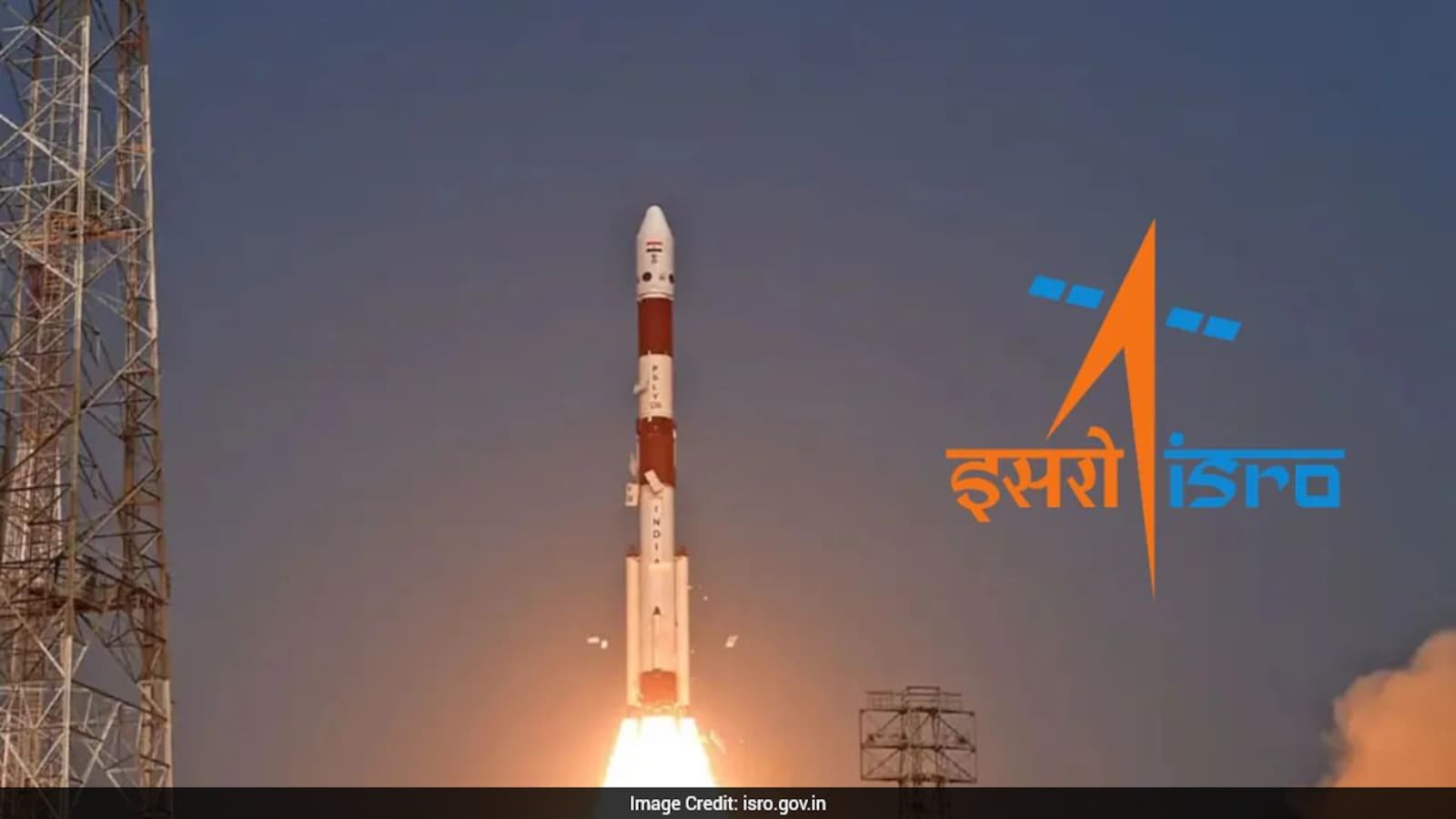
The space agency has formally put a full stop to the ongoing speculations and misleading reports on social media and some media platforms regarding the privatization of the Indian Space Research Organization (ISRO) and its restructuring. ISRO’s top leadership and the Department of Space have issued a clear and strong statement terming all these reports as completely ‘baseless, factless and baseless’. The agency has made it clear in no uncertain terms that the Government of India or the Department of Space neither has any proposal under consideration to hand over or privatize any of ISRO’s centres, assets or its administrative structure to private hands nor do they have any such plans in the future. Space scientists and officials expressed deep dissatisfaction over the fact that the progressive space sector reforms implemented in the country are being misrepresented by some sections as ‘privatisation’. ISRO has assured the countrymen and space lovers that its status, autonomy and sovereign significance as the National Space Agency of India will always remain supreme as before.
Clarifying the situation, ISRO leadership said that even thinking about privatization is ridiculous, because in the coming decades, ISRO’s national and strategic responsibility is going to increase manifold instead of decreasing. The agency stressed that freed from the burden of building routine satellites and launching commercial rockets, ISRO is now focusing its entire attention and scientific resources on ‘highly complex and unprecedented missions’ that no private company can afford to undertake on its own. The overall leadership of mega projects like India’s ambitious human space flight mission ‘Gaganyaan’, the historic mission to bring back samples from the Moon ‘Chandrayaan-4’, scientific exploration of Mars and Venus and setting up India’s own ‘Indian Space Station’ (Bharatiya Antariksh Station – BAS) in the Earth’s orbit by the year 2035 will be completely in the hands of ISRO’s skilled scientists. Apart from this, defense of the country’s borders, military surveillance, advanced radar imaging and control of sensitive data from disaster management satellites will also always remain under the exclusive jurisdiction of ISRO, where no private interference can be allowed.
ISRO has clarified that the basic objective of the ‘Indian Space Policy’ of the Government of India is not to privatize ISRO, but to create a strong and self-reliant private space ecosystem in the country. This entire system can be understood through three major pillars:
-
ISRO: The country’s main Research and Development (R&D) institute, which will lead new technologies, next-generation heavy-lift rockets (Next-Gen Launch Vehicle – NGLV), deep-space robotics and complex scientific discoveries.
-
In-SPACe: The Indian National Space Promotion and Authorization Center functions as an independent single-window regulatory body. Its function is to allow private startups (like Skyroot, Agnikul, Pixel, Dhruv Space) to use ISRO’s facilities (launch pads, testing facilities) and approve their rockets and satellites, and not to sell them to ISRO.
-
NewSpace India Limited (NSIL): It is a wholly owned public sector enterprise (CPSE) of the Government of India under the Department of Space. Its main function is to carry out commercial production of those mature technologies (like PSLV and SSLV rocket manufacturing) in collaboration with the industry, so that ISRO scientists can spend their time in new research instead of manufacturing rockets like in a factory.
This strategy being adopted by ISRO is based on the same successful global model which was adopted by the American space agency ‘NASA’ decades ago. NASA in the US never privatized itself, rather it gave private American companies like SpaceX, Boeing and Northrop Grumman the opportunity to enter the field of commercial cargo, rocket manufacturing and communication satellites. As a result, NASA could focus on large-scale research such as the James Webb Space Telescope, the Artemis Moon Mission, and Mars rovers, while private companies captured the global market by making space launches cheaper. India is also moving on the same path. At present, India’s share in the global space economy of more than $500 billion is only around 2 to 3 percent. The Government of India aims to increase this share to 8 to 10 percent in the coming years. This goal can be achieved only when the private startups and industries of the country also join the space race and ISRO provides them its mentorship and technical guidance.
ISRO has also termed the concerns of its employees, engineers and scientific organizations as completely baseless. Some rumors claimed that the entry of private companies would affect the jobs, pensions and recruitment processes of ISRO employees. On this, the officials made it clear that all the scientific and technical employees of ISRO will remain permanent employees of the Central Government as before and there has not been even an iota of change in their service conditions. In fact, the infrastructure of all the major centers of ISRO—such as Vikram Sarabhai Space Center (VSSC) in Thiruvananthapuram, UR Rao Satellite Center (URSC) in Bengaluru, Satish Dhawan Space Center (SDSC SHAR) in Sriharikota and Space Applications Center (SAC) in Ahmedabad—is being continuously expanded. The government has consistently increased the annual budget allocation for the Department of Space to fund construction of the country’s second spaceport at Kulasekharapattinam in Tamil Nadu, development of semi-cryogenic engines and world-class human spaceflight laboratories. ISRO has appealed to the general public and the youth not to believe in unconfirmed and misleading news spread on social media and remain proud of the achievements of this glorious institution of the country.