 look news india

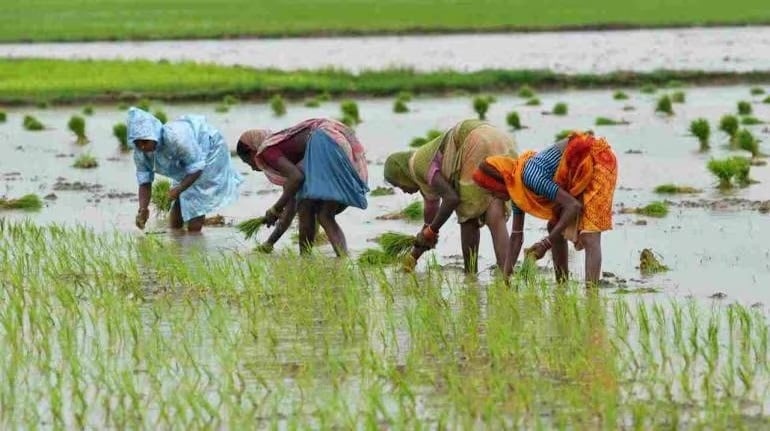
The month of June has so far proven to be worrying for farmers and the rural economy across the country. This year the progress of monsoon has not been as per expectations and its pace has been recorded quite slow in the first fortnight. The Meteorological Department (IMD) and economic analysts estimate that this time the total monsoon rainfall in the country may be 10 percent less than normal.
This situation is a bad sign in terms of agricultural production, whose direct impact can be seen on consumer demand in rural areas and food inflation of the country. However, economic experts also say that due to increased irrigation resources in the last few years, adequate water level in major reservoirs and buffer stock of food grains like wheat and rice with the government, this sluggish monsoon will not have much impact on India’s main GDP growth.
Badra rains 35% less than normal in first 16 days of June
According to official data of the Indian Meteorological Department, the monsoon rainfall across the country between June 1 and 16, 2026, has been recorded 35 percent less than normal. Although there are always ups and downs in the progress of monsoon in the month of June, but this time the forecast of ‘El-Nino’ conditions emerging globally has increased the concern for the entire season from June to September.
The Meteorological Department had already indicated that the country may have to face partial drought or less rainfall throughout this season. Talking about the availability of water, till June 11, 2026, the major reservoirs of the country will have only 100 per cent of their total capacity. 28 percent water Only this was left.
“Indian economy’s dependence on monsoon has now reduced” — Economist
Speaking on the country’s economic outlook, Sujit Kumar, Chief Economist, National Bank for Financing Infrastructure and Development (NaBFID), underlined a significant change:
Changing economic structure: India’s economic growth is no longer completely dependent on monsoon rains like before. The biggest reason for this is that in the last few decades, there has been a huge increase in the share of non-agricultural activities like manufacturing, digital infrastructure and service sector in the country’s Gross Value Added (GVA). However, the agriculture sector is still the main source of livelihood for a large population of the country, hence whenever the prices of essential commodities increase, it directly impacts retail inflation, RBI interest rates and the demand for tractors, two-wheelers and FMCG products in rural markets.
How does food inflation get trapped in the maze of weak monsoon?
According to Manoranjan Sharma, Chief Economist, Infomerics Ratings, the country should be mentally prepared for weak monsoon conditions ahead and its economic consequences. Whenever there is less rainfall, its simple mathematics works to increase food inflation:
-
Supply chain disruption: Due to insufficient rainfall, the total area and production of crops decreases, due to which the arrival of vegetables, pulses (pulses) and oilseeds (edible oils) in the markets reduces. Due to decrease in supply, the prices of these things start rising rapidly in the market.
-
Historical example from 2015: Earlier in 2015, when there was a strong El Nino in the country, the monsoon rains were 14 percent less than normal. During that period, the country’s retail food inflation had increased to the level of 5 percent. Economists estimate that this year too food inflation may hover around the same level.
Latest data of retail inflation: increased to 3.93% in May
According to the latest data released by the Ministry of Statistics and Program Implementation (MoSPI), retail inflation continues to rise in the country:
-
Retail Inflation Rate: Country’s retail inflation rate to increase in May 2026 3.93 percent It reached 3.48 percent, which was at the level of 3.48 percent in the month of April. This is the fifth consecutive month when the inflation graph has seen a rise.
-
Food inflation pressure: Retail Food Inflation, especially in May 4.78 percent was recorded, which was 4.2 percent in April. In such a situation, if the rains remain weak even in June and July, then this figure may cross the limit of 5% in the coming months.
Impact on crops: Paddy and wheat safe, pulses and oilseeds in danger
Weak monsoon does not affect all the crops of the country equally. Due to backup of irrigation networks (Canal and Tube-well Systems) and reservoirs, there is no possibility of much damage to the main crops of paddy (rice) and upcoming wheat in the belt like Punjab, Haryana and western Uttar Pradesh.
But, in the parts of the country which are completely dependent only on rain-fed agriculture, Pulses (pulses) and oilseeds (soybean, groundnut) Production may suffer a huge blow. According to the historical analysis of CareEdge, since 1951, whenever a ‘Strong El Nino’ situation has occurred in the country, then the agriculture GVA has on an average Big decline of 5.6 percent Has been registered. In contrast, when El Nino has been weak or normal, agriculture sector growth has grown at an average pace of 1 percent.