 look news india

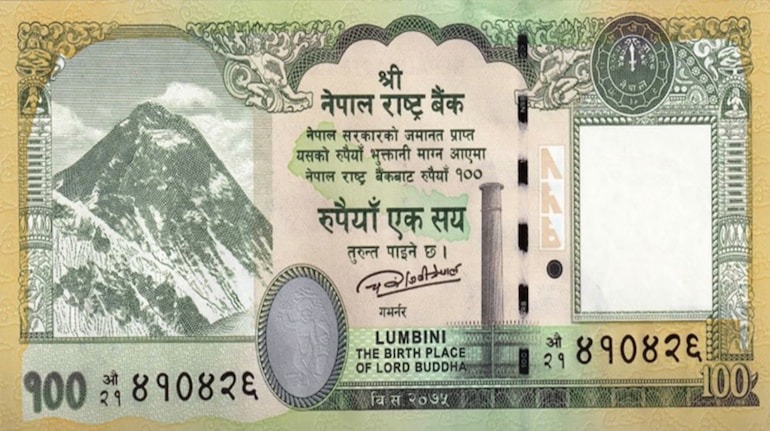
The relationship between India and Nepal has always been one of ‘Roti-Beti’, but in the last few years the line drawn on the map is becoming deeper. The latest case is related to the new currency note of Nepal. Nepal has printed a map on its new Rs 100 note, which has created a stir in diplomatic circles.
On this new note, Nepal has shown its share in Lipulekh, Kalapani and Limpiyadhura. Whereas the truth is that these three strategically important areas are within the border of India and are an integral part of India.
India rebuked: ‘This one-sided game will not work’
The Indian government is not silent on this action of Nepal. The Indian Foreign Ministry immediately reacted sharply to this. India has bluntly said that taking such “unilateral steps” will not change the ground reality. By printing a map on a note, India’s land does not become Nepal’s. India has called it a violation of its territorial integrity.
What is the connection with China?
There is also a ‘sugar spice’ in this controversy. You will be surprised to know that the printing of these disputed notes was not done in Nepal but in China. According to reports, last year Nepal Rastra Bank (NRB) had given the contract for printing of these notes to a Chinese company ‘China Banknote Printing and Minting Corporation’. People are seeing this as the increasing closeness between Nepal and China and a conspiracy to provoke India.
What is special on the note?
Controversy has its place, but let us know how this note looks. Nepal Rastra Bank has added many new features to it:
- Picture: The main part of the note depicts a one-horned rhinoceros and its baby.
- Background: On the left is the world’s highest peak Mount Everest and on the right is Rhododendron (Buransh), the national flower of Nepal.
- Mark: Along with the picture of the Ashoka Pillar, there is also that disputed map in the middle.
- For Disabled: To enable visually impaired people to identify it by touching it, an embossed black dot has been placed near the Ashoka Pillar.
- Other: In this, the picture of ‘Maya Devi’ has been printed in silver ink.
This fight is old
In fact, the foundation of this controversy was laid on 20 May 2020 itself. Then the then government of Nepal amended the Constitution and passed a new political map of the country, in which Indian areas were declared a part of Nepal. At that time also KP Sharma Oli was in government. In May 2024, when the design of these new notes was approved, the cabinet had taken the decision in the presence of KP Sharma Oli.
Overall, the notes have been printed, but it has definitely soured the relations between the two neighboring countries. Now it remains to be seen what Nepal’s next step is after India’s objection.