 look news india

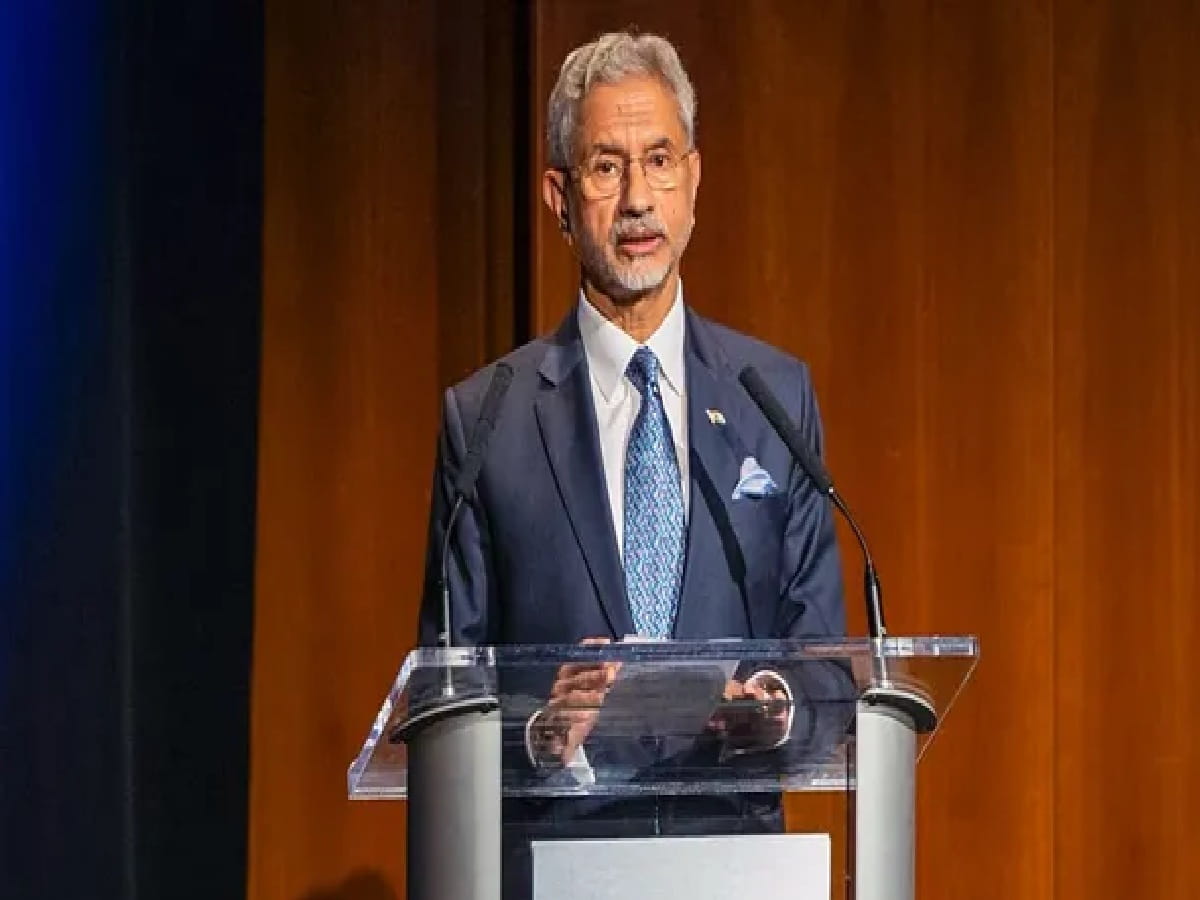
Amidst the ongoing equations at the global level for the last few months on the front of Indian diplomacy and foreign policy, External Affairs Minister S. Jaishankar has expressed his views from American soil in very clear, strong and blunt words. While addressing a high-level event organized by ‘Asia Society’ in New York during his official visit to America, the External Affairs Minister openly expressed his opinion on the tension and discomfort in the bilateral relations between India and America for the last one and a half years.
S. In his address, Jaishankar strongly presented India’s stand to the world on the two biggest and most sensitive issues – trade differences and cross-border terrorism fostered by neighboring Pakistan. He gave a clear message to the American leadership and Western countries that if strategic partner countries do not respect India’s security and primary sensitivities, it will have a direct impact on the depth of bilateral relations between the two countries.
Describing the issue of terrorism as the highest and most sensitive priority for India, External Affairs Minister Jaishankar said without any hesitation that there would be very few countries in the world which have suffered terrorism sponsored and deliberately nurtured by their neighboring nation to the extent that India has suffered.
He clearly said, “Taking care of each other’s sensitivities is the most important foundation of any strong partnership. Terrorism is an issue that is extremely sensitive for us. A subject which is so important to our national interest and security, if any of our partner countries does not take adequate care of these key concerns and warnings of ours, then it is natural that it will have a negative impact on our bilateral relations.” Experts believe that this statement of the Foreign Minister indirectly shows India’s deep disagreement and concern over the increasing military and diplomatic rapprochement with Pakistan by America and Western countries.
This sharp and clear statement of the Foreign Minister is being considered very timely and important because in recent times, the closeness between America and Pakistan has been seen increasing at diplomatic and military level. Some steps taken by Washington in recent years, such as the claim of mediation between India and Pakistan in the context of Operation Sindoor and welcoming of Pakistani Army Chief General Asim Munir to the US White House, have unsettled strategic circles in New Delhi.
India has been following these developments very closely, but has so far refrained from giving such vocal reactions in public forums. During the tenure of President Donald Trump, India’s diplomacy to isolate Pakistan on the issue of terrorism in international forums got a setback in recent times when along with America, many major European countries also started bringing their economic and diplomatic relations with Pakistan back on track. New Delhi’s biggest fear is that by taking advantage of this soft attitude of Western countries, Pakistan may once again find scope for promoting its old activities i.e. cross-border terrorism.
Not only on security and terrorism, but also on the issue of proposed trade deals with America, Foreign Minister S. Jaishankar took a tough stance while protecting the economic interests of the country. He made it clear that in the ongoing trade negotiations between India and America, India cannot back down at any cost from its domestic interests, the rights of small producers, small industries and farmers associated with the agriculture sector.
Jaishankar admitted that there is a huge difference in the economic structure of India and America. He explained, “We must always keep in mind that India is a vast society of mainly small producers, small agricultural producers and small factories and cottage industries. Apart from the huge difference in per capita income between India and America, the pattern of production and the nature of our socio-economic structure are also completely different.” He also acknowledged that there was a delay in finalizing the trade agreement because the complexities of the ground reality were very deep, and now further outlines are being decided in this direction under the process of Section 301 of the US law.
Meanwhile, Union Commerce and Industry Minister Piyush Goyal is also reported to be on a US tour, where he will participate in the G-20 Trade Ministers’ meeting in Milwaukee and hold high-level talks with his American counterparts to take forward the stuck interim trade agreement between the two countries. This clear and blunt message from the External Affairs Minister has proved that the new India does not shy away from communicating clearly even with its friends and partners on matters of its national security interests and economic sovereignty.