 look news india

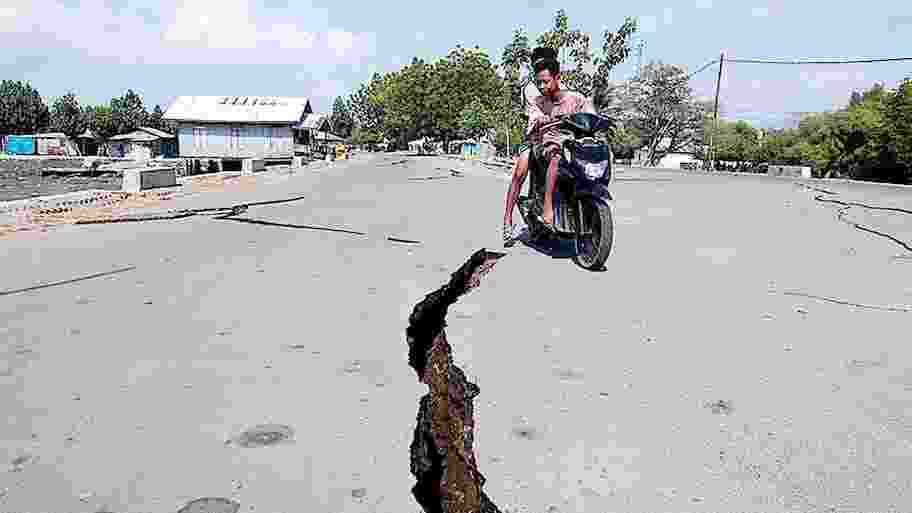
Ground shaking is not an uncommon phenomenon in Indonesia, which sits at the mouth of the Pacific Ocean’s most turbulent tectonic plates. Due to its presence in the world’s most active ‘Ring of Fire’ region, hundreds of small and big earthquakes occur here every year. While earthquakes ranging from 6 to 8 on the Richter scale turn concrete structures into piles of debris in many of the world’s developing countries, Indonesia’s skyscrapers and traditional houses stand firm. This is not a divine miracle, but a deliberate scientific balance of age-old indigenous architecture, modern seismic engineering, strict regulatory controls and community readiness.
Pacific ‘Ring of Fire’ and Indonesia’s geological challenge
Indonesia is geographically located at the highly sensitive intersection of the Eurasian, Indo-Australian, Pacific and Philippine Sea plates. Due to the constant movement and friction of these huge tectonic plates, a huge amount of geological energy keeps getting accumulated here, which suddenly comes out in the form of powerful earthquakes and volcanic eruptions. Spread across more than 17,000 islands, the country has faced devastating tragedies such as the 2004 Indian Ocean tsunami and the 2006 Yogyakarta earthquake. These bitter experiences inspired Indonesia to develop a defensive system where natural disasters cannot be prevented, but the structural damage caused by them can be minimized.
‘Rumah Panggung’: The scientific basis of centuries-old traditional architecture
Indonesia’s earthquake resilience is rooted in its rich cultural heritage. Centuries before the advent of modern concrete, artisans in the Indonesian archipelago developed architecture that could withstand ground movements. The most classic examples of this are ‘Rumah Panggung’ and ‘Rumah Gadang’ of the Minangkabau community of Sumatra.
-
Flexible Wood Joints: In traditional buildings, wooden ‘pasak’ (wooden pegs and grooved joints) are used instead of hardened iron nails. When seismic shear waves hit the ground, these joints move but do not break, allowing the structure to absorb the energy.
-
Stilt and Pile Foundation: Buildings are built on elevated pillars rather than pouring concrete slabs directly on the ground. Large smooth stones are placed beneath the pillars, causing the building to oscillate as an independent unit during an earthquake rather than colliding directly with the ground.
-
Light roofs and natural materials: Bamboo, palm fiber and light wood are used in the construction of roofs. Due to this, the center of gravity of the structure remains low and the risk of walls collapsing due to overhead load during earthquake shocks is almost eliminated.
Incorporation of modern engineering and ‘Base Isolation’ technology
When concrete and glass skyscrapers are built in modern metropolises like Jakarta, Surabaya and Bandung, they are based on world-class state-of-the-art seismic engineering. The most important technology in these buildings is ‘Base Isolation’.
-
Lead-Rubber Bearings: High capacity rubber and lead bearings are installed between the foundation and superstructure of buildings. When the ground shakes rapidly during an earthquake, these bearings act like a shock absorber and prevent vibrations from reaching the main structure of the building.
-
Tuned Mass Dampers: Heavy pendulums or dampers are installed at the top of tall buildings, which move in the direction opposite to that of the building. It balances the tilt of the building during wind pressure and seismic shaking.
-
Ductile Detailing and Shear Walls: Special steel reinforcement is used in concrete pillars, which allows the pillars to bend first rather than collapse suddenly. This gives the people inside enough time to get out.
Strict compliance with strict building codes and ‘SNI 1726’
Indonesia has repeatedly revised the Seismic Code under its National Standards (SNI – Standar Nasional Indonesia) in accordance with international standards (particularly the American and Japanese codes). The country’s current ‘SNI 1726’ standard sets extremely strict guidelines for the design of buildings.
Under this system, detailed ‘geotechnical soil investigation’ is mandatory before construction of any multi-storey building. The use of deep piling foundation and ground improvement techniques in areas with soft soil is legally binding. Before municipalities issue a building permit (PBG), designs are thoroughly reviewed by independent panels of structural engineers. Old and weak public structures are being strengthened by running retrofitting campaigns.
Early Warning Network and the technical mechanism of ‘InaTEWS’
Along with stronger buildings, early warning systems have a central role in Indonesia’s disaster strategy. Indonesia’s Meteorology, Climatology and Geophysical Agency (BMKG) operates an extensive network of seismographs, GPS stations, and tide gauges spread across the country.
‘InateWS’ (Indonesia Tsunami Early Warning System) issues alerts at the national level within 3 to 5 minutes of any major earthquake by calculating the intensity, depth and probability of tsunami. This real-time data reaches citizens instantly through TV broadcasts, siren networks and mobile emergency alerts.
Community preparedness: taking technical solutions to the social level
Structural strengthening remains incomplete unless citizens have practical training to deal with disasters. ‘Simulasi Bencana’ (Disaster Drills) are regularly conducted in schools, workplaces and residential areas in Indonesia.
Trained volunteer groups such as ‘Tagana’ (Taruna Siaga Bencana) lead local level first aid, safe evacuation and debris rescue practices. The community is clearly taught how to follow the “Drop, Cover, and Hold On” technique during an earthquake and which designated evacuation zones to gather in as soon as the shaking stops.
Lessons for seismic regions of the world and India
Indonesia’s disaster management model proves that safe living is possible even in high-risk geological areas. The Himalayan region of India, the Rann of Kutch and the plains of North India, which fall under Seismic Zones 4 and 5, can learn many important lessons from this multi-pronged strategy of Indonesia.
Preservation of traditional regional architecture (such as the Kath-Kuni style of the Himalayas), mandatory compliance with strict seismic codes in modern urban construction, expansion of advanced engineering such as base isolation and public awareness at the grassroots level are the only sustainable ways to prevent any country from succumbing to earthquakes. Indonesia has transformed its geographical challenges into its greatest engineering strength.