 look news india

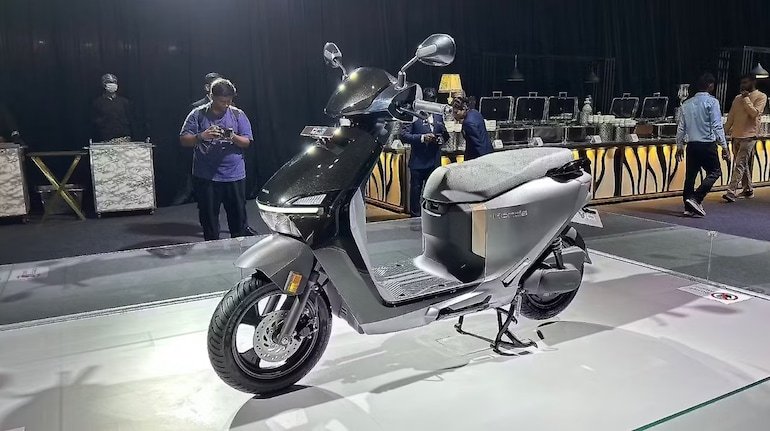
Honda Motorcycle & Scooter India (HMSI) takes its big step into the eco-friendly mobility segment in the domestic market by launching the much-awaited family electric scooter. Honda QC3 Has been officially launched. Japanese automobile company Honda, which has ruled the petrol segment in the Indian two-wheeler market for a long time, is now strengthening its hold in electric mobility. This is the third all-electric model in the company’s portfolio after QC1 and Activa e: which has been specially designed keeping in mind the everyday urban needs and family use.
This new e-scooter offers a perfect balance of long range capability, improved boot space, modern connectivity features and affordable running costs. With the demand for electric two-wheelers growing rapidly in India, this offering is considered a game-changing option for customers looking for a trusted brand name, robust construction and practical specifications.
The most important technical highlight of the Honda QC3 is its powertrain and battery pack architecture. Honda has provided a modern lithium-ion fixed battery pack with 3.0 kWh capacity in this electric scooter. The company’s official claim is that as per Indian Driving Cycle (IDC) standards, this scooter has an impressive range of up to 145 kilometers on a single full charge. This figure becomes the longest range offered by any scooter in Honda’s current Indian electric lineup.
Talking about charging time, keeping in mind the urban hustle and bustle, the company has given priority to fast-charging compatibility. Through a standard home charger, this battery gets charged from 0 to 80 percent in just 2 hours 40 minutes, while it takes about 4 hours to fully charge from 0 to 100 percent. This charging window proves to be very practical for office-going workers, college students and families who depend on a single vehicle for household chores, as the scooter can be easily recharged overnight or in the office parking lot.
Storage space is one of the biggest deciding factors in the Indian family scooter segment. Acting on feedback from its previous electric models and competing alternatives, Honda has provided a massive 32 liters of underseat storage in the Honda QC3. This storage space is much larger and deeper than the 26 liters of storage on the QC1.
The biggest advantage of this large boot space is that the rider can keep a full-face helmet, important documents, charger kit, laptop bag or groceries bought from the market safely without any hassle. Apart from this, the flat and wide floorboard provides footrest space, which makes it easy to carry heavy items like cylinders or shopping bags near the feet.
The Honda QC3 has been built high-tech to suit the needs of today’s digital era riders. It is fitted with a 5-inch color TFT digital instrument console, which ensures clear visibility even in bright sunlight. This display supports Honda’s special RoadSync smartphone connectivity system. Through Bluetooth connectivity, the rider can pair his smartphone directly with the scooter screen.
In the connectivity setup, important information like turn-by-turn (TBT) navigation, incoming call and message alerts, battery percentage, live speed, trip meter and service reminders are visible directly on the screen. Along with this, Honda’s patented Smart Key technology has been provided in the scooter. With the help of this keyless entry system, the scooter can be started by keeping the key in the pocket, along with this it also has security measures like remote boot unlock, vehicle locator and anti-theft security alarm.
In terms of design, the Honda QC3 is a balanced blend of traditional scooter silhouette and modern aesthetics. The sleek horizontal LED headlight on the front apron, integrated LED DRL and tail lamps give it a premium and modern road presence. The scooter features a long, wide and cushioned single-piece seat, which provides a fatigue-free experience to both the rider and pillion during long journeys.
For ride safety and stability, Honda has setup disc brake in the front wheel and drum brake in the rear, which works with Combined Braking System (CBS). Talking about suspension, smooth telescopic forks have been installed at the front and twin shock absorbers at the rear, which easily absorb the shocks on potholes and speed breakers on Indian roads. The company has introduced it in 4 attractive colors:
-
Matt Photon Gray Metallic
-
Pearl Precious White
-
Pearl Shallow Blue
-
Pearl Siren Blue
On the price front, Honda QC3 has been launched at an attractive price of ₹ 1.35 lakh (ex-showroom, New Delhi). Honda has started the official booking of this e-scooter on its official website and authorized dealerships for a token amount of just ₹ 5,000.
Under its first phase (Phase 1), the company has made it available through its premium Honda RedWing dealerships network in 5 major cities of India:
-
Delhi (Delhi NCR)
-
Agra (Agra, Uttar Pradesh)
-
Surat (Surat, Gujarat)
-
Cuttack (Cuttack, Odisha)
-
Kollam (Kollam, Kerala)
According to Honda, along with preparation of local service infrastructure and charging network, its delivery and sales will also be expanded in a phased manner to other Tier-1 and Tier-2 cities like Lucknow, Jaipur, Mumbai, Bengaluru, Pune, Patna and Hyderabad in the coming months.
The price bracket of Rs 1.30 lakh to Rs 1.45 lakh sees the toughest competition in the Indian electric two-wheeler market. Honda QC3 is going to compete directly with the already established TVS iQube (3.1 kWh variant), Bajaj Chetak 3502, Vida VX2 Plus and Ather Rizta / Ather Konarc in this segment.
While TVS and Bajaj rely on their metal bodies and family image, Honda rests on its decades-old engine reliability, service reliability and resale value. The long IDC range of 145 km, large storage space of 32-litres, convenience of a fixed battery pack and a price tag of ₹1.35 lakh makes it a solid and reliable option for families who want to get rid of rising petrol prices and shift to electric without any compromise.