 look news india

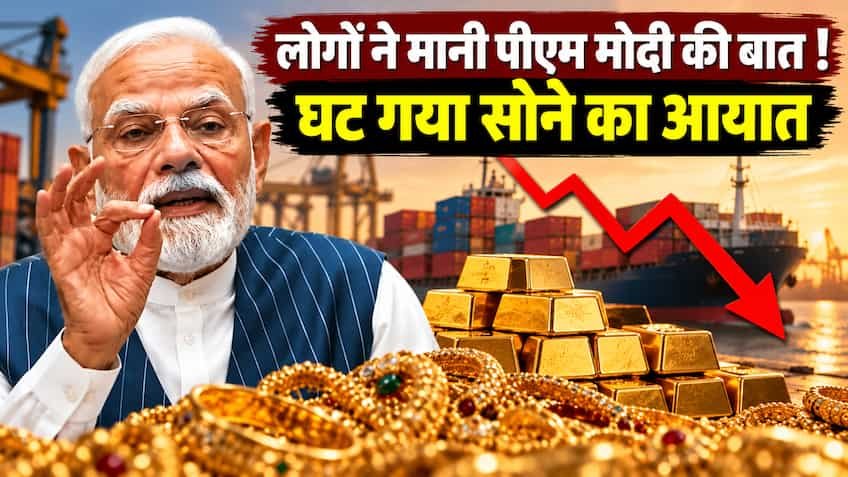
A shocking and pleasant data has emerged on the front of the Indian economy and the global bullion market. According to the latest foreign trade data released by the Ministry of Commerce and Industry, a huge decline of 57.7 percent i.e. about 57 percent has been recorded in India’s gold imports in August 2026 on an annual basis. If we look at the figures, last year in August 2025, India had bought gold worth 5.4 billion US dollars from abroad, which has come down to only 2.3 billion US dollars in the month of August this time. Even if we compare this with the gold import of $4.16 billion in the last month i.e. July 2026, there has been a huge decline of about 45 percent month-on-month. This huge reduction of $ 3.1 billion (about more than Rs 26,000 crore) in the gold import bill in just one month has not only provided a big boost to the country’s foreign exchange reserves, but has also reduced the unwanted pressure on India’s current account deficit (CAD) to a great extent.
This historic decline in the import bill is being linked to the repeated public appeal of Prime Minister Narendra Modi, in which he had called upon the countrymen to limit indiscriminate purchase of non-essential foreign goods and gold. The Prime Minister in his recent addresses had underlined that as India moves towards becoming a $5 trillion and developed nation at a fast growth rate, the country should use its valuable foreign exchange (Forex) to create productive assets. PM Modi argued that India is in huge need of foreign exchange to import state-of-the-art machinery, GPU, CPU, high-tech components and crude oil for its manufacturing, semiconductor mission, artificial intelligence and defense self-reliance. In such a situation, if trillions of dollars are spent only in importing non-productive physical gold, then unnecessary risk on the country’s foreign exchange reserves will increase. The Prime Minister’s appeal to reduce the extravagance of foreign trips, grand weddings and unnecessary holding of gold has had a deep psychological impact on the psyche of the middle class and institutional buyers, the direct reflection of which is now clearly visible in the business data.
Along with the Prime Minister’s appeal, technical and pricing factors of the bullion market have also played a big role in curbing gold imports. Gold prices remain near their all-time high due to geopolitical uncertainties in international commodity markets and US interest rate expectations. In the domestic futures market i.e. MCX and local bullion markets, 24 carat gold prices are trading in a record range of Rs 74,000 to Rs 76,000 per 10 grams. From Chowk Sarafa Bazaar in Lucknow in Uttar Pradesh, Birhana Road in Kanpur, Thatheri Bazaar in Varanasi to Chandni Chowk in Delhi and Zaveri Bazaar in Mumbai, retail buyers have pulled out of new purchases due to this record inflation. Common middle class customers are giving priority to melting and exchanging old jewelery (Old Gold Recycling) instead of getting new jewelery made at such high prices of gold. Due to this softening of retail demand, large jewelers and bullion dealers already had sufficient inventory, due to which they largely postponed or canceled orders for new gold from abroad during August.
The biggest and positive impact of this direct saving of $3.1 billion in gold imports has been seen on the country’s trade deficit. Bloomberg and global economists had estimated that India’s trade deficit could cross $32.15 billion in August due to rising imports of crude oil and manufacturing inputs. But the Commerce Ministry’s data surprised all the analysts. India’s trade deficit declined to $26.86 billion (about $26.9 billion) in the month of August, which was at the level of $31.98 billion in July. Simply put, the trade deficit declined by more than $5 billion within a month. While on one hand the country’s total merchandise imports increased by 14.1 percent to $70.67 billion due to domestic industrial demand and energy needs, the 57% decline in gold imports completely crushed the fear of the import bill getting out of control.
The brightest picture of the trade data for August has been seen on the export front of India. While gold purchases declined, total merchandise exports of Indian goods jumped 26.12 per cent year-on-year to a record high of $43.81 billion. Briefing reporters in New Delhi, Commerce Secretary Rajesh Aggarwal said that the demand for Indian engineering goods, petroleum products, organic chemicals and textiles remains strong in the US, European Union, BRICS countries and South-East Asian emerging economies. This record inflow of foreign exchange savings on gold imports and dollar inflow from exports has also provided stability to the Indian Rupee (INR) against the US Dollar. Economists say that the $3.1 billion that has been saved from being locked in gold lockers can be used for the upcoming semiconductor fabrication plants, data centres, solar PV modules and imports of capital goods in the country, which will become the biggest fuel to accelerate the country’s GDP growth at the rate of 7 to 8 percent in the coming years.
After this historic decline in gold imports in August, the entire bullion industry now has its eyes set on the upcoming festive and wedding season. In Indian culture, after the end of Pitru Paksha, purchasing gold and silver on Navratri, Dussehra, Karva Chauth, Dhanteras and Diwali is considered very auspicious. Immediately after this, the biggest wedding season of Hindu weddings will begin in November and December. Representatives of the Confederation of All India Traders (CAIT) and the Gems and Jewelery Domestic Council (GJC) believe that this August decline could be a ‘temporary pause’. Bullion analysts estimate that if there is even a slight correction (profit booking) in international gold prices by the last week of September, then Indian jewelers may again increase gold imports in the last fortnight of September and the first fortnight of October to meet the huge demand of Dhanteras. However, the increasing trend of investors towards Sovereign Gold Bond (SGB) by the government and the influx of investments in digital gold and gold ETFs (ETFs) have also ensured that people are now investing in financial assets instead of keeping bricks or biscuits in the locker, thereby helping in keeping the country’s import bill safe and balanced in the long run.