 look news india

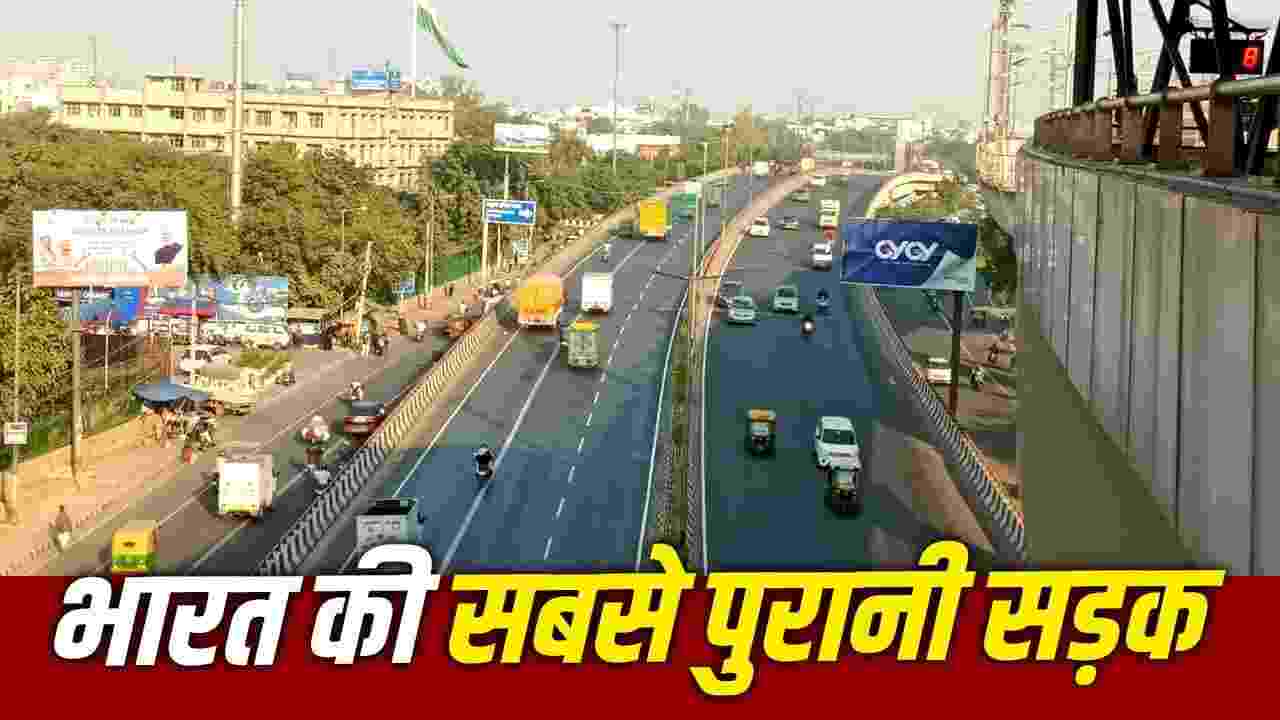
Today, the network of expressways and modern highways is expanding very fast in India, due to which travel has become very easy and fast. This modern process, which started with the Mumbai-Pune Expressway, is today connecting every corner of the country. But when gleaming concrete roads, national highways or state highways did not exist in the country, then India’s biggest lifeline Grand Trunk Road – GT Road Used to be.
This road is not only older than the British era, but its history spans centuries. There is often a perception among the common people regarding GT Road that it was built only by Sher Shah Suri. But historical and scientific facts tell a different story. Let us understand in very simple words the entire story of this oldest and historical route of Asia, its route and current status:
Historic Route: The vast corridor from Bangladesh to Kabul
Historically the expansion of the Grand Trunk Road was extremely vast. It was considered the largest trade and strategic route connecting South Asia:
-
Historical detail: This road started from Chittagong area of present-day Bangladesh, crossing India and Pakistan and went straight to Kabul, the capital of Afghanistan.
-
Old route in India: Within India, it mainly started from Kolkata, passing through major cities of modern Bihar, Uttar Pradesh and reaching Delhi, Haryana and Amritsar in Punjab. After this it connected to Kabul via Lahore and Peshawar.
-
Historical range: Famous situated between India and Pakistan Wagha-Attari Border Located on this historical Grand Trunk Road.
-
Modern form: Today, the original existence of GT Road within India has merged into many modern national highways. a large part of it now National Highway 19 (NH 19) And National Highway 44 (NH 44) Has become a part of major roads like.
2300 years old history: Chandragupta Maurya’s ‘Uttarapath’
The history of the Grand Trunk Road is thousands of years older than Sher Shah Suri. In fact, its origin is related to ancient India. ‘Uttarapath’ Which literally means ‘the main road to the north’.
-
Backbone of the Maurya period: Founder of the Maurya Empire Chandragupta Maurya and after them Emperor Ashoka During the reign of (about 2300 years ago) the administrative and military importance of this route was at its peak. This rough route was organized to unify such a large empire, to enable quick movement of troops, trade and to send messages through spies.
-
Passengers’ lifeline: Since ancient times, this route was being used by traders, soldiers, Buddhist monks, saints and students studying in universities like Takshashila from India and abroad. Therefore, it would be absolutely appropriate to say that the basic structure of GT Road was present since ancient times, which was improved by different kings from time to time as per their needs.
Did Sher Shah Suri really build this road? (documented truth)
In the history books as the creator of GT Road shershah suri The name is written in golden letters at the top. But if we analyze the historical time frame and scientific facts, a completely different aspect emerges:
Brief tenure of 5 years: Sher Shah Suri defeated Mughal emperor Humayun in the battle of Kannauj and captured the throne of Delhi. Suri’s total reign was only 5 years (1540 to 1545 AD) is from. It is technically and practically impossible to reconstruct thousands of kilometers of paved roads from Bangladesh to Afghanistan in such a short period of just five years.
Then why is Suri’s name taken?
Sher Shah Suri did not build the road, rather he restructured the ancient scattered ‘Uttarapath’ road. Suri’s contribution is considered incomparable for the following reasons:
-
He completely repaired the old and dilapidated roads and gave them a systematic road shape and widened many narrow stretches.
-
Inn system: For the safety and comfort of travelers and traders, ‘rest houses’ were built at every distance along the road, where there were arrangements for accommodation and fodder for horses.
-
Kos Minarets: Suri measured the distance on the side of the road. ‘Kos Minarets’ Got it made. At that time, one kos was equal to approximately 3 kilometers, which helped travelers to make accurate estimates of the journey.
-
Security and Post: He made strict security arrangements on the roads against bandits and robbers and for the first time developed an efficient ‘post post system’ on this route.
From Mughals to British: How did GT Road become modern?
-
Glory of Mughal period: When the Mughals again assumed power after Sher Shah Suri, emperor akbar And his successors also made full use of this route. It played a big role in connecting major Mughal centers like Delhi, Agra and Lahore. Large-scale international trade in textiles, spices, grains and horses took place along this route, leading to the development of many prosperous towns and cultural centers around it.
-
Modern engineering of the British period: During the 19th century, the British rule completely modernized the GT Road to strengthen its administrative and military hold over India. The British got large parts of the road metalled, built modern engineering bridges over old drains and made traffic easier. Although later its importance for long distances diminished slightly with the advent of the railway network, it always remained the backbone for regional connectivity.
What is the condition of this historical heritage today in 2026?
Today, the Grand Trunk Road is no longer visible in its old traditional form. With changing times, it has completely become a part of the development story of modern India:
-
Converted into modern highway: Its stretches passing through Delhi, Haryana, Uttar Pradesh, Bihar, Jharkhand and West Bengal have been widened into gleaming 4-lane and 6-lane national highways, with new bypasses and flyovers, making long-distance travel much faster.
-
Urban Challenges: GT Road today faces serious challenges like excessive traffic jams, illegal encroachments and increasing pollution while passing through big cities (like urban areas of Shahdara, Kanpur, Varanasi in Delhi). The problem of potholes and waterlogging is also common in some of its old and neglected parts during monsoon days.
The Grand Trunk Road is not just a geographical route or a dirt road; It is a living symbol of India’s more than 2300 years of checkered history, the fusion of cultures, commercial revolutions and the rise and fall of empires.