 look news india

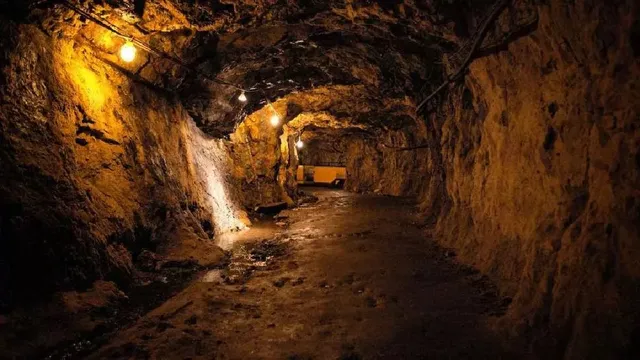
In India, the craze for gold is well known, from common people to the bullion market. But now this craze and the country’s economy is going to get a historic and huge boost at the domestic level. A very encouraging and proud news has come from Kurnool district of the South Indian state of Andhra Pradesh, which has attracted the attention of mineral experts all over the world.
A huge deposit of about 50 tonnes of gold has been discovered in Jonnagiri belt of Kurnool. According to geologists and officials, after this historic discovery, Andhra Pradesh can emerge as the largest producer and supplier of gold in the country in the coming few years. This mega-reserve will not only give a revolutionary boost to the country’s domestic gold production, but will also reduce India’s dependence on extremely expensive gold imports from abroad and its foreign exchange expenditure to a great extent.
4 new locations including Jonnagiri identified: CM Chandrababu Naidu will start mining
Mukesh Kumar Meena, Principal Secretary, Mines Department, Andhra Pradesh, has officially confirmed this major national success during a special press conference. He said that the survey teams of the department have identified not only Jonnagiri but also four more highly probable geological sites for unlimited exploitation and mining of gold in the state. These new sites include strategic gold mines like Ramagiri, Javavkula and Chigurukunta Bisnattam.
However, among all these identified areas, Jonnagiri block of Kurnool is the most prominent and largest, where alone it has been scientifically estimated that 50 tonnes of pure gold is present. The Chandrababu Naidu government of the state is now preparing a mega action plan for further infrastructure in these mineral-rich areas and their comprehensive commercial development. Chief Minister Chandrababu Naidu is going to officially inaugurate the Jonnagiri Gold Mining work later this month.
Kuber’s treasure is spread over 1500 acres: Know the complete mathematics of this gold worth billions of rupees
Talking about the preparations for the commercial production of this treasure, senior officials of the Mines Department said that 1,500 acres of land was allotted for gold mining in Jonnagiri village of Kurnool about a decade ago. However, in the initial technical phase, drilling and exploration work could be done only in an area of 500 acres, where about 13 tonnes of gold was expected to be found. Now, fresh exploration work is being started on the remaining 1,000 acres of vast land with state-of-the-art machines, due to which the total gold reserve of this entire belt is expected to cross 50 tonnes.
If we look at the current equations of the bullion market and the current price of gold, then the estimated market value of this 50 tonne gold reserve found in Jonnagiri is being estimated between Rs 7,500 crore to Rs 9,000 crore. Since the prices of gold in the bullion market keep changing daily depending on the international conditions and the position of the rupee against the dollar, there may be some fluctuations in the final valuation of this treasure. However, the availability of the precious metal in such large quantities has the power to change the country’s GDP and the entire employment scenario for thousands of youth at the local level.
Only one gram of gold can be obtained from processing one ton of debris: This game of mining is very complicated.
As attractive and easy as it may seem to extract shining gold from the earth’s chest, in reality this scientific process is equally complex, expensive and risky. Principal Secretary Mukesh Kumar Meena laid special emphasis on the fact that gold mining requires huge capital investment as well as very special international technical knowledge. This is the reason why the government has decided to hand over the command of this work to big private companies through a completely transparent global tender process.
Sharing a very important technical aspect, he said that in recent years there has been a significant global decline in the yield rate of pure gold per tonne of debris during deep mining. Today, after modern processing of one ton of mining material (raw debris), only one gram of pure gold is obtained, whereas a few decades ago this quantity used to be three grams per ton. He clarified that if this yield rate becomes less than 0.8 grams per ton, then mining becomes an economically unprofitable deal due to the huge cost.
India’s immense hunger for gold: Crisis increased due to closure of Kolar Gold Fields
India consumes a huge amount of gold every year, about 800 tonnes, but in comparison our domestic production is negligible. Since the complete closure of Karnataka’s famous and historic Kolar Gold Fields (KGF) in 2000, India’s domestic production has been in a continuous decline. At present, Karnataka’s government-run Hutti Gold Mines is the only large and active gold mine left in the country, which produces only 1.5 tonnes of gold annually.
In such a situation, to meet its immense domestic demand and the needs of the wedding season, India has to completely depend on foreign imports, due to which the country’s trade deficit increases. In such difficult times, this new and golden discovery of Andhra Pradesh can prove to be a historic milestone in the direction of making India self-reliant on this front.