 look news india

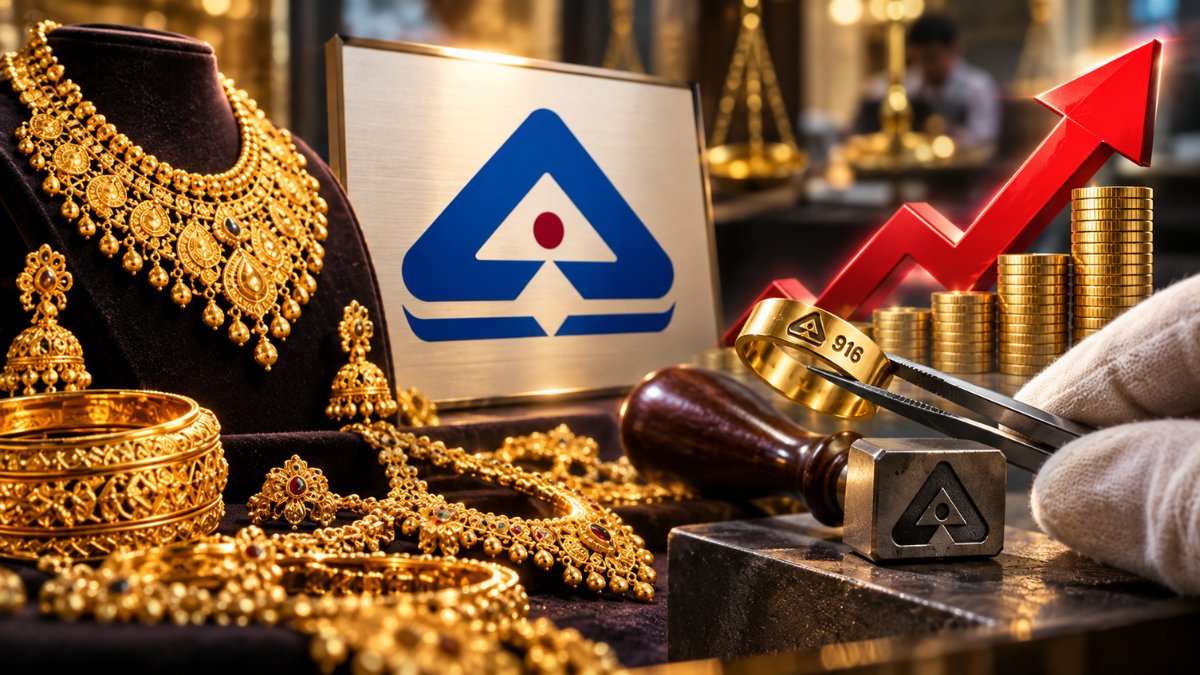
Just before the festive season, Karva Chauth, Dhanteras and upcoming weddings, a big policy news has come out from the gold and silver jewelery market. The Bureau of Indian Standards (BIS), the top government body that certifies the purity of gold in India, has made a major revision in the hallmarking fee on gold jewelery and artefacts. Under the official gazette notification of ‘Bureau of Indian Standards (Hallmarking) Amendment Regulations, 2026’ issued by BIS on 14 September 2026, the hallmarking fee per article of gold has been directly increased from Rs 45 to Rs 75. That means the cost of hallmarking on each jewelery has directly increased by Rs 30. On mathematical basis, this is a huge increase of 66.67 percent (about 67%) in the fee. The discussion about this decision has intensified among jewelers and jewelery buyers from Chowk and Aminabad Sarafa Bazaar of Lucknow, the capital of Uttar Pradesh, Birhana Road of Kanpur, Thatheri Bazaar of Varanasi, Noida, Meerut to Chandni Chowk of Delhi and Zaveri Bazaar of Mumbai.
On hearing the news of 67 per cent increase in hallmarking fees, a doubt has arisen in the minds of common consumers whether buying gold jewelery will now become more expensive? To understand this, it is important to look at the ratio of the charge per article and the total price of the jewellery. In the year 2022, BIS had increased the hallmarking fee per piece of gold jewelery from Rs 35 to Rs 45. Now after four years, in this amendment of 2026, it has been increased from Rs 45 to Rs 75 (+ applicable 18% GST).
A practical analysis of the impact of this increase on customer budget is as follows:
-
On purchase of ring or chain: If you get a 10 gram gold chain or ring made, the market price of which is currently around ₹ 70,000 to ₹ 75,000, earlier there was a hallmarking fee of ₹ 45. Now after the new rule, a fee of ₹ 75 will be charged on it. That means on jewelery worth ₹75,000 you will have to pay only ₹30 extra.
-
Upon purchase of the entire bridal set: If a family buys a heavy bridal jewelery set for a wedding, which includes a necklace, two jhumkas (earrings), a mangtika, two bangles and a nose ring—that is a total of 7 different articles. Earlier the total hallmarking charge on these 7 pieces was ₹315 (7 × ₹45). Now at the rate of ₹75 per article, this expense will be ₹525 (7 × ₹75). This means that on a heavy set costing around ₹4 lakh to ₹5 lakh, the total additional burden on the customer’s pocket will be only ₹210.
Simply put, in percentage terms an increase of 67% looks very large and aggressive, but given the current record gold prices, the impact on the overall value of an individual jewelery piece is less than 0.05%.
In the latest notification issued by BIS, complete relief has been given to silver lovers and artisans making silver jewellery. According to the new rules, there has been no change in the hallmarking fees of silver jewelery and artefacts. The fixed fee of Rs 35 for each article of silver will remain applicable as before. Additionally, the minimum consignment fee for silver consignment sent by jewelers to hallmarking centers will also remain the same at ₹150 as before. In the case of gold also, while giving relief to jewellers, BIS has not increased the minimum fee per consignment; Earlier also this minimum fee was ₹ 200 and even after the new amendment it has been kept at ₹ 200 only.
In this new system of hallmarking, not only the fees charged from jewelers have increased, but the royalty fees paid to BIS by the ‘Assaying and Hallmarking Centers’ (AHC) have also been revised. Recognized private hallmarking centers operating across the country pay a certain share to BIS when they conduct X-ray and chemical tests for the purity of a piece of jewellery.
-
AHC to BIS fees for gold: Earlier hallmarking centers used to pay ₹4.50 per article to BIS. Under the new notification, it has been increased to ₹ 7.50 per article, that is, there is a direct increase of ₹ 3 per article. For this, the minimum consignment fee has been kept constant at ₹20.
-
AHC to BIS fees for silver: There has been no change in the fees paid by hallmarking centers to BIS for silver jewellery; It will continue to be ₹3.50 per article and minimum ₹15 per consignment as before.
Representatives of the Hallmarking Association say that in the last few years, the cost of spectrometer machines, chemical testing materials (Chemicals/Acids), laser marking software and skilled labor had increased significantly. In such a situation, increasing the fees will improve the financial condition of hallmarking centers and they will be able to check the purity of jewelery more quickly and accurately with modern technical equipment.
The Central Government has imposed a complete ban on the sale of gold jewelery without 6 digit ‘Alphanumeric HUID’ (HUID – Hallmark Unique Identification) across the country from April 1, 2023. Whenever you buy a new hallmarked piece of jewelry from a jeweler, you should look for three major marks on it:
-
Standard Logo of BIS (BIS Triangular Logo): Triangular shaped official government mark.
-
Carat and Purity Mark: Like 999 for 24K, 22 carat gold 22K916for 18 carat 18K750 and for 14 carat 14K585.
-
6-Digit HUID Code (6-Digit Alphanumeric Code): A unique 6 digit code (e.g. AB12CD) is laser engraved on each piece of jewellery, which is the digital Aadhaar card of that jewellery.
Consumers can download the ‘BIS Care’ mobile app on their smartphones and go to ‘Verify HUID’ option and enter this 6 digit code. As soon as the code is entered, it becomes clear on the screen which jeweler made this jewellery, which hallmarking center certified it, what is its net weight and how many carats it is. With this, the possibility of any kind of adulteration or fraud in gold is 100% eliminated.
As per the strict guidelines of BIS, it is mandatory for any small or big jeweler in the country to indicate the hallmarking charges separately in the jewelery bill in a transparent manner. When you buy new jewellery, be sure to check these points on your invoice:
-
Clear entry on bill: The jeweler will have to show the gross weight and net weight of the gold, that day’s 22K or 18K gold price, making charges and hallmarking fees (now ₹75 + 18% GST = ₹88.50 per piece) as separate line items in the bill.
-
Different weights of stones: If you are buying jewelery studded with Kundan, Polki, diamonds or other stones, ensure that the weight of gold in the bill is different and the weight and value of the stones are different. Never let the weight of stones be compared to the price of gold.
-
GST rate: A total of 3 percent GST from the Central and State governments is applicable on the total price of jewelery (gold + making charges + hallmarking fees). The confirmed bill is the only valid legal proof of purity when exchanging, re-selling or taking a gold loan in the future.
This increase of ₹30 in hallmarking fees is technically a huge regulatory increase of 67%, but it is not a matter of concern for the common consumer. An additional charge of ₹30 on gold jewelery worth thousands and lakhs of rupees guarantees 100% government protection of your purity. This nominal extra amount ensures that there is not even 1 ratti adulteration in the hefty price of 22 carat gold you are paying for. Therefore, whenever you go to the bullion market in this festive season, without any hesitation buy only certified hallmarked gold with 6 digit HUID code and do not forget to get the confirmed invoice.