 look news india

India stands at the threshold of taking a huge economic leap in the changing times of global geopolitical equations and trade policies. After successfully implementing comprehensive free trade agreements (FTAs) with leading developed economies such as Australia, the UK and New Zealand, New Delhi is now very close to formalizing its most ambitious economic pacts with the European Union (EU) and Canada. According to information coming out from commercial and diplomatic circles, Prime Minister Narendra Modi is going on an official tour of Belgium and Canada in December 2026. During this historic foreign visit, there is a strong possibility that these two very important multilateral and bilateral trade treaties, which have been pending for a long time, will be finally signed. This strategic move will not only completely open the doors of western markets for the Indian manufacturing and services sector, but will also make India an indispensable hub of the global supply chain.
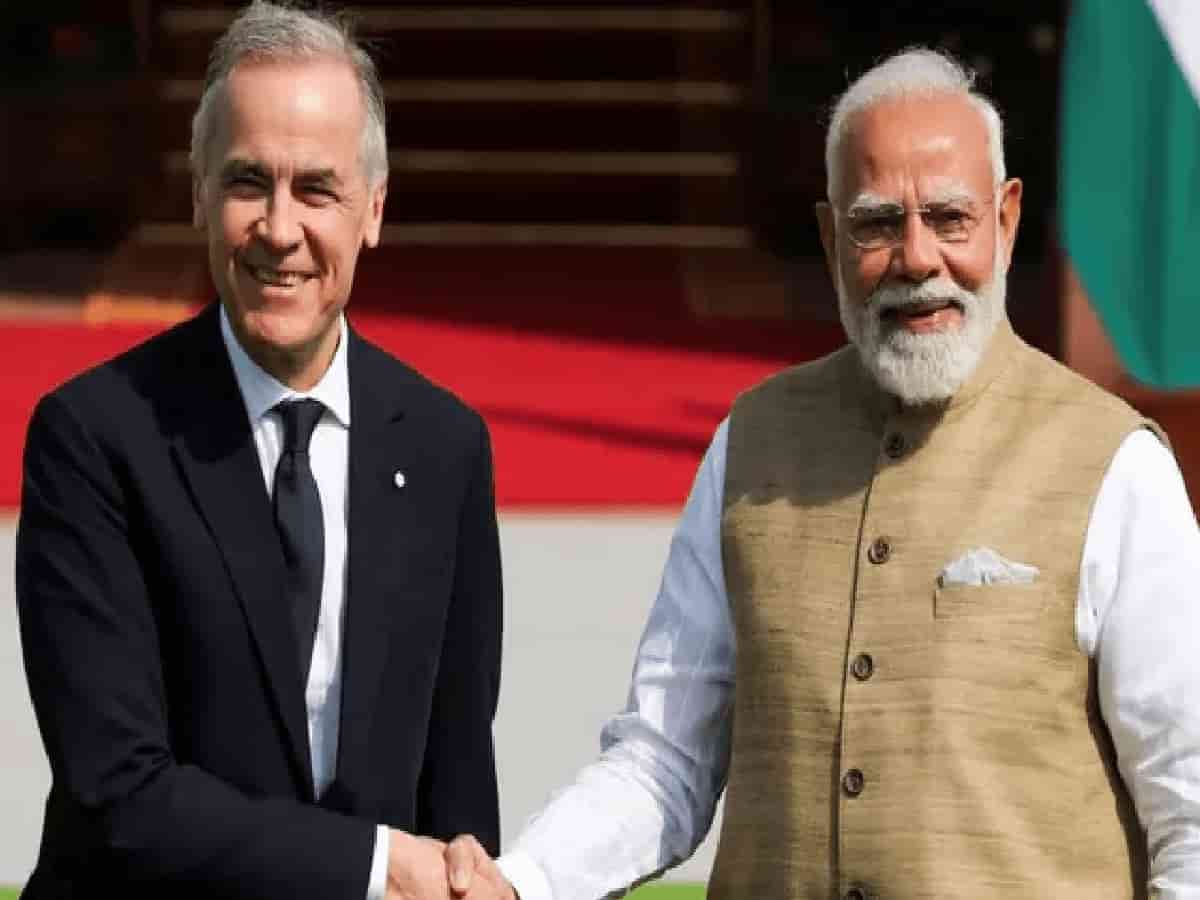
After the ups and downs in bilateral relations between India and Canada over the past few years, diplomatic and economic relations are now normalizing and strengthening at an unprecedented pace. Canadian Prime Minister Mark Carney himself has publicly announced that Indian Prime Minister Narendra Modi will pay an official visit to Canada in December 2026. The visit of an Indian Prime Minister to Canada for the second consecutive year is a living testimony of the reviving deep economic and trade trust between the two sovereign nations. There were several rounds of intensive negotiations between the two countries on the Comprehensive Economic Partnership Agreement (CEPA) from 2010 to 2017, but due to political deadlocks and differences in priorities, the process was put on hold for almost a decade.
After the new warmth in relations, the formal terms of reference for this dialogue were re-signed during the visit of Canadian Prime Minister Mark Carney to New Delhi on March 2, 2026 this year. Since then, negotiators from both sides have shown extraordinary promptness. In a short span of just seven months, four rounds of high-level marathon talks have been completed. Union Commerce and Industry Minister Piyush Goyal had recently indicated that the next three months would prove to be historically decisive for India-Canada trade relations. A fifth round of talks is being held on Canadian soil in the first week of October to finalize the remaining technical aspects of the agreement, paving the way for signature at the top leadership level in December.
On the other hand, India’s proposed free trade agreement with the EU is going to be one of the largest agreements in modern global trade. In line with the latest strategic input received from Brussels, the European Commission has, after extensive consultation, presented the draft agreement to the European Council for signature and formal approval. The most notable achievement was that all the 27 member countries of the European Union have given their unanimous support to this historic treaty with India. Belgian Prime Minister Bart de Wever has sent a formal state invitation to Prime Minister Narendra Modi to visit Brussels in December 2026, where the mega treaty will be signed in the presence of the top leadership of both sides.
The history of trade negotiations between India and the EU has been quite complex and checkered. The two sides first started bilateral talks on trade and investment in 2007, but talks broke down completely in 2013 due to serious differences on sensitive issues such as market access, intellectual property rights and agricultural subsidies. After a pause of almost a decade, these talks were restarted in July 2022 in a new geo-economic perspective. Ultimately, in January 2026, both sides formally announced the outline of the treaty, removing all major impasses. Now full technical and legal agreement has been reached on all the chapters of the treaty. After this signing in December, the approval of the European Parliament and the internal legislative processes of India will be completed, due to which this mega agreement will be fully implemented in the year 2027.
According to economic data shared by the Ministry of Commerce and Industry, the India-EU FTA will create a common market representing nearly 200 crore citizens of the world’s total population and more than 25 per cent of the global gross domestic product (GDP). The most revolutionary feature of this agreement is that the EU will either completely eliminate (zero duty) or reduce customs duty to the lowest level on approximately 99 percent of the total trade value of Indian goods.
Labour-intensive sectors of India such as textiles and garments, leather and footwear industries, gems and jewellery, processed sea-food, pharmaceuticals, organic chemicals and toy manufacturing industries will directly benefit from zero or negligible duty from the day one of the agreement comes into effect. Currently, these Indian products had to face tough competition in the European markets from countries like Vietnam and Bangladesh, which enjoyed duty-free treatment there. After this historic treaty, the competitive edge of Indian products will increase manifold, which will create millions of new jobs in the manufacturing sector of the country.
While balancing bilateral trade, India has also agreed to open up its huge consumer market to EU exporters in a phased manner. Under the provisions of the agreement, India will implement tariff reduction on about 96 to 97 percent of industrial and technical goods of the European Union in a phased manner. This reduction will be done gradually within a stipulated time frame so as to protect Indian domestic manufacturers and Micro, Small and Medium Enterprises (MSMEs) from any sudden shocks or unequal competition.
This arrangement will provide India with high-end European manufacturing machinery, cutting-edge technology, precision medical equipment and green energy solutions at affordable rates, which will help in accelerating the ‘Make in India’ campaign domestically. Strategic analysts believe that this dual trade agreement with the EU and Canada will set India’s global trade policy to a new height and accelerate the country’s national goal of making it a $5 trillion economy.