 look news india

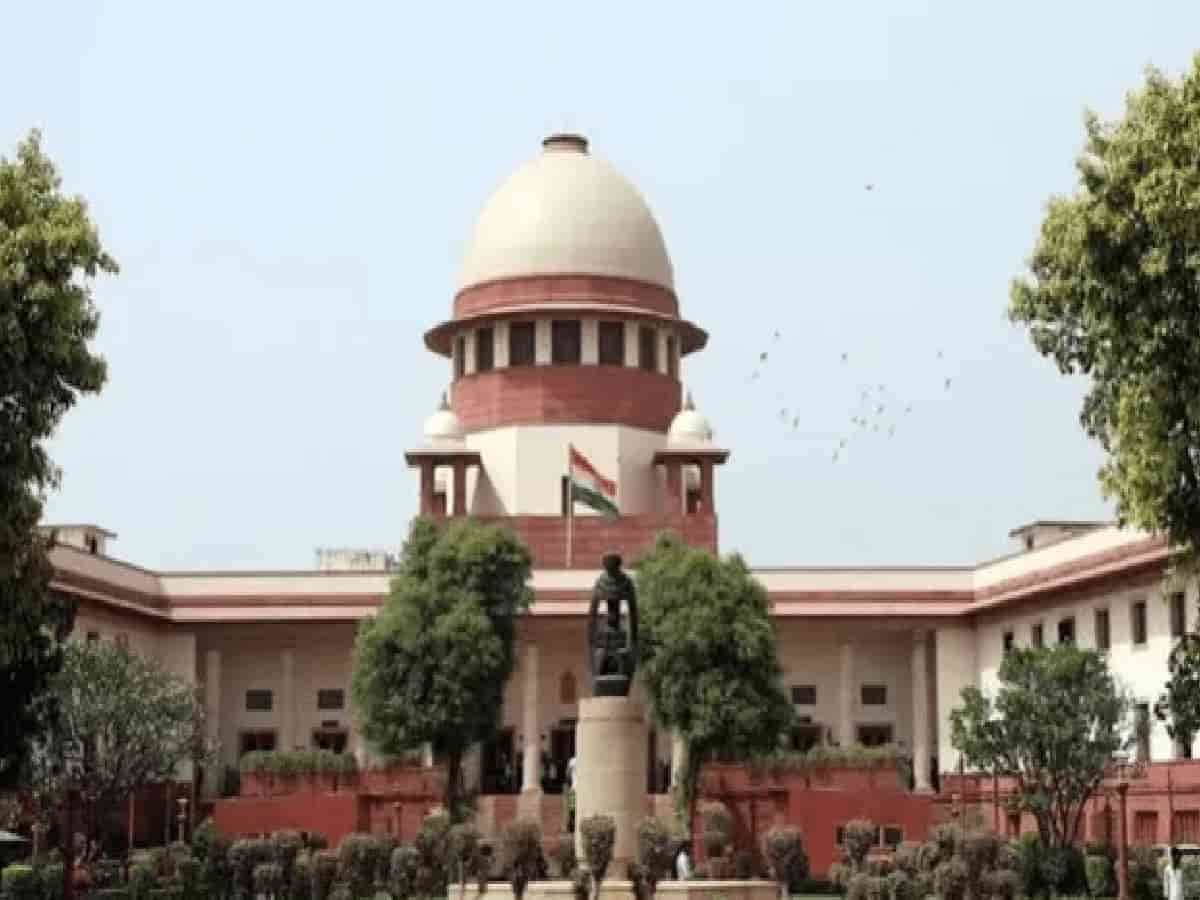
Amidst the ongoing public debates regarding the appointment process of judges in the country’s Supreme Court and the Collegium System, Supreme Court Justice Dipankar Dutta has made a very important and blunt comment. He rejected the widespread perception and narrative that often claims that in the Indian judicial system, only ‘judges appoint judges’. While presenting the detailed constitutional context of the judicial appointment process, Justice Dutta made it clear that on the actual ground, the role of the judiciary in the appointment of judges is secondary to that of the executive (government).
In this statement quoted by news agency PTI, Justice Dutta expressed deep surprise that when the executive already has such wide powers, veto and final approval powers in the entire selection and appointment process, then why is the demand for inclusion of an outsider or non-judicial representative in the initial stage of the selection process constantly raised. He termed the government’s demand for presence of an outsider in the collegium as a weak attempt to divert attention from the executive’s own administrative shortcomings and failures.
Justice Dipankar Dutta, while factually replying to the allegations of the Collegium ‘running the law as per its wish’, placed before the public the entire procedure of appointment of judges. He said that before the name of any lawyer or judicial officer is recommended by the collegium of the High Court or the Supreme Court, there is a very stringent and multi-layered investigation of several stages. In this process, the concerned state government, the law ministry of the central government, the Intelligence Bureau (IB) and other relevant investigating agencies conduct a thorough investigation into the background, character, financial integrity and professional integrity of the candidate.
Until positive reports come from the Intelligence Bureau and the Home Ministry, no formal consensus is reached on any name. Thereafter, the final signature and warrant is issued by the President of India on the recommendation of the Collegium to the Cabinet of the Central Government and the Prime Minister’s Office. Without the formal and constitutional consent of the President of India, it is not possible to appoint a judge of any High Court or Supreme Court in the country. In such a situation, to say that the entire process is limited only to a closed-door decision of the judges is like distorting the facts.
The Supreme Court judge also openly expressed concern over the attitude of the executive in which the recommendations sent by the collegium are implemented selectively (cherry-picking). Justice Dutta said that it is seen time and again that instead of approving the entire panel of names sent by the Collegium, the executive implements decisions as per its choice and almost every time withholds at least one or two names without any solid reason.
He also revealed that despite this selective approach by the executive, the judiciary has at times shown practical flexibility to avoid direct constitutional confrontation and to keep the judicial structure functioning smoothly due to vacancies in courts across the country. The Collegium takes the decision to proceed in such cases so that no serious constitutional crisis or deadlock arises in the country and there is no hindrance in getting speedy justice to the general public. He reiterated that this dignified silence and institutional wisdom of the judiciary should not be considered its weakness.
Justice Dipankar Dutta, while strongly attacking the tendency of criticizing the collegium system in public discourse and media, said that in today’s era, it has become a kind of fashion to put the entire collegium system directly in the dock for any adverse or wrong decision of the judiciary. Critics and analysts too easily forget the basic truth that in any democratic system mistakes are always exceptions, they are not a general rule.
He said that no system or institutional structure in the world can ever guarantee that human decisions are hundred percent infallible or error-free. If in any one case a person does not live up to his responsibilities, it cannot be taken to mean that the entire selection system is flawed. This half-truth has been deliberately spread among the public that the Supreme Court and High Court judges make appointments only on their own discretion, whereas the truth is that it is impossible for any person to reach the bench of the court without detailed scrutiny and final constitutional recommendation by the executive.