 look news india

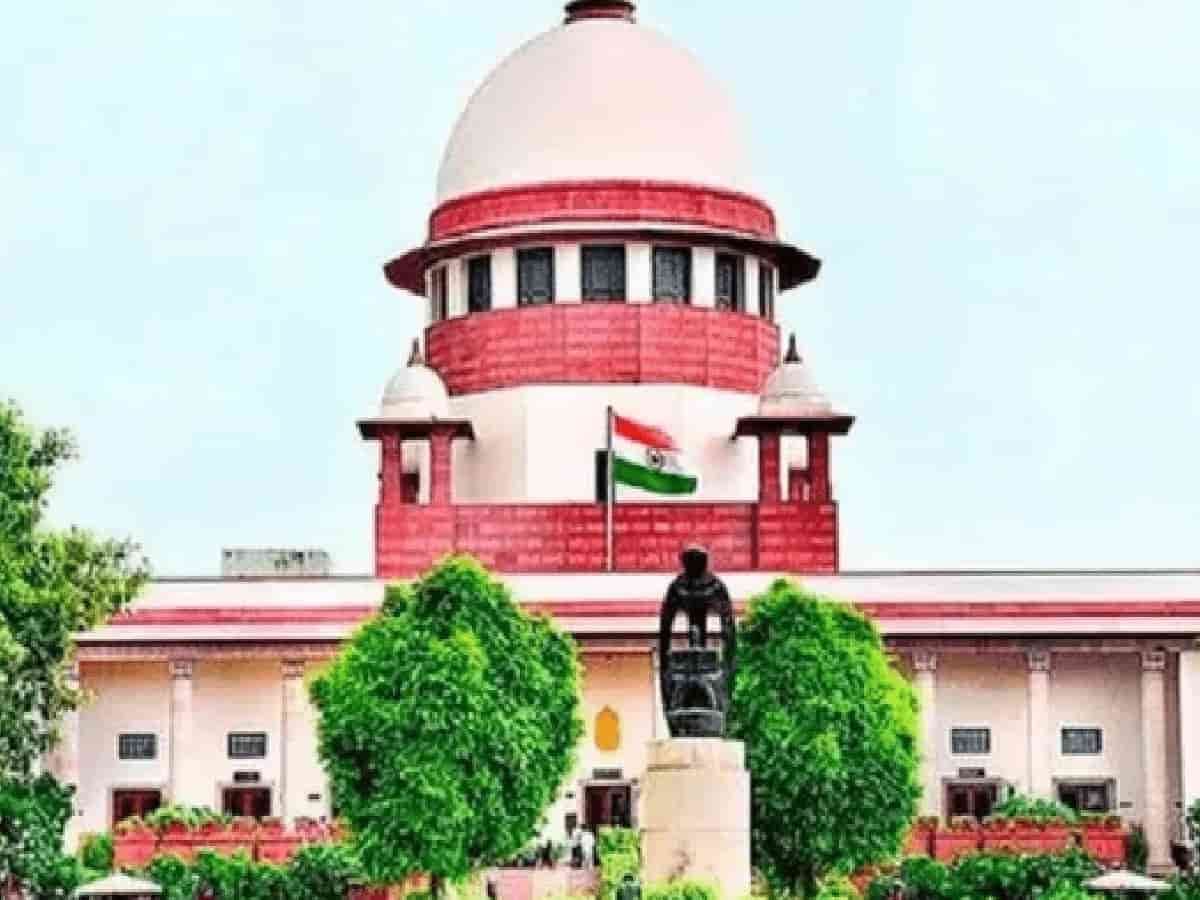
The country’s top court has expressed strong and serious concern over the pendency of extremely sensitive cases related to constitutional interpretation and fundamental rights for years. Two senior judges of the Supreme Court—Justice Dipankar Datta and Justice Satish Chandra Sharma—have taken a strong stance on this systemic laxity, terming it ‘Institutional Embarrassment’. Recording its opinion on petitions challenging the validity of the law relating to the appointment process of the Chief Election Commissioner (CEC) and Election Commissioners (EC), the bench made it clear that non-timely disposal of important legal questions related to the interpretation of the Constitution directly affects the democratic system. The court clearly acknowledged that the time has come when the judiciary is in dire need of serious introspection on its functioning.
Both the judges have made a very historic and systemic request to the Chief Justice of India (CJI). The bench has recommended that serious consideration be given to constituting a ‘Permanent 5-Judge Constitution Bench’ for expeditious disposal of constitutional questions, validity of laws and policy references in the Supreme Court. In the present system, whenever a case is referred to a larger bench, ad-hoc benches are formed based on the roster and availability of judges, due to which many years elapse before the first hearing of the cases begins. With the coming into existence of a permanent bench, it will be possible to resolve constitutional matters regularly and without any unnecessary interference.
To prove their serious concern with logical and irrefutable data, Justice Dipankar Dutta and Justice Satish Chandra Sharma gave detailed examples of two much-discussed historical cases of the Supreme Court. The bench first referred to the case ‘Anup Baranwal vs Central Government’, in which a writ petition was filed under Article 32 of the Constitution in 2015 seeking reform in the appointment system of the Election Commission. It took three years for this petition to be sent to a Constitution bench of five judges and this reference was sent in 2018. After this, a long time of five years passed before the Constitution Bench conducted a detailed hearing and gave its final verdict. Thus a matter of utmost fundamental and democratic importance took a full eight years to reach a decision, after which Parliament passed the Election Commissioners Appointment and Conditions of Service Act 2023.
Apart from this, the bench reminded the historical dispute of ‘Uttar Pradesh vs. Jai Bir Singh’, which is an unprecedented example of delay in the justice system. The first reference in this case remained in cold storage for almost 15 years since 2002. Subsequently, the reference made by the seven-judge Constitution bench took a long time of nine years to reach the larger bench of nine judges, and after the formation of the nine-judge bench, it took another five months for the decision to come. Thus more than two decades were spent merely in the transfer of judicial references from one bench to another. The bench said that when this is the pace of decisions in the highest court of the country, then the apprehension and nervousness of the petitioners seems completely justified and natural that the cases sent to the five-judge bench will remain undecided for many years.
The judges of the Supreme Court underlined in no uncertain terms that the first and primary statutory obligation of this court and its judges is to provide impartial, speedy and authentic resolution of constitutional questions. This core function cannot be secondary under any circumstances and must always remain the highest priority of the Court. The judges said in a very strict tone that any case being pending for more than five years, ten years or twenty years without any concrete decision is in no way compatible with the dignity, decorum and reputation of this great judicial institution.
The court said that if the past statistics of the judiciary are taken as a guide, then today no person, legal expert or petitioner can predict with confidence when a case referred to a larger bench will be heard and when its final solution will emerge. The bench said that this endless delay in cases defeats the very concept of justice. Therefore, now the turning point has come when the Supreme Court will have to solve this institutional disease with the same urgency, seriousness and promptness that it demands constitutionally.
In the concluding section of their order, Justice Dutta and Justice Sharma laid special emphasis on the fact that whatever legal issues come up for consideration before a Constitution Bench of five judges or larger, they are not personal civil disputes of any two parties, but they are related to the democratic structure of the country, parliamentary sovereignty and the existence of fundamental rights of crores of citizens. Delay in decision on such issues has a direct impact on the rights of the legislature, executive and general public of the country. Until the Constitution Bench gives its clear opinion on any law, there remains an atmosphere of policy uncertainty in the country.
The bench expressed its hope and conviction that the present reference relating to the process of appointment of the Chief Election Commissioner and Election Commissioners will not have to suffer a long and endless wait of years like those earlier cases. The judges expressed confidence that the CJI, keeping in mind the sensitivity of the matter and future constitutional crises, will take concrete and historic steps towards the formation of a permanent Constitution Bench, so that the credibility of the Indian judiciary, its constitutional commitment to transparency and delivery of speedy justice remains intact.