 look news india

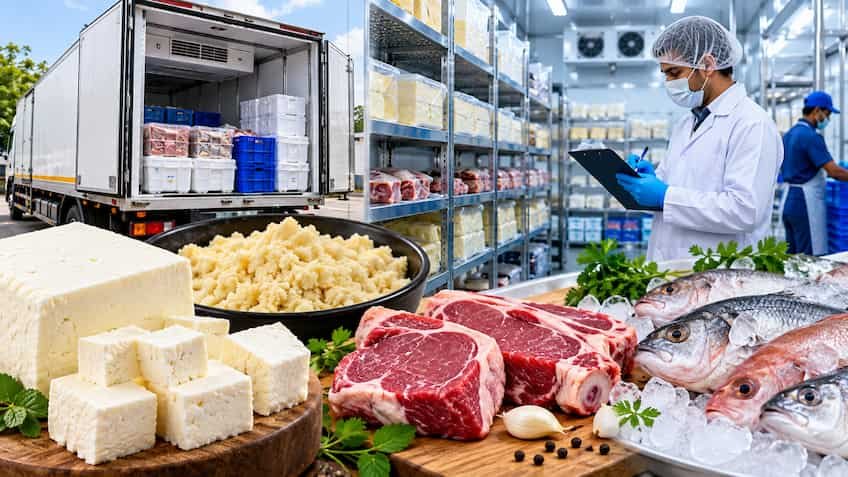
During the festive season of Dussehra, Dhanteras, Diwali and Chhath, the demand for milk products, sweets and non-vegetarian food items skyrockets. Taking advantage of this huge demand in the market, the dirty game of adulteration and poor maintenance also starts. To curb this, the Food Safety and Standards Authority of India (FSSAI) has taken a tough stance and issued a comprehensive and very strict advisory. The authority has given clear instructions that no negligence will be tolerated in the handling, cold chain storage, transportation and sale of perishable food products like khoya (mawa), cheese, fresh meat and fish. If any violation of prescribed standards and temperature control is found, strict legal action including heavy fine, immediate confiscation of goods and imprisonment up to 6 months will be implemented under the Food Safety and Standards Act 2006.
It is often seen that khoya and cheese are transported hundreds of kilometers from wholesale markets to retail markets in simple sacks or open boxes without any temperature control. Similarly, meat and fish are sold in the open without ice or deep freezer. FSSAI has warned that due to lack of temperature control in such sensitive products, harmful bacteria and microorganisms start growing at lightning speed. Due to this, the risk of food poisoning and serious infectious diseases increases manifold, which directly compromises the health of the general public.
In the latest guidelines issued by the authority, the biggest emphasis has been given on maintaining ‘end-to-end cold chain’. It has been made clear to food businessmen (FBOs) that merely installing a fridge or deep freezer in their shop or main warehouse will not be enough. It will be mandatory to maintain the prescribed temperature at every stage from manufacturing or purchasing of the product to transportation, loading-unloading and final delivery to the consumer.
Under the guidelines, dairy products like paneer and khoya will always have to be stored and transported at a temperature of 4 degrees Celsius or less. For frozen meat and fish, it is mandatory to maintain a controlled freezing temperature of -18 degrees Celsius or below, while for transportation of fresh meat and fish, adequate layer of crushed ice and insulated boxes will have to be used. If during inspection the temperature of the product in any vehicle or warehouse is found to exceed the prescribed limit, that consignment will be immediately declared unsafe for human consumption.
FSSAI has also set strict rules regarding packaging of food items. Often, khoya and paneer coming from rural or town areas are sent wrapped in old jute sacks, dirty plastic bags or newspapers. Under the new advisory, the use of non-food-grade packaging material has been completely banned.
Businesses will now have to use only certified ‘food-grade’ containers, butter paper, vacuum packaging or food-grade plastic trays that do not have any chemical reaction with food items. Additionally, the products must be completely protected from exposure to dust, moisture, insects, direct sunlight and other chemicals during transportation. To prevent cross-contamination, transportation of raw meat and cooked goods in the same vehicle without sealed partitions is strictly prohibited.
According to the advisory, transportation of khoya, cheese, meat and fish can be done only in vehicles which are fully covered, insulated or refrigerated. Carrying these sensitive food items without covering them in an open auto, tractor-trolley, bike or in a normal pickup van will be considered a legal offence. Regular washing, sanitization of the vehicle and maintaining its hygiene records will be the joint responsibility of both the vehicle owner and the dealer.
Additionally, the authority has made ‘traceability’ mandatory. Traders will have to maintain detailed records of each consignment, including where the goods were purchased, its production date, batch number, name of the transporter and copies of bills. Whenever the food safety officers arrive for inspection, the trader will have to immediately submit complete details of purchases and sales. If the bill or valid proof of source is not found, the material will be considered suspicious or synthetic (fake) and will be confiscated directly.
In view of the upcoming festive season, FSSAI has directed the Food Safety Commissioners of all States and Union Territories, Indian Railways and all its Regional Directors to be on high alert. Special flying squad teams are being deployed for surprise inspections at interstate borders, major railway stations, bus stands and wholesale markets.
If any violation of rules is found, immediate action will be taken under various sections of the Food Safety and Standards Act, 2006. The entire stock found unsafe will be seized on the spot and destroyed with bulldozers, so that it cannot reach the market. Along with this, a criminal case will be registered against the concerned guilty businessman, in which apart from heavy financial fine, there is also a clear provision for imprisonment.
The authority has also appealed to the common citizens to be aware and alert customers during festive shopping. While buying sweets, cheese or meat, pay attention to the cleanliness of the shopkeeper and the temperature of the store. Avoid loose khoya or paneer available at very cheap prices, as there is a high risk of them being adulterated with detergent, starch, urea or refined oil.
Always buy from FSSAI registered or licensed establishments and always ask for a confirmed bill. If you see rotten food being sold in the open or gross lack of hygiene in any shop, dairy or vendor, then you can immediately register your complaint on FSSAI’s ‘Food Safety Connect’ portal or the state’s food safety helpline number.