 look news india

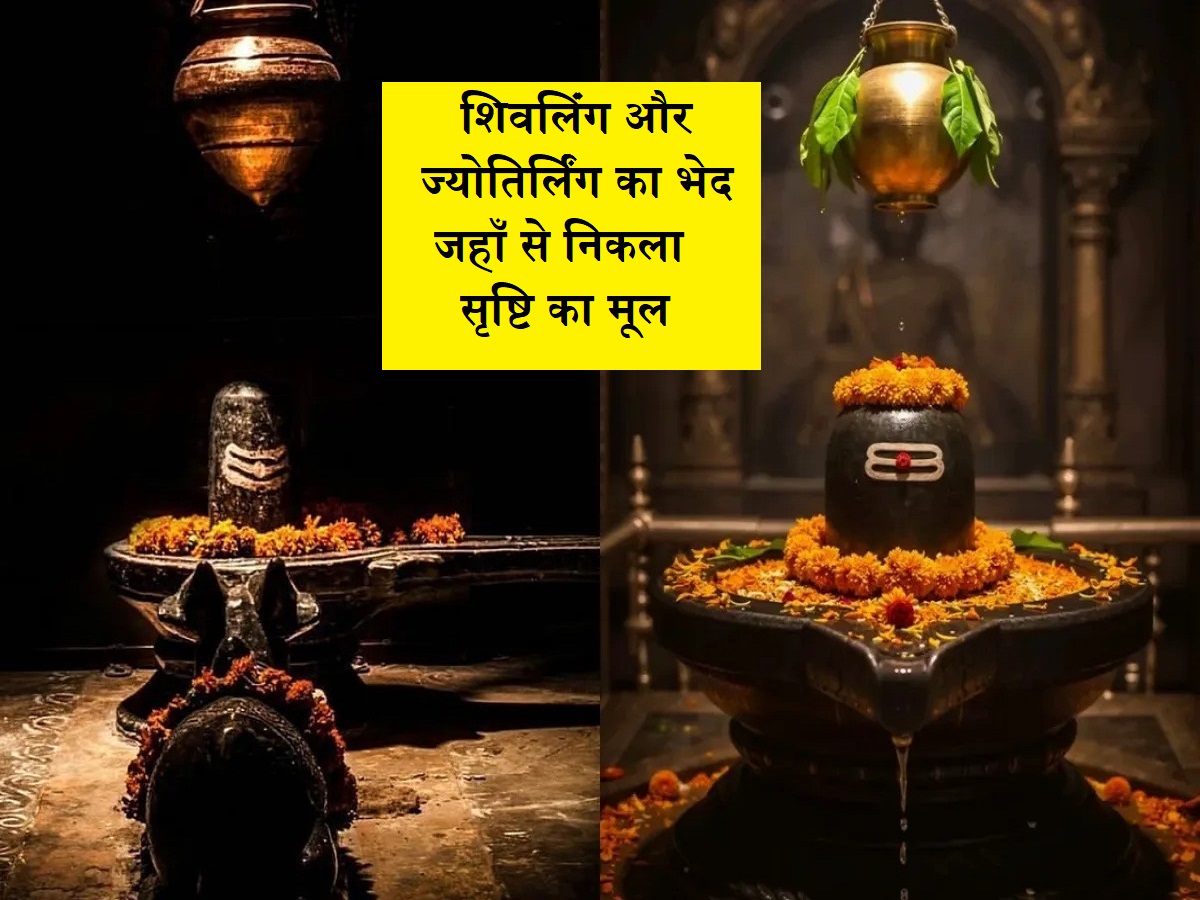
News India Live, Digital Desk: There is often a situation of curiosity and some confusion among the people about two major forms of Lord Shiva, Shivling and Jyotirlinga. Although both these are a symbol of the highest power of Lord Shiva and his immense energy, but there are some subtle differences in their meaning, origin and importance which are necessary to understand. The first thing talks about Shivling. Shivalinga reflects the formless form of Shiva, that is, the form that is neither adi nor end. It is considered a symbol of the creation, adherence and destruction of the universe. The Shivling can be installed anywhere and it can be worshiped anywhere with devotion, whether it is a temple of the house, a public place or a cave. It can be made from various substances such as soil, stone, metal, mercury or rhinestones. It is actually a symbol of the latent form of Lord Shiva, through which devotees meditate on his immense qualities. Now come to Jyotirlinga. Jyotirlinga represents the ‘light column’ or ‘Agni Pillar’. It is many times more special and revered than ordinary Shivling. In Hinduism, 12 major Jyotirlingas are mentioned, which are spread across India and are the major pilgrimage sites for Shiva devotees. Their specialty is that they themselves are considered to be manifested, that is, they were not established by humans but with divine power to emerge on the earth itself. They are considered highly powerful and energetic. Behind the origin of these Jyotirlingas is a legend described in the Shiva Purana. Once, a debate broke out between Brahma and Palak Vishnu, the author of the universe, which of the two is superior. When his dispute increased, Lord Shiva appeared as a huge and endless Jyotirmaya (light) gender. There was no beginning nor end of this fireplace. Shiva asked both the gods to find its ends. Brahma tried to find the upper end by taking the form of a swan, while Vishnu took the form of Varaha in search of the lower end. Even after traveling for a thousand years, both of them could neither find it etc. nor end. Then he accepted the highest form of Shiva. It is believed that 12 Jyotirlingas appeared on Earth as a symbol of this fire, which reflect the supremacy and eternal-infinite form of Lord Shiva. These twelve places are still considered to be the evidence of the divinity of Lord Shiva and his own appearance. In the intervention, every Shivling is a symbol of Lord Shiva, but not every Shivling is Jyotirlinga. Jyotirlinga is a self -published, divine and extremely powerful form of Shiva which is associated with his cosmic emergence, while Shivling is a common symbolic presentation. The worship of both gives us the blessings of Lord Shiva, just their mythological basis and energy levels are different.