 look news india

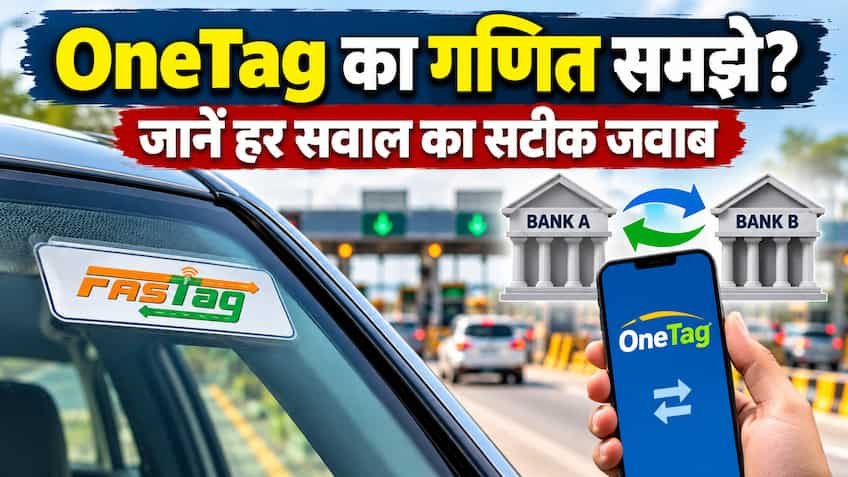
The toll collection system for crores of drivers traveling on the country’s national highways and expressways is standing on the threshold of a new and major technological change. Among the recent initiatives of the Ministry of Road Transport and Highways (MoRTH) and National Highways Authority of India (NHAI) ‘OneTag’ The discussion has started rapidly.
Since the announcement of this new system, there are many questions and confusions in the minds of common drivers – will the existing Fastag become completely useless? What will happen to the money lying in the old bank wallet? Will I have to buy a new chip or sticker? If you are also in the same dilemma, then understand the complete mathematics of OneTag and its ground impact here in easy and simple language.
At present FASTag system is implemented in the country, which is issued by various banks (like SBI, ICICI, HDFC, Paytm Bank etc.). The biggest problem seen in this system was that many people tried to use the same Fastag in multiple vehicles, or got different Fastags issued by different banks on the same vehicle. This led to errors in Radio Frequency Identification (RFID) readers at toll plazas and long queues of vehicles.
To make it completely transparent, the government has upgraded the ‘One Vehicle, One FASTag’ rule. OneTag An integrated framework has been prepared.
In simple words, OneTag is not rocket science, rather it is a centralized and streamlined identification system. In this, each vehicle’s registration number (RC), chassis number, vehicle owner’s Aadhaar/identification and bank account will be directly mapped (linked) permanently to a single central national database. That means only one active tag will work on one vehicle and there will be no scope for duplication.
The biggest concern of most drivers is what will happen to the ₹500, ₹1000 or security deposit deposited in their existing Fastag wallet.
The guidelines of National Payments Corporation of India (NPCI) and banks are completely clear regarding this:
-
Money will not sink anywhere: The balance in your old FASTag wallet or linked bank account is 100% safe.
-
Automatic Migration/Linkage: Under the new OneTag architecture, if your existing Fastag is completely updated and linked to a single bank, your same balance will automatically start appearing in the new system.
-
Wallet closure and refund: If due to any technical change you have to deactivate your old Fastag and get a new OneTag, the remaining wallet balance and security deposit will be credited back to your primary bank account (Savings Account) within 3 to 7 working days as soon as you visit the app or portal of the old issuing bank and select the option ‘Close Fastag’.
The process of switching to the OneTag system or activating it for a new vehicle has been made highly transparent and digital:
-
Step 1: Single Tag Verification: First of all, check that only one bank’s active Fastag is installed on the windshield of your vehicle. If an invalid or blacklisted tag of any old bank is stuck, remove it immediately.
-
Step 2: Central Vehicle Mapping: The vehicle owner’s registration number will be directly linked with the OneTag ID from the database of the ‘VAHAN’ portal.
-
Step 3: Direct Linkage to Bank Account: OneTag will have the option to link it directly to your main bank account or UPI auto-pay to eliminate the hassle of repeatedly recharging the wallet. As soon as you cross the toll, the prescribed amount will be deducted directly from the account.
-
Step 4: Ready for GPS/Satellite Tolling: This new OneTag framework will also serve as the base platform for ‘Global Navigation Satellite System’ (GNSS) based barrier-less toll collection to be implemented in future.
Millions of drivers traveling on major expressways of Uttar Pradesh—such as Agra-Lucknow Expressway, Purvanchal Expressway, Bundelkhand Expressway, Yamuna Expressway—and Delhi-Meerut Expressway and Eastern Peripheral Expressway will greatly benefit from OneTag.
It is often seen that at Chinhat or Itaunja toll plaza of Lucknow, or at the border toll booths of Noida-Ghaziabad, a situation of dispute arises due to the scanner not reading the tag and there is a fear of getting double the toll. Through OneTag’s high-speed data syncing, the vehicle stopping time at the toll booth will be reduced from zero to 2 seconds, which will provide great relief from the problem of traffic jam during festivals and peak hours.
If you want to avoid any kind of confusion or fine at toll plaza, check these 3 things today:
-
Check KYC Status: Visit the National Payments Corporation of India (NPCI) portal or your respective bank’s app to check whether the ‘Fastag KYC’ of your existing tag is complete or not. In case of incomplete KYC, the tag may become inactive immediately.
-
Delete multiple tags: If you have purchased an old car or previously had a tag from another bank, ensure that the old tag is permanently surrendered at the bank level.
-
Correct placement on the windshield: Always place the tag on the inside, right behind the rear-view mirror, in the center of the mirror, so that the new sensors at the toll plaza can scan it the first time.