look news india

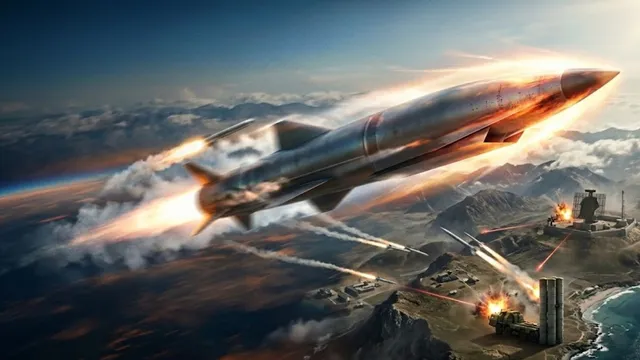
Military technology and rules of war are changing very rapidly around the world. Now the script of future wars is being written not on the ground or in the normal sky, but on the basis of hypersonic weapons. Defense experts clearly believe that in the coming time, only that country will emerge as a superpower in global politics and battlefield, which will have the power of infallible hypersonic missiles. Because of its stormy speed of more than five times the speed of sound, its astonishing ability to change direction suddenly during flight and its ability to dodge even the world’s most modern radar, it is being called the ‘Brahmastra’ of this century. The biggest thing is that even the most modern air defense systems of the biggest countries present in front of them appear completely helpless and helpless.
The power of supersonic was shown in Operation Sindoor, now enemy countries will tremble at the speed of Mach 5.
Recently, in India’s very secret and successful ‘Operation Vermillion’, the entire world had closely watched the destructive capability of the supersonic BrahMos Missile. This missile, which flew at a speed of about three times the speed of sound i.e. about 3700 kilometers per hour (Mach 3), had proved that it was almost impossible to intercept such high-speed weapons. Now just think, what will happen if this speed increases to Mach 5 i.e. more than 6100 kilometers per hour? According to defense experts, at this astonishing speed, no existing defense technology in the world can even think of stopping these missiles on their way.
Why are hypersonic weapons so dangerous? Understand its two main categories
Hypersonic missiles are completely different from conventional ballistic missiles in terms of their speed and technology. These are mainly classified into two most deadly categories. The first category is ‘Hypersonic Glide Vehicle’ (HGV), which is carried to the limit of space with the help of a powerful rocket, after which these missiles glide at extremely high speed and in a zigzag (irregular) manner and directly destroy their target. The second category is ‘Hypersonic Cruise Missile’, which, thanks to the advanced scramjet engine, continuously maintains hypersonic speed within the atmosphere. Normal ballistic missiles move on a fixed path (parabolic path) which makes them easy to track, but hypersonic weapons fly at low altitude and change their path in the air, due to which radars cannot see them.
Air defense system loses its cool, commanders will have only 9 seconds to take a decision
Hypersonic missiles are a nightmare for any country’s air defense commander. If a missile is flying close to the land or sea surface, ground radar can detect it only at a distance of 15 kilometers due to the curvature of the Earth. At supersonic speed of Mach 3, air defense systems get about 15 seconds to respond. But at hypersonic speeds above Mach 5, the missile covers this distance of 15 kilometers in just less than 9 seconds. It is impossible for a computer or commander to take a decision in such a short time, and the biggest challenge is that most of the interceptor missiles in the world themselves have a speed of less than Mach 5, so they cannot even touch them.
The toughest challenge of extreme temperature and pressure, the most complex cocktail of engineering
Developing hypersonic technology is one of the most complex scientific tasks in the world. When a missile moves through the air at a speed of Mach 5 or more, friction creates extreme temperatures (thousands of degrees Celsius) and severe atmospheric pressure on its exterior. The world’s normal metals are of no use to protect the missile from melting due to this intense heat. This requires very special and rare metals, advanced composite materials and modern cooling systems, in preparing which superpowers like America, Russia and China are spending billions of dollars like water.
DRDO’s big bang: 5 secret projects of India including ‘BrahMos-II’ and ‘HSTDV’
In this era of technological challenges, India is also not behind anyone. Indian Defense Research and Development Organization (DRDO) has doubled its pace on several hypersonic projects including ‘Sudarshan Chakra’ air shield to make the country’s security impenetrable. Recently, DRDO has surprised the global defense world by successfully testing an actively cooled full-scale scramjet combustor continuously for 20 minutes. India is currently working on a total of five most important and destructive hypersonic weapons:
-
HSTDV (Hypersonic Technology Demonstrator Vehicle): This indigenous scramjet vehicle of India has already shown its strength by achieving an incredible speed of Mach 6 during testing.
-
BrahMos-II: Being built in collaboration between India and Russia, this will be the world’s most dangerous hypersonic cruise missile, whose estimated speed will be more than Mach 7.
-
Dhwani Glide Vehicle: India’s own indigenous hypersonic glider project to achieve long-range strategic strike capability.
-
LR-AShM (Long Range Anti-Ship Missile): A missile is being prepared to sink the enemy country’s giant warships and aircraft carriers in the ocean in a moment.
-
ET-LDHCM (Electric-Target Long Range Hypersonic Cruise Missile): Secret missile technology being developed to deliver precise and accurate surgical strikes on enemy targets at extremely long ranges.