 look news india

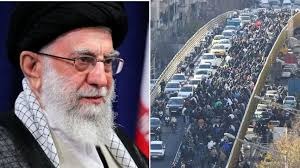
News India Live, Digital Desk: Reza Pahlavi, son of the former Shah of Iran and leader living in exile, has described the death of Ayatollah Khamenei as a turning point in Iran’s history. He appealed to the international community, and especially the Iranian security forces, to help ensure an orderly and peaceful transition of power at this critical time.
Reza Pahlavi’s main message: “Now there will be a new dawn”
Addressing the Iranian public through social media, Pahlavi said that the decades-old religious dictatorship is now in its final stages. He clarified that:
Power in the hands of the people: The next successor to the regime should not be a religious leader, but a democratic government elected by the Iranian people.
No sense of revenge: He has appealed to the citizens to maintain peace and not take the law into their hands.
Direct challenge to Iranian Army and Revolutionary Guards (IRGC)
In a very strategic move, Reza Pahlavi addressed Iran’s army and police. He said:
“Your oath is to protect the country, not any one person or ideology.”
He appealed to security forces not to open fire on protesters and act as a ‘safety net’ during the fall of the regime.
He also hinted at amnesty to those officers who would show courage in standing with the public.
What is the roadmap for ‘Stable Transition’?
Pahlavi has suggested the formation of a ‘Transitional Council’, which would do the following:
Free Elections: To conduct fair elections under the supervision of international observers.
Rewriting the Constitution: To create a constitution which is based on human rights and secularism.
Salvation of the economy: Dialogue with Western countries to lift sanctions and bring back global investment.
Seeking support from the international community
Reza Pahlavi has appealed to America, European Union and neighboring countries to support the Iranian people during this ‘transition’. Praising President Donald Trump’s tough stance, he said the time has come for the world to be ready for a ‘free and democratic Iran’.