 look news india

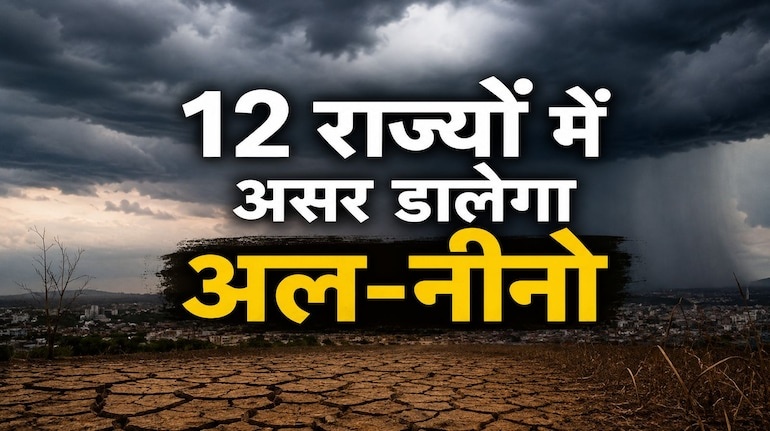
Amidst the slowing down of monsoon in the month of June, the dreaded shadow of El-Nino has started looming over the Indian agricultural sector. It is expected to have the most serious and adverse impact on 12 major states of the country from Uttar Pradesh to Maharashtra. The Union Agriculture Ministry has become fully alert to deal with this possible agricultural crisis and to save Kharif crops from the effects of drought.
Meanwhile, Union Agriculture Secretary Atish Chandra told in an exclusive interview to news agency PTI that the Central Government End of June 2026 Awaiting the upcoming new and detailed forecast of the Indian Meteorological Department (IMD). Only after this final report will the exact timeline of entry of El Nino be clear, on the basis of which the Ministry will approve its final strategic plans.
From UP to Maharashtra: These 12 affected states come on the radar of El Nino
The Agriculture Ministry has identified 12 states of the country that are mainly dependent on ‘rain-fed agriculture’, where drought or extremely low rainfall due to El Nino can have the most devastating impact. Following is the list of these states:
-
Uttar Pradesh
-
Bihar
-
Jharkhand
-
Madhya Pradesh
-
Maharashtra
-
Rajasthan
-
Gujarat
-
Odisha
-
Andhra Pradesh
-
Telangana
-
Karnataka
-
Tamil Nadu
326 districts at high-risk; Special ‘Contingency Plan’ is being prepared
According to Agriculture Secretary Atish Chandra, those falling within these 12 affected states. 326 districts declared ‘high-risk’ (extremely sensitive) zones Has been marked as. Special district-level agriculture action plans for all these districts are being updated on a war footing.
In view of this serious weather forecast, the Indian Council of Agricultural Research (IAC)ICAR), Central Dryland Agriculture Research Institute (CRIDANecessary technical changes are being made in the Contingency Plans with the active cooperation of ) and agricultural universities of various states. Major cash and food crops grown in rainfed areas—e.g. Oilseeds, oil palm, pulses and cotton. The National Missions are being thoroughly reviewed so that crops can be saved even in less water.
IMD’s June end forecast: Picture will be clear at the peak of sowing
The Agriculture Secretary made it clear that the final scientific conclusion is yet to come regarding the exact timeline of El Nino becoming active in India. IMD will release its new and comprehensive bulletin by the end of this June. By then, the Kharif sowing season in the country will be at its peak, which will make it easier to accurately assess how this season is going to be.
According to the broadest estimates so far, El Nino in the Pacific Ocean is said to be fully active around November 2026, but the weather service is looking for more accuracy and certainty in the data before releasing its final report.
Monsoon Tracker: The pace is running 4 to 5 days behind schedule
The Meteorological Department has released the Long Term Average (LPA) of the South-West Monsoon for the four-month period from June to September. about 90 percent is predicted to remain, which directly indicates a below normal rainy season. At present the monsoon is not as per its scheduled schedule. 4 to 5 days behind It is going on.
Main reasons for hindering progress: A strong Western Disturbance continuously active in North India is being considered a major obstacle in the further progress of monsoon. However, due to a low pressure area forming over West Bengal, the monsoon is moving rapidly from the east, but its southern branch, which was supposed to cover Maharashtra and Central India, is still behind schedule. The Agriculture Secretary said that except Tamil Nadu (where rainfall is mainly due to the returning monsoon i.e. North-East monsoon), good rainfall has been recorded so far in the states where monsoon has arrived.
Neutrality of IOD is increasing the concern of economists
The ‘Indian Ocean Dipole’ (IOD) is important in determining the impact of El Nino on the Indian monsoon.Indian Ocean Dipole – IOD)’s role is very important and decisive. After being positive in the month of May, IOD became completely positive in June. Neutral This has happened, which has increased the concern of the Agriculture Ministry.
Generally, a positive IOD completely neutralizes the bad and droughty effects of El Nino and provides good rainfall over India. But when IOD is neutral or negative, El Nino causes great damage to the Indian monsoon. However, IMD scientists are still hopeful that there will be some positive changes in the ocean temperature in the coming days which will reduce the impact of El Nino.
Government’s promptness: Buffer stock of fertilizers, improved seeds and water ready
While assuring the food providers of the country, the Agriculture Secretary said that there is no need to panic or panic due to the news of El Nino. History has shown that except for the strong El Nino of 2014-15, this weather phenomenon has never caused serious damage to India and the country’s overall agricultural production was strong even in that drought year.
India’s strong ground preparation:
-
Climate-Smart Seeds: Today India has in abundance improved varieties of climate-resilient and less water-ripening seeds.
-
Better level of reservoirs: The current water level in major dams and reservoirs of the country is much better than last year. Only non-irrigated areas are a matter of concern, while irrigated areas are completely safe.
-
Amrit Sarovar Scheme: To recharge the groundwater level, the government has renovated more than 75,000 ponds and revived more than 1 lakh water recharge structures across the country under the Amrit Sarovar Scheme.
-
Fertilizer Backup: There is adequate supply of all major fertilizers including Urea and DAP in the country. Big farmers had already purchased their advance stock in March and early April, while small farmers are taking fertilizers from the societies at the time of need. The availability of fertilizer on the land is much easier than last year.