 look news india

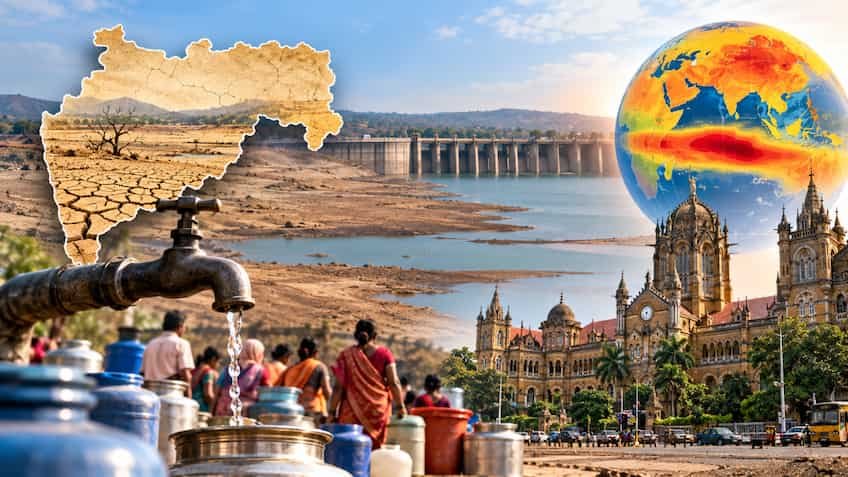
Maharashtra is facing serious water crisis due to adverse effects of global climate cycle ‘El Niño’ and less rainfall in many parts of the state during monsoon. To deal with the adverse conditions like drought in the state in the coming summer and next year’s monsoon, the Maharashtra government has taken a very tough and far-reaching administrative decision in a timely manner. Issuing official instructions on Monday, October 5, 2026, the state government has announced to implement a mandatory minimum 10 percent reduction in water supply in all urban and rural local bodies across Maharashtra from October 16, 2026. The government clearly says that this cut is not due to any immediate shortage, but is part of a pre-planned strategy to keep safe drinking water reserves available for the citizens in the future till 31 August 2027. Which areas including Mumbai, Thane and Pune will be directly affected? The scope of this new order of the government extends to all the Municipal Corporations, City Councils, Nagar Panchayats and Rural Gram Panchayats of the state. There will be a reduction in the time and pressure of water coming from taps in major cities like Mumbai, the country’s largest metropolis under the jurisdiction of Brihanmumbai Municipal Corporation (BMC) as well as in major cities like Thane, Navi Mumbai, Kalyan-Dombivli, Mira-Bhayander, Pune, Pimpri-Chinchwad, Nashik, Chhatrapati Sambhajinagar (Aurangabad), Nagpur, Solapur and Kolhapur. Especially in those urban settlements and high-end societies which are directly dependent on municipal water supply, the hours of water supply during the day will be reduced. The Water Resources Department has clarified that this 10 percent water will be directly saved by curbing leakages in water pipelines, illegal tube wells and arbitrariness of valvemen, so that it does not have a severe impact on the ordinary families living at the last resort. Roadmap till August 31, 2027: Every dam will have 10% emergency buffer stock. ‘Drinking water’ has been given top priority in the water management formula prepared by the state cabinet and the water resources department. All District Magistrates and Divisional Commissioners have been instructed to accurately estimate the drinking water needs of the total population till August 31, 2027 in major dams and reservoirs under their respective jurisdictions and reserve that much water only for drinking. Additionally, an additional 10 per cent of the available water in each reservoir will be sealed as ’emergency buffer stock’ to avoid any future seasonal uncertainties, evaporation loss and risk of silt accumulation. If the situation in any area becomes extremely uncontrolled, an emergency option of using ‘dead storage’ (water from lower sediments) of the dams has also been kept open after technical testing. Drinking water will be completely banned at construction sites, treated sewage water will be mandatory. To prevent open wastage of clean drinking water in cities, the government has imposed strict restrictions on construction and commercial activities. Under the new rules, the use of potable municipal water for maintaining greenery in real estate construction sites, concrete mixing plants, large parks and gardens and for washing commercial vehicles will now be completely banned. For all these non-essential works, local bodies have been ordered to run their Sewage Treatment Plants (STP) at 100 per cent capacity and provide only ‘Reclaimed Water’. If any builder or commercial institution is found using clean drinking water in construction work, its water connection will be immediately disconnected and heavy fine will be imposed. It is mandatory for industries to recycle 30% water, priority given to farming, strict guidelines have also been issued regarding water consumption in industrial areas. It has been made mandatory for Maharashtra State Industrial Development Corporation (MIDC) and private industrial units to recycle and reuse at least 30 percent of their daily water consumption. This will reduce the dependence of industries on fresh water. On the other hand, a clear priority has been set for water release for the rural economy and agricultural sector: drinking water for humans will be met first, and the needs of livestock and fodder second. Only after this, water will be released from the remaining water reserves into the canals for irrigation, in which also Rabi season food crops will get priority over perennial cash crops like sugarcane. Police and Revenue Department will take action against water theft and illegal motor pumps. To stop theft of water from reservoirs, rivers and open canals, the State Government has issued an order to form Joint Flying Squads of Police, Revenue and Irrigation Department. Strict criminal cases will be registered against those drawing water from canals in rural and semi-urban areas by installing powerful diesel pumps or submersible motors without official permission. Patrol teams will conduct surprise inspections and if any violation of rules is found, illegal pipelines and electric motor pumps will be confiscated on the spot. The government has appealed to all the citizens of the state to understand the importance of every drop of water in the coming eight to ten months, get the leakages in their houses fixed and give full cooperation in this statewide campaign of water conservation by not leaving the taps open while brushing, bathing or washing utensils.