 look news india

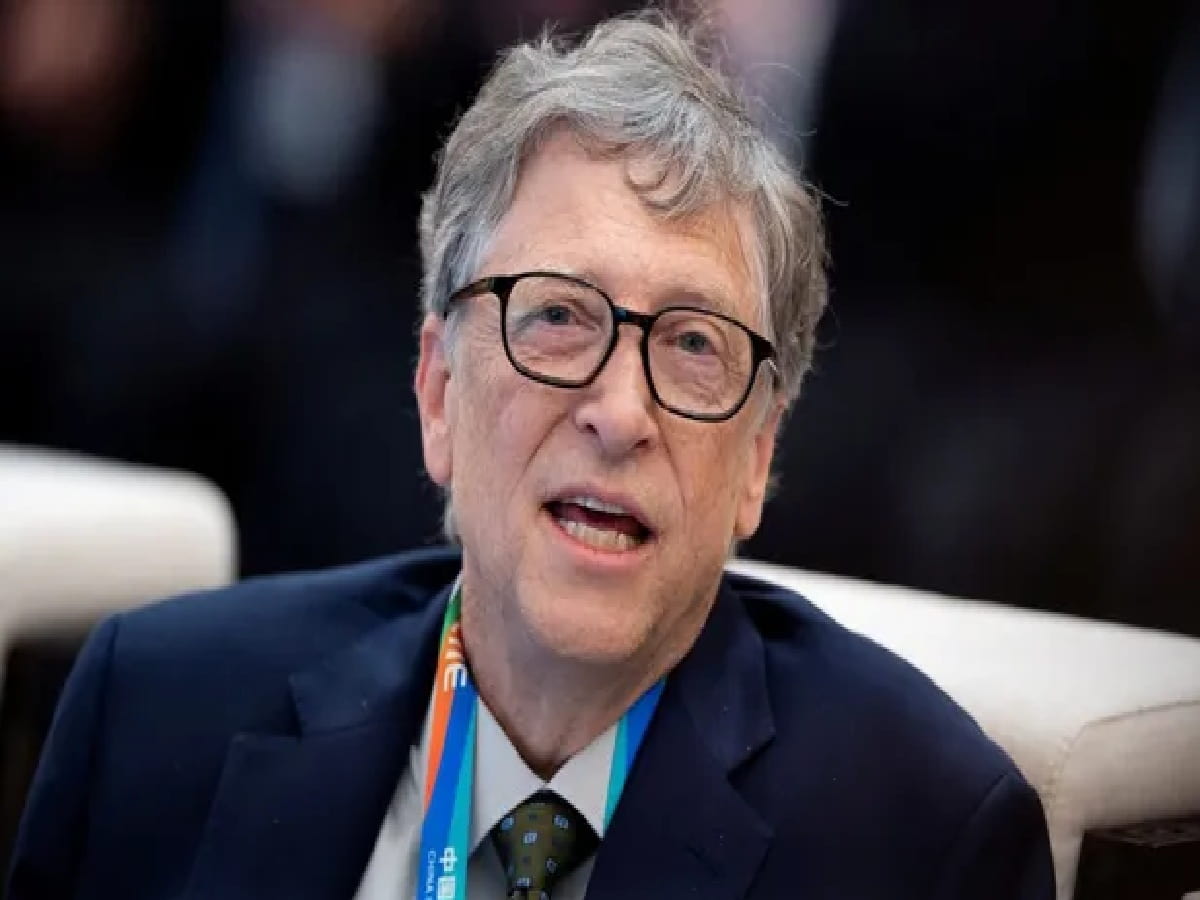
A shocking news is currently coming out from the global tech industry and corporate corridors, which has given sleepless nights to working professionals around the world. The speed with which Artificial Intelligence (AI) technology is making its way into our lives and offices, its impact is now becoming visible very aggressively. Just a few days ago, the world’s leading technical guru and co-founder of Microsoft Bill Gates Gave a serious warning to the world, saying that companies are facing tremendous pressure to replace human employees with robots and AI. Surprisingly, just a day after this warning by Bill Gates, his own old company Microsoft around the world 60,000 employees shown the way out of jobs (Mass Layoffs) A huge and shocking proposal has been made. This two-pronged development has raised huge questions on the modern technological revolution and the future of human labour. Let us know in detail what major concerns Bill Gates had expressed in his interview and what impact this big decision of Microsoft is going to have on the global labor market.
Bill Gates’ warning: ‘Hire robots, fire humans and don’t look back’
Recently, in a comprehensive interview published in the prestigious publication ‘The Observer’, Bill Gates had issued a very strong warning regarding the indiscriminate and uncontrolled commercial use of Artificial Intelligence. Expressing his concern, Gates had said that the incentive structure currently being prepared for companies to work is going in a completely wrong direction.
Taking a dig at the mentality of the corporate world, he had said that today’s situation has become such that companies are thinking that ‘Hire the robot, fire the human and then don’t look back.’ Although Bill Gates no longer holds any official executive or active board position in the Microsoft company, his ideas are still seen as the greatest visionaries in the global technology market. Gates believes that this era of artificial intelligence is an evolutionary event in human history, where the human species will no longer be the single most intelligent creature on the planet. In the times to come, AI will take over almost every kind of professional and logical work, starting with ‘white collar’ (office and desk jobs) and gradually it will also cover ‘blue collar’ (manual and field labour).
Microsoft’s layoff order came within just 24 hours of Bill Gates’ warning
What happened the very next day after this interview of Bill Gates stunned the tech market of the entire world. Giant tech company Microsoft suddenly announced that it is planning to expand its operations in America, Canada, Britain and other countries with the world’s largest tech workforce. India from many other major markets including 60,000 employees laid off Is proposing to do.
Even though technical experts and company insiders may argue that Bill Gates’ warning and Microsoft’s buyout or layoff offer could be two separate events, but the occurrence of these two events in two consecutive days is enough to refute the fact that how fast the corporate world is ready to sacrifice its employees to adopt AI. As big tech companies around the world are investing trillions of dollars in AI research and its infrastructure, the usefulness of human employees in offices is decreasing, the direct consequence of which is that common employees are having to pay by losing their jobs.
If there are less working hands then who will pay the taxes? Bill Gates raised a big economic question
During this warning, Bill Gates not only talked about loss of employment, but he also drew the world’s attention towards a big economic and social challenge of the future. His argument was that if there is a huge decline in the number of human employees working in companies in the coming time, then there will be a huge decline in the tax and social security revenue received by the governments.
According to Gates, even if overall global prosperity and GDP figures increase due to AI in the future, the safety net available to ordinary citizens will become increasingly smaller and weaker. To deal with this serious crisis, Bill Gates has given a revolutionary suggestion and said that governments should have a special committee on the commercial use of AI. ‘Token Tax’ Or robot tax should be imposed, as well as more heavy wealth tax should be imposed on the super-rich billionaires of the world so that economic security can be given to the lower and middle class of the society. Bill Gates himself has set an example in this direction and said that till now he has paid tax of 14 billion dollars in his life, but if he has to pay tax of up to 40 billion dollars for the welfare of the society, then he is completely ready for it.
Is AI a curse altogether? Gates also told its positive aspects
It is not that Bill Gates sees Artificial Intelligence only as an evil or destructive force. He also clarified in his interview that AI has the amazing ability to solve human problems in a jiffy. For example, in the field of medical science, the time taken for decades to discover new drugs (Drug Discovery) is now being reduced to just a few weeks or months with the help of AI, which will make it easier to find cure for many deadly diseases.
But at the same time he also believes that this technological change will prove to be a very big and difficult test of the efficiency and policy quality of the governments. Especially at a time when the rich countries of the world are already facing huge economic pressure, inflation and geopolitical tensions on many fronts, then handling such a big labor transition will be no less than a litmus test. Gates said in a warning tone that this is going to be the most difficult task ever for the developed countries of the world.
What does this mean for countries with a huge tech workforce like India?
This entire incident is a big warning and a matter of thought for developing countries like India. India is considered to be the home of the world’s largest tech talent and IT workforce, and India’s inclusion in this scope of layoffs by Microsoft clearly shows that in the coming times, lakhs of software engineers and IT professionals of the country may face a major employment crisis.
As companies are handing over tasks ranging from ‘coding’ to ‘customer support’ and ‘data analysis’ to artificial intelligence tools and automated robots, the nature of traditional jobs is changing rapidly. The biggest and most serious question in this entire race still remains that ‘Who will ultimately pay the real cost of this technological change?’ If governments and tech giants do not make concrete policies regarding human employment and skill development in time, then the future is going to be very difficult and challenging for the job market.