 look news india

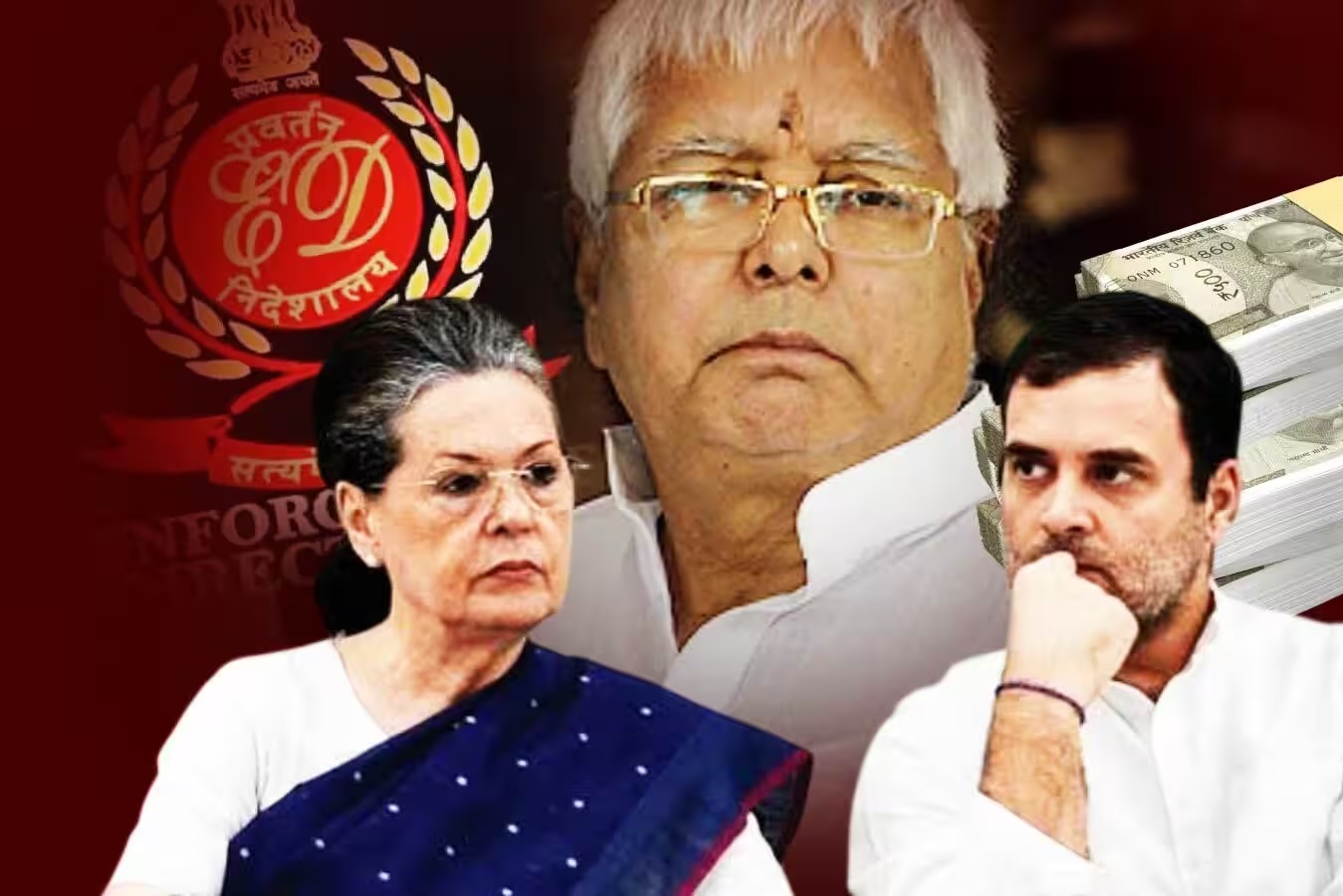
There was an uproar in the Indian political circles and the legal world when the Enforcement Directorate (ED) made a major change in its strategy regarding the much talked about and high-profile money laundering cases of the country. Instead of prolonging the scope of its investigation, the Central Investigation Agency is now pursuing the cases at a very fast pace, due to which the problems of top Congress leaders Rahul Gandhi, Sonia Gandhi, Rashtriya Janata Dal supremo Lalu Yadav and many other senior politicians may increase significantly in the coming days. In these sensitive cases which have been pending for a long time, ED is now adopting a completely aggressive approach and taking concrete legal steps to speed up the trials in special courts and complete the court process within the next 6 to 8 months and get the accused punished. This strict working style of the investigating agency and its readiness to present solid evidence in the court has created a huge stir in the camp of political parties, and the discussion has intensified whether any big and unexpected legal decision will be seen in the country’s politics in the coming months.
The Prevention of Money Laundering Act (PMLA) is considered one of the most stringent and stringent laws in the country, the provisions of which are much more stringent than the normal Indian Penal Code. Under this Act, once a person is proven guilty of financial irregularities or acquiring illegal assets or the agency files a solid charge sheet in the court, it becomes an extremely difficult and challenging process for the accused to get bail. Recently, the Supreme Court had also expressed its deep displeasure over the speedy hearing in many PMLA cases and the hanging of cases without any reason, after which the investigating agencies have intensified their functioning. This new plan of ED is to ensure that the statements of witnesses, documentary evidence and money trail of financial transactions are presented in the trial courts in such a way that there is no unnecessary delay in the judicial process. This is the reason that in the cases where Rahul Gandhi, Sonia Gandhi, Lalu Yadav and other members of their family are undergoing interrogation or bail relief, the legal noose seems to be tightening further.
At the center of this entire legal exercise are those big and old cases which have remained the main center of political and judicial debate for the last several years. The most prominent among these is the famous National Herald Case related to the Congress Party, in which the financial transactions related to the acquisition and transfer of assets of Associated Journals Limited are being investigated and Sonia Gandhi and Rahul Gandhi have been interrogated for a long time in this regard. On the other hand, the family of former Bihar Chief Minister and RJD chief Lalu Prasad Yadav is also being prosecuted under PMLA in the much talked about ‘Land for Jobs Scam’ case of taking land in exchange for job in Railways. The investigating agencies claim that they have irrefutable digital and financial documents in these cases which prove how an empire of illegal assets was built through abuse of power. In these cases, the ED is continuously requesting the special courts to conduct hearings on a daily basis so that the cases can be disposed of logically and quickly.
Due to these strict actions of the law and investigative agencies, the political temperature of the country has reached sky high, and the opposition parties have started directly attacking the central government. Leaders of all opposition parties, including Congress and RJD, say that the central government is deliberately using central investigative agencies to tarnish the image of the opposition leadership and harass them politically. They allege that whenever elections come near or any major public issue arises against the government, such old cases are raised and sensation is created in the media. However, on the other hand, the ruling Bharatiya Janata Party and government circles are rejecting these allegations outright and arguing that the law is taking its course and no big leader can be considered above the law in corruption cases. This stance of the government clearly indicates that the agency is fully committed to sharpening its legal grip as per the policy of zero tolerance against corruption.
The coming times may prove to be a turning point in the pages of Indian politics and legal history, because if the ED is successful in its time-bound action plan and decisions start coming from the courts in these high-profile cases, then it is sure to have a direct and far-reaching impact on the electoral politics of the country. On one hand, while the investigating agencies are trying their best to save their reputation and give concrete results in corruption cases, on the other hand, the top opposition leaders of the country are trying their best in the court with their army of top lawyers to get out of this legal maze. It will also be a big test at the judiciary level as to what speed it pursues the hearing of these sensitive political cases. At present, all eyes of political analysts and common citizens across the country are on the courtrooms and the next legal steps of the ED, and it will be very interesting to see which side this camel of the country’s politics takes in the coming few months.