 look news india

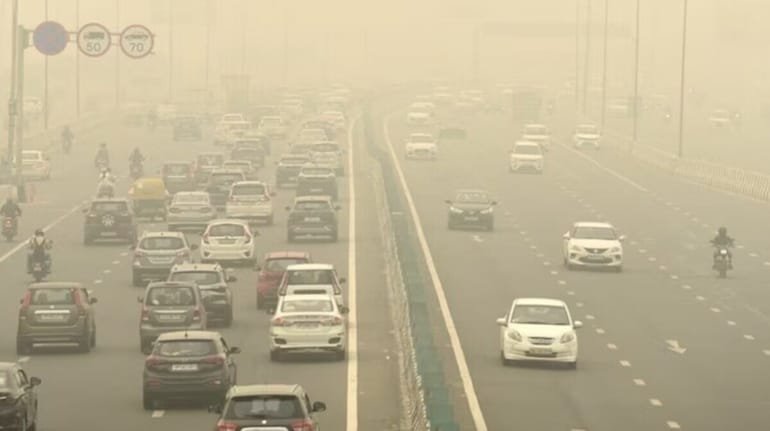
Air pollution levels in the national capital Delhi and the surrounding National Capital Region (NCR) have taken a sharp turn towards dangerous direction soon after the celebration of Ravana Dahan and fireworks on Dussehra (Vijayadashami). Dussehra celebrations amid calming winds, falling minimum temperatures and initial smoke of stubble have once again pushed Delhi’s climate into the ‘poor’ category. According to data from air quality monitoring stations of the Central Pollution Control Board (CPCB), Delhi’s average air quality index (AQI) has been recorded at 238. In order to prevent the deepening crisis of air pollution and the situation from getting worse in the coming days ahead of Diwali festival, the Commission for Air Quality Management (CAQM) has launched the first phase of Graded Response Action Plan in the entire Delhi-NCR i.e. GRAP-1 Strict instructions have been issued to be implemented with immediate effect.
Every year, after the departure of monsoon in North India in the second fortnight of October, the wind speed slows down and the temperature starts falling. Due to this seasonal change, a situation of ‘thermal inversion’ (temperature reversal) is created in the air, due to which the release of dust, smoke and fine particles (PM2.5 and PM10) present in the atmosphere stops and they get trapped on the lower surface of the ground and take the form of fog.
The burning of huge effigies of Ravana, Kumbhakarna and Meghnad at hundreds of places across the city on the night of Dussehra and the smoke released along with the heavy firecrackers made the situation more serious. The AQI reached close to 250 to 290 at major hotspots like Anand Vihar, Wazirpur, Jahangirpuri, Bawana, Dwarka and RK Puram, due to which a thick blanket of smog was clearly visible in the sky in the morning.
The first phase of GRAP (Graded Response Action Plan) is automatically activated when the air quality index remains in the ‘poor’ category (AQI between 201 and 300). Following the CAQM order, Municipal Corporation of Delhi (MCD), Public Works Department (PWD) and administrative authorities of NCR have started strictly enforcing the following restrictions:
-
Dust Control and Water Sprinkling: Water guns, anti-smog guns and regular spraying of water have been made mandatory to prevent dust blowing at construction sites. Construction and demolition (C&D) projects of more than 500 square meters are required to be registered on the DUST portal.
-
Complete ban on burning of garbage and solid waste: A strict ban has been imposed on open burning of garbage, dry leaves, plastic or biomass. Heavy environmental compensation fines are being imposed on violators.
-
Mechanized sweeping of roads: To reduce the dust flying on the roads, the frequency of cleaning and water sprinkling by machines has been increased.
-
Ban on coal and wood in hotels and restaurants: There is a ban on the use of coal and firewood for tandoor in hotels, restaurants and dhabas; Only gas or electricity based appliances are allowed.
-
Strict inspection of old vehicles: Monitoring of movement of 10 year old diesel and 15 year old petrol vehicles on the roads has been intensified. Heavy challans are being issued to vehicles without valid PUC.
AQI exceeding 200 is not considered healthy for general health, but this level poses a direct risk to people suffering from asthma, bronchitis, COPD and heart disease. Doctors and health experts have advised people to remain alert for the coming days:
-
Avoiding morning walks: Avoid heavy workouts and morning walks in open fields or roads during early morning and late evening hours when smog and pollution are highest near the surface.
-
Use of mask: Use an N95 or higher quality anti-pollution mask when at crowded intersections or when going out.
-
Stay hydrated and eat a balanced diet: To maintain lung function, drink enough water, have ginger-basil tea and eat antioxidant-rich fruits and vegetables.
According to the forecast of the Meteorological Department (IMD), the wind speed will remain slow in North-West India for the next few days and there is no possibility of rain. Along with this, there is a possibility of gradual increase in incidents of stubble burning after paddy harvesting in Punjab, Haryana and Western Uttar Pradesh. If GRAP-1 norms are not strictly enforced in time and uncontrolled fireworks happen during the upcoming Diwali festival, Delhi’s air quality may enter the ‘very poor’ (AQI 301-400) and ‘severe’ (AQI 400+) category, followed by more stringent restrictions in the second and third phase of GRAP.