 look news india

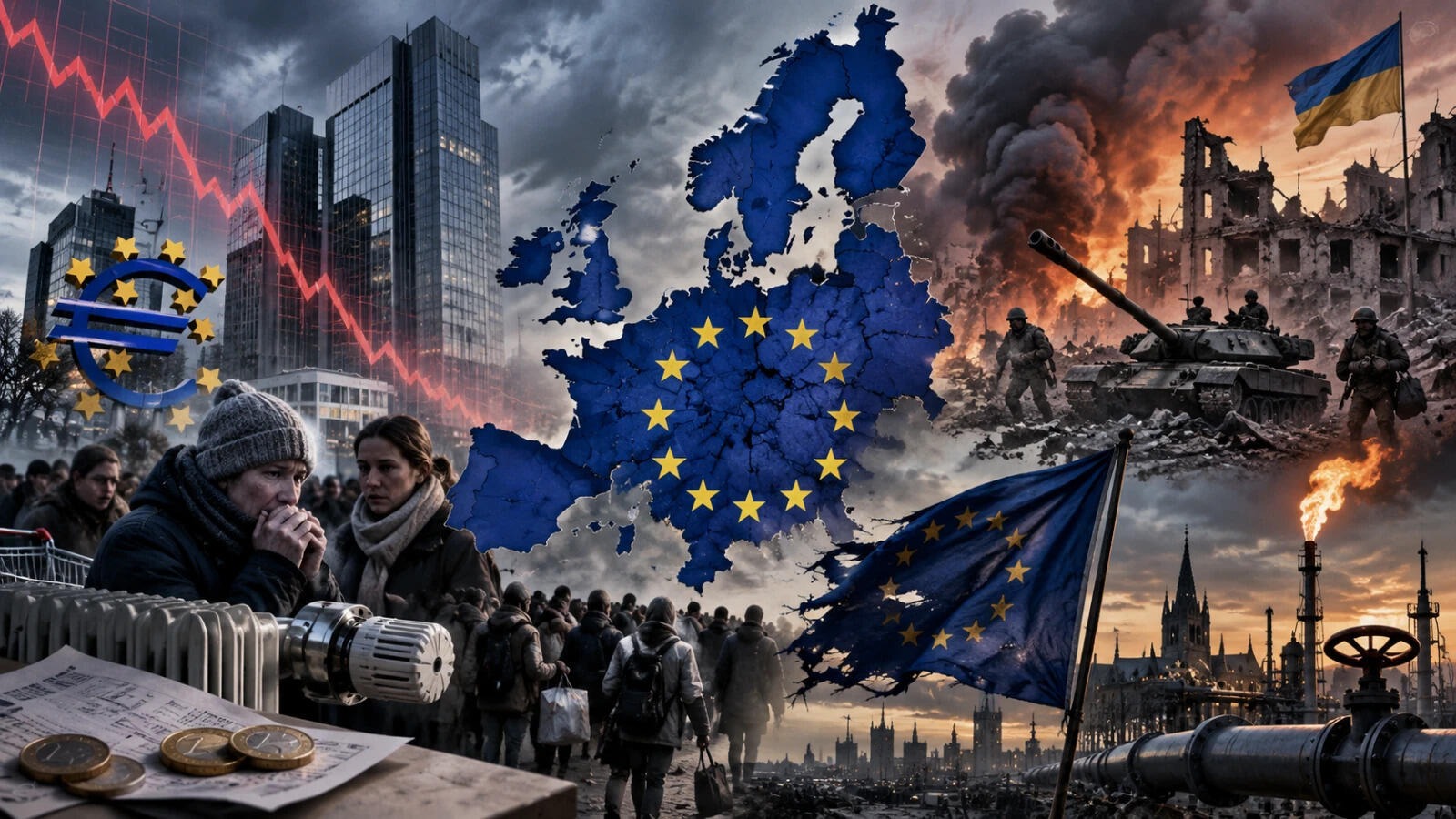
If we look at the history after the Second World War, rarely has modern Europe faced such serious, multidimensional and deep crises at the same time as it has been facing in the last few years. The period of turmoil at the global level began when the whole world was struggling with the terrible blow of the Corona epidemic, and as the world was trying to come out of this health disaster, the Russia-Ukraine war knocked at the door of Europe. This geopolitical conflict shook the energy system that was the backbone of Europe, resulting in the continent’s worst energy crisis in history. Today the situation is such that everyone from industrialists to common citizens is troubled by the skyrocketing electricity and gas prices, and experts believe that this decade is proving to be the worst and challenging decade for Europe so far.
We had not even recovered from the impact of the pandemic when the shadow of Ukraine war loomed.
When the Corona virus epidemic engulfed the entire world in the year 2020, even the countries of the European Union could not escape its economic and social effects. Lockdowns, supply chain disruptions and a massive decline in global trade had already put European economies in the ICU. The struggle to recover from this economic recession was going on when the war that broke out between Russia and Ukraine in February 2022 completely devastated the equations of European security and economy. European countries, which were heavily dependent on Russia for their energy needs, suddenly found themselves facing a major geopolitical obstacle. This war not only disturbed the regional peace, but also caused global inflation, food shortage and crude oil prices to such an extent that there was an outcry in the whole of Europe.
Fierce form of energy crisis: How gas and electricity shortage increased Europe’s worries
At the heart of Europe’s current crisis has largely been a failure of energy security. European countries have struggled to keep homes warm and factories running during the winter season after Russia halted or drastically cut gas supplies. The huge increase in the prices of natural gas and coal increased the cost of power generation manifold. Due to this, even powerful European countries like Germany, France, Britain and Italy started fearing situations like energy rationing and blackouts. Heavy industries were forced to either reduce production or close their units due to costly energy alternatives, dealing a severe blow to the pace of industrialization in the continent.
Historical record of inflation and its deep economic impact on common people.
The direct and most devastating impact of the energy crisis has fallen on the pockets of common European citizens. Inflation reached its highest level in decades, making it increasingly difficult for the middle class to pay for groceries, transportation, and even house rent. The purchasing power of people has declined drastically and wages have not increased at the same rate as the cost of living. There have been massive demonstrations against governments in many European countries, as people demand relief from rising electricity bills and inflation. This economic crisis has created a strange dilemma for the EU governments: on the one hand, to continue military and financial support for the Ukraine war, and on the other hand, to protect their own citizens from domestic inflation.
Is this really Europe’s worst decade and what are the challenges of the future?
Economic analysts and global affairs experts believe that the kind of uncertainties that are engulfing Europe in this decade were not seen in the last several decades. Amidst the pressure of climate change, the haste to move away from fossil fuels and shift towards renewable energy has also fueled this crisis. Although European countries have now begun to increase investment in alternative sources of LNG and green energy, the economic cost of reducing dependence on Russia has slowed the continent’s growth. Ultimately, it will be very interesting to see whether Europe can come out of this unprecedented period on the basis of its traditional strong economic policies and diplomacy or whether this crisis will affect its image as a global superpower for a long time.