 look news india

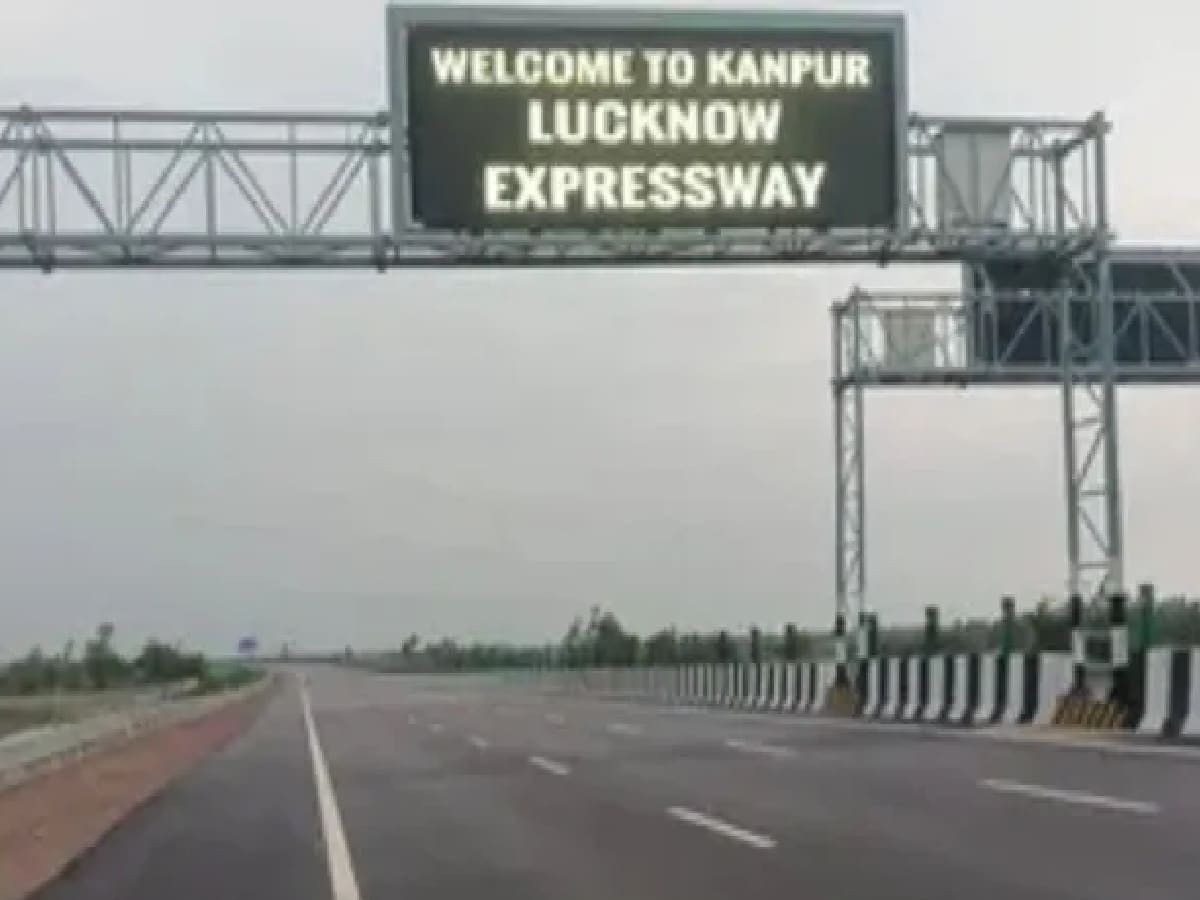
The National Highways Authority of India (NHAI) has taken a very strict punitive stance on the serious structural flaws, poor quality and incidents of road subsidence in the very first rains encountered during the construction of the much-publicized 63 km long Lucknow-Kanpur Expressway. In accordance with the instructions of the Union Ministry of Road Transport and Highways, NHAI has blacklisted construction giant PNC Infratech Limited and its special purpose vehicle Avadh Expressway Private Limited for the next three years and banned it from all new tenders of the authority. After the implementation of this order, now the company will not be able to participate in the new bidding or tendering process of NHAI or any road transport agency associated with it for the next three years. This company, belonging to the family group of Agra-based senior BJP leader and Rajya Sabha member Naveen Jain, was served a show cause notice on 5 August 2026 declaring it a non-performer, after which this strict administrative decision has been taken after a long technical hearing and detailed site inspection.
With the ambitious objective of reducing the travel time between Lucknow and Kanpur to 40 to 45 minutes, the construction of this 63 km long elevated and greenfield expressway was claimed to be completed in record time under the Hybrid Annuity Model (HAM). The new expressway was inaugurated with much fanfare on July 13, but when the first heavy monsoon rains occurred just 12 to 13 days after the inauguration, the engineering quality of the newly constructed highway fell apart like a house of cards. Asphalt layers on many important stretches of the expressway caved in badly, deep cracks appeared in the middle of the main carriageway and at many places large pieces of cement started breaking off from the slabs of the elevated structure.
This unexpected structural failure not only put the lives of thousands of daily commuters at risk, but also raised serious questions on the zero tolerance infrastructure policy of the Uttar Pradesh and Central governments. Soon after the incident, the Road Transport Ministry took suo motu cognizance of the matter and imposed strict administrative action on the project director, consultant engineers and technical supervisors of NHAI who were monitoring the construction work. Along with issuing a show cause notice to the concerned company, toll plaza operation and commercial toll collection on the entire 63 kilometer stretch was banned with immediate effect. Since then, the company’s technical clarifications and defense arguments were being officially heard at the NHAI headquarters, which was eventually found unsatisfactory and converted into a three-year ban.
The ban order issued by NHAI on September 11, 2026 was confirmed by PNC Infratech itself on September 14 by sending a formal filing to Bombay Stock Exchange (BSE) and National Stock Exchange (NSE) under the regulatory provisions of Securities and Exchange Board of India (SEBI). The company informed the exchange that NHAI has extended the scope of earlier proposed ban on its subsidiary Avadh Expressway Pvt Ltd and has also given effect to a complete ban of three years on the parent company PNC Infratech. As soon as this regulatory disclosure became public in the financial markets, heavy selling of the company’s shares started in the stock market and on Tuesday, the shares of PNC Infratech reached near the lower circuit of 20 percent, which caused a deep blow to the market capitalization of the company.
However, PNC management sought to reassure shareholders in an official statement saying the authority’s action will have no direct impact on the company’s existing ongoing projects, construction contracts and operations. Nevertheless, industry analysts clearly believe that due to three years of being out of NHAI tenders and a huge decline in the technical capacity rating, the company will face serious challenges in the future in winning new highway, expressway and metro tenders domestically and internationally. The company management has also clarified that they are considering all available legal and legal options to challenge this stringent order passed by NHAI before the Delhi High Court or the Appellate Tribunal.
Along with this comprehensive ban of three years on PNC Infratech, a series of heavy financial consequences has also started. NHAI has completely stopped toll tax collection on Lucknow-Kanpur Expressway till the condition of the road improves and the safety audit is completed. According to official calculations, an estimated toll revenue of Rs 42 lakh was to be collected per day from this expressway. Since this project is built under the hybrid annuity model and toll collection has stopped due to defects in construction, the authority has clarified that the construction company will have to fully compensate the huge toll revenue loss of Rs 42 lakh per day from its treasury.
Apart from this, NHAI had constituted a special team of civil engineering experts from the country’s prestigious technical institute IIT Kharagpur for independent scientific investigation of the actual strength of the construction work and quality of construction materials. The IIT Kharagpur team has collected core drilling, asphalt thickness and concrete strength samples from various sites and submitted its technical investigation report to NHAI. A high-ranking official of the authority has confirmed that the investigation report has revealed sub-grade subsidence, lack of proper drainage of rain water and discrepancies in the concrete mix as the main reasons. A senior official of the ministry said that as per the recommendations of the experts, only patchwork or minor repairs on the expressway will not suffice, but complete re-surfacing of a large portion will have to be done. The company itself will have to bear 100 percent of the cost of this entire reconstruction, which is expected to put an additional financial burden of several hundred crores of rupees on the company.