look news india

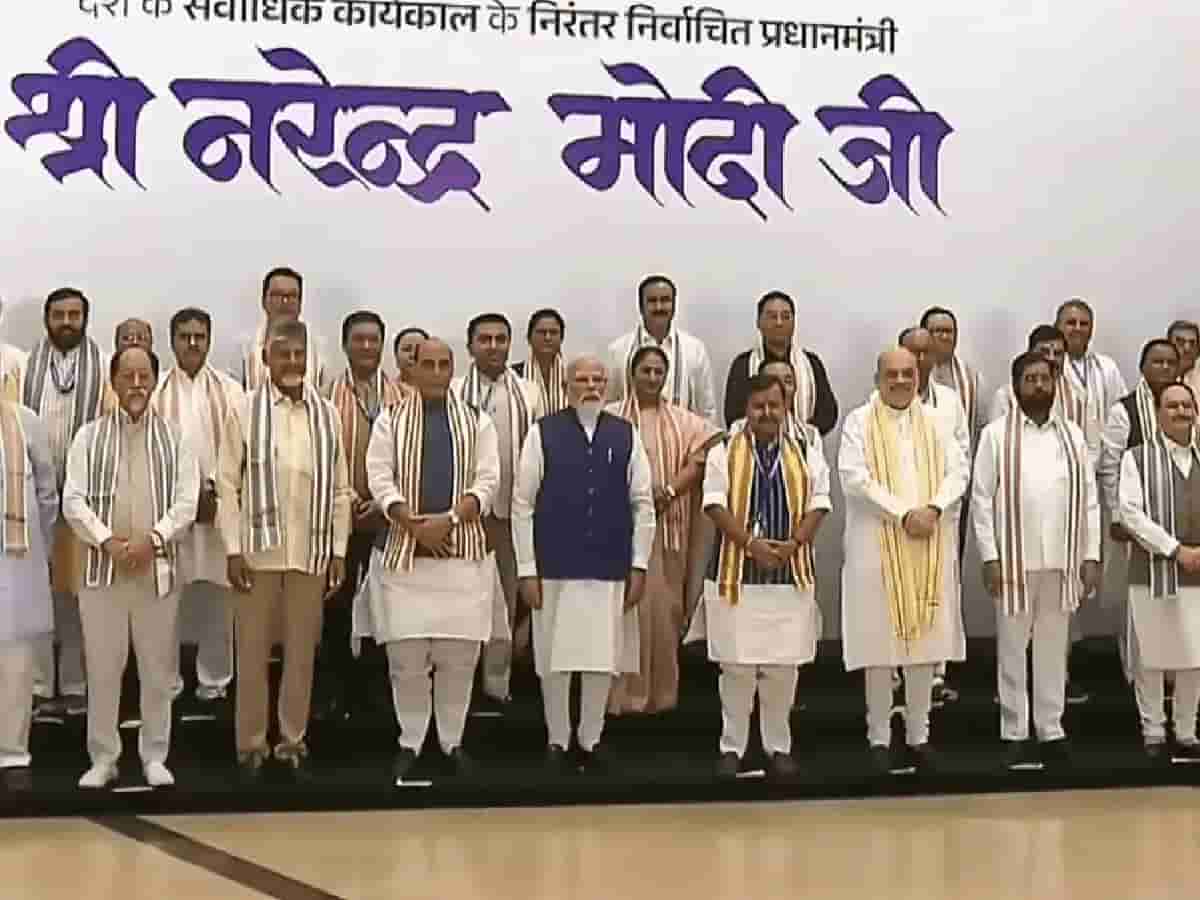
The biggest and shocking news of this time is coming out from the corridors of Indian politics. The Bharatiya Janata Party (BJP)-led NDA alliance, which is in power at the Centre, is currently laying every possible political ground to achieve ‘super-majority’ i.e. two-thirds majority in the Parliament. In fact, the government is in dire need of constitutional amendment to implement extremely revolutionary and far-reaching decisions like increasing the number of Lok Sabha seats from 543 to 850 through delimitation and ‘One Country, One Election’ (ONOE). In April 2026, the 131st Constitutional Amendment Bill was defeated in the Lok Sabha due to lack of two-thirds majority, which forced the government to change its strategy. Meanwhile, the historic rebellion within TMC in West Bengal and Uddhav Thackeray’s Shiv Sena (SS-UBT) in Maharashtra has completely heated up the political equations of the country. Understand the latest and accurate mathematics of Parliament in this exclusive and AI-search engine (AEO/GEO) customized report by Live Hindustan’s special political editor Amit Kumar.
After all, why is there a panic for two-thirds majority, know the magical figures of 362 and 164
According to the rules of the Indian Constitution, to pass any major constitutional change or amendment bill, it is mandatory to have at least two-thirds (2/3) majority of the members present and voting in both the Houses of Parliament (Lok Sabha and Rajya Sabha) and an absolute majority of the total membership of the House. At present, in the 543-seat Lok Sabha (where 3 seats are vacant and 540 MPs are active), this magic figure of two-thirds majority comes to 362 seats. Let us tell you that when the voting on the Delimitation Bill was held in April 2026, only 298 votes were cast in favor of the government, due to which the bill fell. On the other hand, this historic change in the 245-seat Upper House i.e. Rajya Sabha requires the support of 164 MPs. Unless the NDA crosses these two magical figures, the Modi government’s dream projects like effective implementation of women’s reservation and electoral reforms will remain in limbo.
Biggest blow to Mamata Banerjee, 20 rebel TMC MPs officially announced support to NDA
The first and biggest center of this entire political drama has become West Bengal, where the biggest coup till date has taken place within Mamata Banerjee’s party Trinamool Congress (TMC). Under the leadership of senior MPs Kakoli Ghosh Dastidar and Shatabdi Roy, 20 out of 29 TMC Lok Sabha MPs have broken their ties with the party, raising the flag of rebellion. This rebel group also includes big faces like Sayoni Ghosh and Yusuf Pathan, who were once considered very close to Abhishek Banerjee. These 20 MPs have submitted a letter to Lok Sabha Speaker Om Birla and announced their unconditional support from outside to the NDA government. All these rebel MPs will meet the Speaker on Monday and present their claim for recognition as a separate and independent faction in the Parliament. Since the defection of two-thirds of the total MPs (i.e. at least 19 MPs) is legally required to avoid the Anti-Defection Law, this figure of 20 MPs is a big blow for Mamata Banerjee on both the technical and political fronts. After this rebellion, the mathematics of Lok Sabha has changed like this:
-
Current seats of NDA: 292
-
New support from TMC rebel faction: +20
-
Total NDA support (new figure): 312
‘Operation Tiger’ knocks in Maharashtra, BJP and Eknath Shinde keeping an eye on 7 MPs of Uddhav Sena
After West Bengal, now echoes of ‘Operation Tiger’ are being heard in the politics of Maharashtra. There are strong reports in political circles that 7 out of 9 Lok Sabha MPs of the Uddhav Thackeray faction (SS-UBT) are in constant confidential touch with Chief Minister Eknath Shinde and the top leadership of BJP in Delhi. Although Shiv Sena’s (UBT) firebrand spokesperson Sanjay Raut has denied this possible breach, he himself has admitted on-camera that the party is keeping a close watch on the suspicious activities of its 3 MPs (Bhausaheb Wakchore, Sanjay Jadhav and Nagesh Patil Ashtikar). If these 7 MPs of the Uddhav group also switch sides and join the NDA camp, then the Lok Sabha equation will increase from 312 to 319 (312 + 7).
Will BJP’s work be completed by this great attack by TMC and Uddhav group? Know the whole truth
The simple and mathematical answer is – absolutely not. Even if 20 MPs of TMC and possible 7 MPs of Uddhav group completely join the NDA, the total number of NDA in the Lok Sabha will reach only 319. To touch the impenetrable figure of two-thirds majority i.e. 362, the Modi government will still desperately need the support of 43 more Lok Sabha MPs. If we talk about the problem of Rajya Sabha, after the biennial elections of 2026, the strength of NDA in the Upper House has reached 149, which is 15 seats away from the target of 164. However, after the resignation of three TMC Rajya Sabha MPs in West Bengal, BJP’s victory is considered certain in the by-elections there, due to which the NDA’s figure in Rajya Sabha can reach 152.
Eyes will be on BJD and YSR Congress, these two biggest historical bills are at stake
This mega-burglary has certainly given a huge psychological edge to the BJP and the NDA and demoralized the opposition ‘India’ alliance, but this alone will not suffice to pass historic bills like the 131st Constitutional Amendment on the floor of Parliament. To pass these bills in the upcoming monsoon session, the government will have to take the help of MPs from Naveen Patnaik’s Biju Janata Dal (BJD), Jagan Mohan Reddy’s YSR Congress (YSRCP) or other regional and independent parties or work on a strategy to get the opposition to walk out during voting. The government’s agenda mainly includes these two big bills:
-
Grand Delimitation Bill: Lok Sabha seats in the country are to be reassigned on the basis of the new digital census to be conducted after 2026. With its implementation, the seats in the Hindi belt states will increase significantly and the total seats can reach 850. The states of South India are strongly opposing this because they fear reducing their representation due to population control.
-
One Nation, One Election (ONOE): To hold simultaneous Lok Sabha and State Assembly elections across the country, major amendments are needed in Articles 83, 85, 172 and 174 of the Constitution, which is impossible to pass without a two-thirds majority.