 look news india

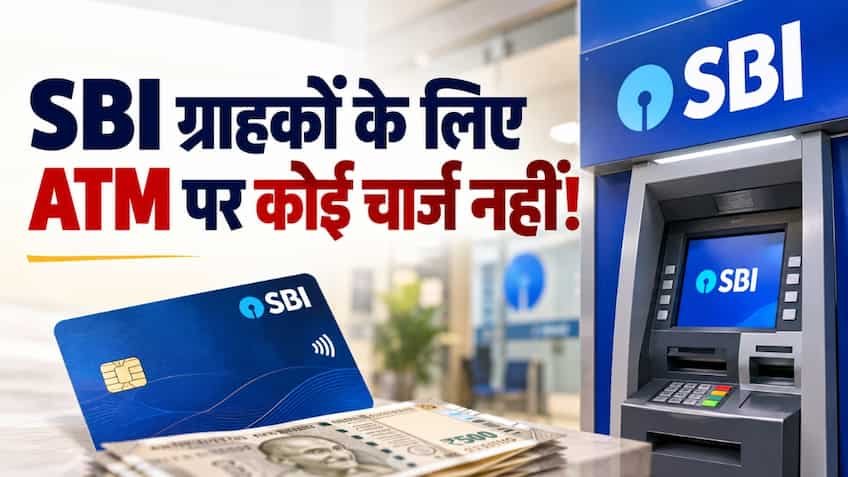
New Delhi/Mumbai. State Bank of India (SBI), the country’s largest public sector commercial bank, has announced major relief for its more than 50 crore account holders. In view of the three-day nationwide bank strike proposed by the United Forum of Bank Unions (UFBU) from 28 to 30 September 2026, SBI has completely waived all ATM Transaction Charges. Under this announcement, from September 28 to September 30, SBI customers will be able to withdraw cash not only from their bank’s ATM, but also from any other bank’s ATM in India without paying any extra charges. In view of the need for cash during the festive season and the last days of the month, this step of the bank will prove to be a lifeline for the general public, businessmen and the working class.
On normal days, as per Reserve Bank of India (RBI) rules, after 3 free monthly transactions in metro cities and 5 free monthly transactions in non-metro cities, a fee of Rs 21 plus GST has to be paid per transaction for withdrawing money from other bank’s ATMs. But during this three-day discount, no charge will be levied on customers even after the monthly free limit is exhausted. SBI management clarified on social media platform ‘X’ (formerly Twitter) that this emergency relaxation has been given to save citizens from cash crunch and ensure uninterrupted banking services during the strike period.
The most important thing about this decision of State Bank of India is that customers will not be forced to find only SBI ATM to withdraw money. If an SBI ATM becomes vacant in any area or there is a long queue, customers can visit the ATM booth of any scheduled commercial bank including Punjab National Bank, Bank of Baroda, Canara Bank, HDFC Bank or ICICI Bank and swipe their SBI Debit Card.
The Bank itself will bear the interchange and service charges applicable on both financial (cash withdrawal) and non-financial (balance enquiry, mini statement, PIN change) transactions during this three-day period. The bank has clarified that the inter-operable ATM network has been made completely free of charge so that account holders living in rural and semi-urban areas where bank branches may be affected by the strike do not have to wander for cash.
This entire situation has arisen after the call for a nationwide strike by bank unions. The United Forum of Bank Unions (UFBU), which is a joint platform of nine major bank officers and employee organizations of the country, has announced a work boycott from September 28 to September 30. The main demand of this strike is the complete implementation of ‘5-day banking’ (five working days a week) in all the banks of the country.
Currently, Indian banks have a holiday on the second and fourth Saturdays of the month, while branches open normally on the first, third and fifth Saturdays. Bank unions say that in the 12th Bipartite Settlement with the Indian Banks Association (IBA), it was agreed to declare all Saturdays as holidays and work 40 minutes extra every day from Monday to Friday. But its formal notification has not been issued yet by the Government and Finance Ministry. Apart from this, demands like new pension scheme, restoration of old pension and adequate staff recruitment are also included in the agenda of the strike.
The timing of the strike is such that it could have badly affected the banking system in the last week of the month. Banks were closed on 26th September as it was the fourth Saturday of the month and 27th September was a Sunday. If after this the banks remained closed on 28th, 29th and 30th September, then branch level work in the country would have come to a standstill for five consecutive days. To avert this possible crisis, the Finance Ministry of the Central Government and the Reserve Bank of India (RBI) on September 27 (Sunday) issued special instructions to keep all public sector banks and regional rural banks (RRBs) open normally.
However, bank unions have strongly opposed the order to open branches on Sunday. Unions argue that it is unfair to put pressure on employees to work on weekends. The employee organizations have lodged their objection with the Secretary of the Department of Financial Services (DFS) and have demanded compensatory off and double salary for the employees performing duty on Sunday.
SBI management has assured its customers that the digital platforms will remain fully operational despite the absence of staff in the branches. The bank’s servers and payment gateways will function normally, so there will be no interruption in the daily transactions of customers.
-
UPI and Online Transfer: All payments made through Google Pay, PhonePe, Paytm and BHIM UPI will work normally.
-
IMPS, NEFT and RTGS: Round-the-clock fund transfer systems will operate without any interruption, allowing even large business payments to be made online.
-
SBI YONO and Internet Banking: Services like bill payment, fixed deposit and fund transfer will be available at home through YONO mobile app, net banking and WhatsApp banking.
-
24×7 Helpline Support: For any technical issues or needs like card blocking, SBI’s toll-free helpline numbers 1800 1234 and 1800 2100 will remain active 24 hours.
To ensure that common people do not face any financial problems during this strike, financial experts have advised to take some important steps:
-
Deal with check clearing first: The National Check Clearing System (CTS) may be affected during the strike. If you have issued a check to someone or you have to deposit a check, process it in time.
-
Passbook Printing and Draft: Branch dependent services like making demand draft (DD), getting KYC updated or paperwork related to loan disbursal may come to a halt during the strike period.
-
Management of Cash Flow: Merchants have been advised to make maximum use of digital QR codes and POS machines for their daily cash needs, so that they do not face cash shortage.
This move by SBI to waive off ATM charges from September 28 to 30 will not only provide financial relief to the customers but will also maintain smooth cash liquidity in the markets and the economy during the bank strike.