 look news india

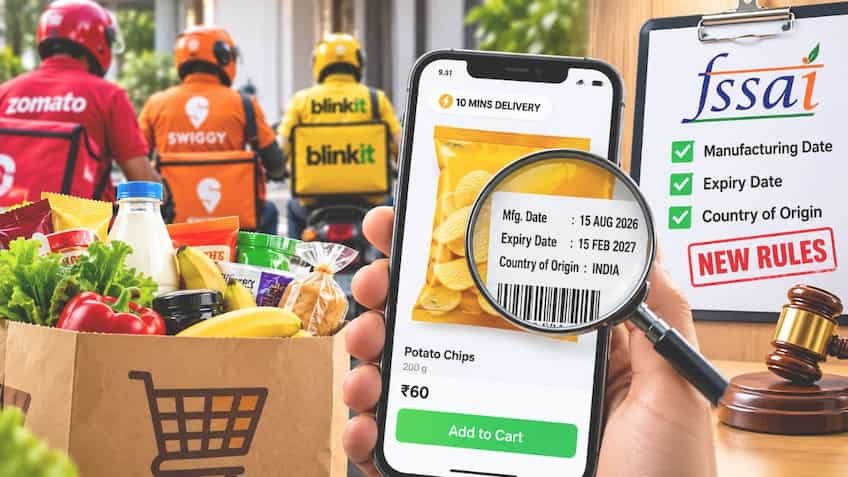
New Delhi. If you also use quick commerce apps like Blinkit, Zepto, Swiggy Instamart or BigBasket to order milk, bread, snacks, medicines or groceries in 10 minutes, then this news is going to prove to be most important for you. Often, while ordering grocery online, customers did not know when the packet was about to reach their home, its expiry date or when it was manufactured. Many times, when the packet was received, it was found that the shelf life of bread or milk was only one day left. Taking cognizance of these continuous complaints of consumers, the Ministry of Consumer Affairs (Department of Consumer Affairs) and Food Safety Regulator (FSSAI) have implemented strict guidelines for quick commerce companies. Now before adding any item to the cart, the customer will have to see the complete technical information, expiry date and manufacturing details of that product transparently shown on the app screen itself.
From metro cities of the country to tier-2 cities like Lucknow, Jaipur, Indore and Patna, the market of quick commerce has expanded very rapidly. People place orders blindly for the sake of convenience, but delivery of ‘near expiry’ products from dark stores had become a serious headache. Under the government’s Legal Metrology (Packaged Commodities) Rules and Consumer Protection E-Commerce Rules, the digital shelves will now be subject to the same rules as the physical racks of a traditional departmental store. This step will ensure that customers get value for their money and avoid consuming food items that are expired or on the verge of spoiling.
According to the new regulatory framework, now quick commerce and e-commerce companies will not be allowed to cater to their product listings by merely placing names and photos. Digital platforms must display the following information on the product checkout page and product detail page:
-
Expiry Date and Best Before: The last consumption date (day, month and year) recorded on the packet should be clearly visible on the digital display.
-
Manufacturing Date and Packaging Date: When the relevant batch was manufactured and the date on which it was packed.
-
Minimum Shelf Life Guarantee: As per food safety regulations, the goods delivered to the customer’s home must have at least 30 per cent of their total shelf life or a minimum of 45 days remaining.
-
MRP and Per Unit Price: Clear details of maximum retail price (MRP) as well as rate per gram, per milliliter or per kilogram so that customers can make correct comparison.
-
Manufacturers, Importers and Country of Origin: Where the goods are manufactured, who is the importer and customer care contact details (customer care number and email).
-
Ingredients & Allergens: Clear mention of ingredients used in food, green/red logo of vegetarian or non-vegetarian and potential allergy causing ingredients.
Quick commerce companies typically build small warehouses, called dark stores, in densely populated areas. In recent times, complaints have become common that the remaining old inventory in these dark stores was used up by luring customers with huge discounts (like 50% to 70% off). Customers used to place orders in hopes of getting a discount and when the packet reached home, they found out that it was about to expire in the next 24 to 48 hours.
After the rules are tightened, companies will no longer be able to make the excuse that they are only an intermediary. If a platform wants to sell a near-expiry product in a special sale, it must enter a warning in bold letters on the app that the shelf life of this product is very short, so that the customer can take a decision at his own discretion and wisdom. It is also being made mandatory to implement FIFO (First In, First Out) inventory management system in dark stores and conduct regular digital audits so that stale or spoiled goods do not reach customers’ homes.
This strictness is not limited only to the expiry date, but the regulatory bodies also keep a close watch on the miraculous and misleading claims made on the products. Recently, Food Safety and Standards Authority of India (FSSAI) has initiated punitive action in several cases against big online players like Amazon, Flipkart, Zepto, Swiggy Instamart and BigBasket. These included serious cases ranging from misleading nutrition claims on processed foods to illegal listing of poisonous and banned substances like Dhatura on online platforms.
Under the Food Safety and Standards Act, 2006, all online food business operators (FBOs) are also required to display the manufacturer’s FSSAI license number for each food product sold on their platform. If a company makes claims like ‘Natural’, ‘Organic’ or ‘100% Healthy’ on packaged food, it must have regulatory certificates, otherwise it will be considered misleading advertising and heavy fines will be imposed.
If you order fresh vegetables, fruits, dairy products, or packaged foods through Quick Commerce apps on a daily basis, keep these important points in mind:
-
Check Dates Before Ordering: ‘Add to Cart’ only after seeing the ‘Use By’ or ‘Best Before’ date of the product on the app.
-
Physical packet checking at the time of delivery: As soon as the delivery partner delivers the goods, immediately match the manufacturing and expiry dates printed on the back of the packet with your in-app invoice.
-
Packaging Seal and Leakage: Do not accept any cutting, blown pack or re-pasted stickers on tetra packs, milk bags or sealed containers.
-
Grievance Redressal System: If you receive expired or damaged goods, immediately ask for a refund by uploading a photo in the help section of the respective app. If you do not get the solution, lodge a complaint directly on the National Consumer Helpline (1915) or the consumer portal of FSSAI.
This rule of displaying complete information in Quick Commerce will not only make digital shopping safe and reliable, but will also completely protect the health and consumer rights of the customers.