 look news india

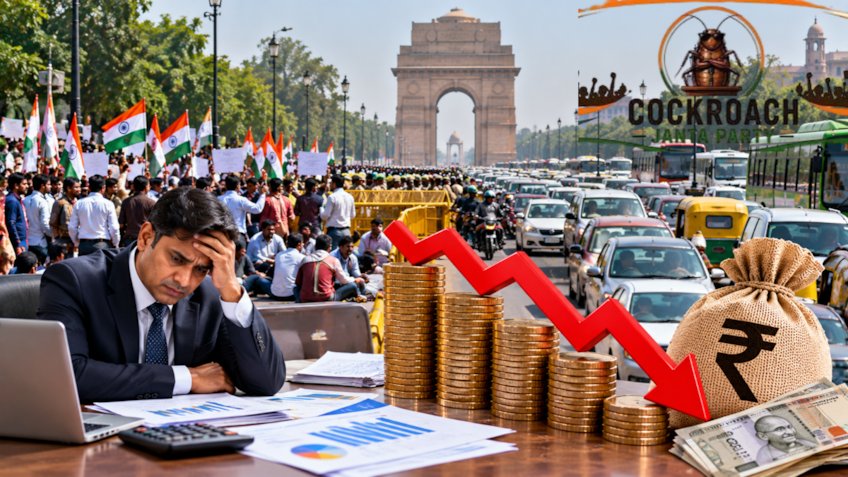
While traders were expecting record sales with the beginning of the festive season in the country’s capital Delhi, the recent political protests and security restrictions have ruined the entire market. According to the latest assessment of the Chamber of Trade and Industry (CTI), due to a single day’s protest and heavy security arrangements in Delhi, the businessmen of the capital have suffered a huge loss of about Rs 2,000 crore. There was silence from Connaught Place, the heart of Delhi, Khan Market to Asia’s biggest wholesale markets like Chandni Chowk and Sadar Bazaar. In view of the protests organized around Jantar Mantar and Lutyens’ Delhi, the pace of the entire Delhi came to a halt due to strict barricading by the police, diversion of routes and gates of more than 45 metro stations remaining closed. Due to complete stoppage of movement of buyers, the business in the markets reduced to only 25 to 30 percent compared to normal days, which has directly affected the livelihood of about 15 lakh traders.
In view of this huge economic loss of traders, Chamber of Trade and Industry (CTI) Chairman Brijesh Goyal has made a public appeal with folded hands to all political parties, social organizations and student unions. CTI has clearly said that in a democracy everyone has the right to express their views and register protest, but it is not at all justified to choose the time of festivals and busy business markets for this. The organization has demanded that at least till Diwali and Chhath festival, no such dharna, chakka jam or demonstration should be held in any area of Delhi which disrupts normal life and business activities. Traders say that they wait for this festive quarter (October-November) throughout the year, because 40 percent of the sales of the entire year happen during this period. If the city is turned into a cantonment at such an important time and customers will not be able to reach the markets, then small and medium traders will be completely ruined.
The strict restrictions imposed on Delhi’s transport system on the day of the protest made the situation more frightening. The entry and exit gates of major metro stations like Rajiv Chowk, Central Secretariat, Patel Chowk, Mandi House and Udyog Bhawan were closed on the recommendation of Delhi Police due to security reasons. The lifeblood of Delhi’s markets are lakhs of buyers coming from NCR (Noida, Gurugram, Faridabad, Ghaziabad), who mainly depend on Metro. When the gates of metro stations were closed and there were long jams on the roads, people thought it better to stay in their homes instead of going to the markets. Not only did it directly impact retailers of clothing, jewellery, electronics and footwear, but the hospitality sector was also badly hit. About 60 to 70 percent of the bookings in hotels, restaurants, cafes, cinema halls and banquets in central and southern areas of Delhi were either canceled or postponed. Even the daily earnings of local petrol pumps and auto-taxi drivers witnessed a decline of more than 50 per cent.
Delhi is not just a market for the local population, but it is the largest trading and wholesale distribution center of North India. Lakhs of wholesale traders from Uttar Pradesh’s Lucknow, Kanpur, Meerut, Agra to Haryana, Punjab and Rajasthan reach Delhi’s Sadar Bazaar, Chandni Chowk, Kashmiri Gate, Karol Bagh and Gandhi Nagar every day to pick up festival goods. Due to the fear of protests and strict checking at the borders, about 3 to 4 lakh traders coming from outside states could not come to Delhi. Representatives of Khan Market Traders Association and Connaught Place Markets Association expressed their displeasure and said that due to this one-day bandh and atmosphere of panic, each shop in Khan Market alone has suffered a direct loss of Rs 1 lakh to 1.5 lakh. Apart from this, small shopkeepers and street vendors dealing in perishable essential goods like fruits, flowers, sweets and vegetables faced the double blow of losing their capital.
CTI and various business organizations of Delhi have written letters to the Delhi Police Commissioner and Lieutenant Governor (LG), demanding strict steps for the future. Traders argue that areas like Jantar Mantar, New Delhi Railway Station and Sansad Marg are located right in the middle of densely populated commercial corridors. Whenever there is a protest here, the entire central Delhi has to be sealed due to security reasons. Traders have suggested that for any major political or social movement, only the outskirts of Delhi like Burari Ground or Ramlila Maidan should be made the authorized venue, so that the business hub of Central Delhi and the daily routine of the general public remains unaffected. If the political parties do not reconsider their strategy and such bandh conditions continue during the festive season, then the businessmen of Delhi will face a deep crisis of paying the rent of shops, salaries of employees and EMIs of banks.