 look news india

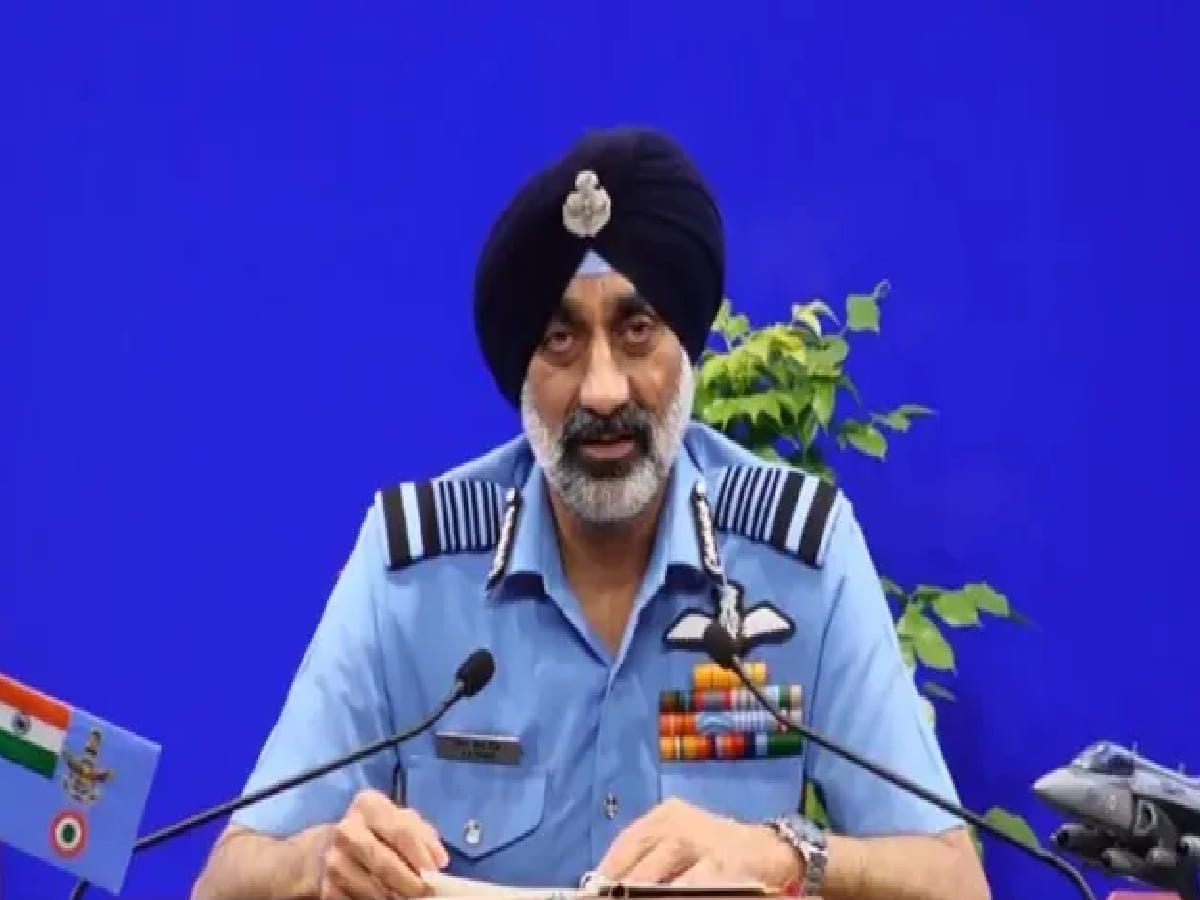
A new and golden chapter has been added in the history of Indian Defense Forces and strategic power. The Indian Air Force, which protects the country’s borders, with its high spirits and indomitable courage has once again shown to the whole world that India has the full capability to teach a lesson to its enemies by entering their homes. Indian Air Force Chief in an important statement recently Air Chief Marshal AP Singh While giving a blunt warning to neighboring country Pakistan, it has made it clear that now no enemy base is beyond the reach of India’s missiles and fighter planes. The Air Force Chief said this while referring to the historic success of ‘Operation Sindoor’. Let us know in detail what big revelations the Air Force Chief has made regarding this military operation and what is its geopolitical significance.
Success of Operation Sindoor: Accurate and lethal strikes by Air Force on the Western Front
According to statements quoted by news agency PTI, Air Force Chief Air Chief Marshal AP Singh has warned Pakistan that the very precise and measured attacks carried out by the Indian Air Force on the Western Front during ‘Operation Vermillion’ have proved that in today’s time no target is out of our reach.
He described this anti-terrorism operation as a huge and unprecedented success of the Capability-Centric Strategy of the Air Force. The Air Force chief underlined that this military operation conducted on the western border was spread over a width of approximately 1,200 kilometers and a depth of 200 kilometers. In this vast geographical area, the brave men of the Indian Air Force carried out extremely accurate, deadly and rapid attacks on the enemy targets, which created panic in the Pakistani military system. The Air Force Chief stressed that this operation has once again proved to the entire world the decisive role of Indian Air Power as the country’s primary counter-defender and a strong strategic deterrent.
That historic four-day campaign and the strategic lessons learned from it
Let us tell you that this entire military operation was conducted for four days with complete secrecy and precise strategy. The Air Chief Marshal, who successfully led this operation, also cautioned that after achieving such a huge success, the Army should never be careless, rather it is the need of the hour to continuously strengthen its combat capabilities.
He clarified that the biggest strategic lesson learned from this operation is that we should always keep multiple options open and be able to change our decisions at very short notice as per the changing tactics and strategies of the enemy. Only a capability-centric army can do this, as it uses multiple modern options simultaneously rather than relying solely on any one conventional weapon or aircraft. Due to this strategic flexibility, the Indian Air Force was completely successful in taking action on its own terms while keeping the entire tension under control.
This operation was a befitting and decisive answer to the Pahalgam terrorist attack.
This entire military development started after the terrible and cowardly ‘Pahalgam Terror Attack’, in response to which ‘Operation Sindoor’ was launched in the month of May last year. Under this campaign, the Indian Air Force selectively targeted the bases of terrorists hiding in Pakistan and its occupied areas.
Experts believe that this was the boldest and biggest military action taken by India across the border after the historic Bangladesh Liberation War of 1971. During this period, India completely destroyed about 9 major terrorist bases. When the government of Pakistan and its army continued to provide shelter to these terrorist organizations, the Indian Air Force also struck their military bases, coming very close to their main military headquarters in Rawalpindi.
Powerful display of indigenous weapons and resolution of ‘zero collateral damage’
The biggest feature of this entire operation was that it included state-of-the-art technology developed in India itself. Indigenous Weapon Systems Performed exceptionally and well. These weapons penetrated deep into enemy territory and caused serious damage, further strengthening India’s defense policy of ‘self-reliant India’.
Additionally, the Indian Air Force fully adhered to its humanitarian and ethical pledge—i.e. ‘Zero Collateral Damage’—throughout the entire operation. This means that no civilian or innocent person was allowed to be harmed during the military action. The Air Force Chief clarified that the spectacular success of this operation was not due to any one particular weapon or fighter aircraft, but was a result of the combined coordination of accurate intelligence, network operations, electronic warfare, precision strike weapons and strong air defense.
Vision of Developed India 2047 and Air Force’s focus on future technology
To deal with future security challenges, the Indian Air Force is now moving rapidly towards being fully equipped with modern technology. The Air Force Chief said that our force is now focusing specifically on surveillance (ISR), electronic warfare, anti-drone systems, secure networks and Artificial Intelligence (AI) based systems.
At the end of his address he said that this is the overall development of the Indian Air Force. ‘Developed India 2047’ Deeply linked with the national vision of. Under this, the Indian Air Force is moving towards becoming a multi-domain aerospace power which is completely self-reliant, technologically at par with the most advanced countries of the world and capable of protecting all the economic and strategic interests of the country under all circumstances. After this strong message, the neighboring country should understand well what could be the consequences of playing with India’s security.