 look news india

According to Sanatan Dharma and Hindu calendar, Ekadashi date of Shukla Paksha of Kartik month is considered to have special and supernatural significance. This holy date is known as Devuthani Ekadashi, Prabodhini Ekadashi or Devotthan Ekadashi. According to mythological beliefs, from the day of Ashadh Shukla Ekadashi i.e. Devshayani Ekadashi, the creator of the world, Lord Shri Hari Vishnu goes into Yoga Nidra for four months in Kshirsagar. This four-month period is called Chaturmas, in which there is a ban on any kind of auspicious and auspicious functions like marriage, mundan, griha pravesh and sacred thread. On the day of Devuthani Ekadashi of Kartik month, Lord Vishnu wakes up from his four-month long yoga nidra, marking the formal end of Chaturmas. As soon as God wakes up, positive energy is transmitted to the entire creation and the auspicious times for all the pending auspicious works begin.
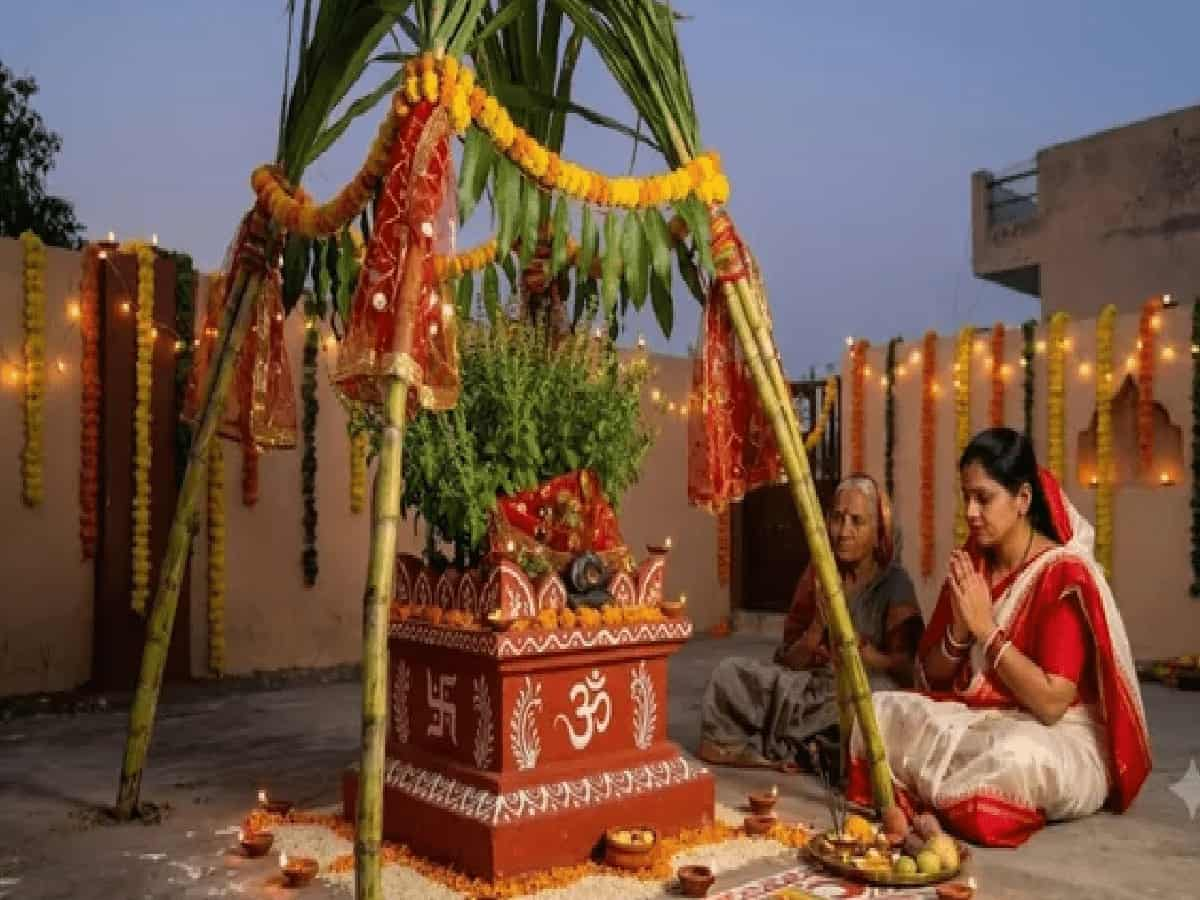
On this auspicious occasion of Devuthani Ekadashi, a grand celebration of the holy marriage of Lord Shaligram and Mata Tulsi, the idol of Lord Vishnu, is organized in different parts of the country. In many areas this marriage festival is celebrated on the evening of Ekadashi, while in some traditions there is a tradition of Tulsi marriage on Dwadashi date. On this auspicious occasion, followers of Sanatan religion decorate the Tulsi Chaura located in the courtyard of their homes in a very beautiful manner with rangoli, lamps and flowers. The most prominent, attractive and essential part of this entire puja ritual is the sugarcane stalks that are erected around the Tulsi Chaura, from which a beautiful marriage pavilion is prepared. In Indian folk tradition, the Tulsi Vivah ritual is considered incomplete without this sugarcane pavilion.
During Tulsi Vivah, four sugarcane stalks are erected around the Tulsi plant and tied together at the top to form a pavilion. The main reason behind this tradition is the same marital decorum and classical customs which are followed in the marriage of any normal girl in the Sanatan tradition. Just as in Hindu marriage rituals, a grand mandap with four pillars is mandatory for the rounds of the bride and groom, marriage ceremony and Kanyadaan, similarly a sacred matrimonial mandap is also constructed for the supernatural union of Mata Tulsi and Lord Shaligram. Since Tulsi is considered to be the form of Goddess Lakshmi, the goddess of wealth and prosperity, and Shaligram is the form of Narayana, hence only the purest and sacred elements obtained from nature are used in their marriage.
Sugarcane stalks are straight, strong and lush green, representing stability, growth and perseverance in life. When the priest, sitting under the sugarcane pavilion, chants Vedic mantras and conjures Tulsi-Shaligram, then divinity resides in that atmosphere. Under this pavilion, the Tulsi plant is decorated in the form of a bride with red chunri, vermilion, bindi and jewellery, while the Shaligram rock is given the form of a groom by offering yellow clothes, sandalwood and Tulsi leaves. By witnessing this marriage and performing Kanyadaan, a person gets virtuous results equal to a thousand donations.
There are not only religious and mythological stories but also esoteric astrological and psychological reasons behind building a sugarcane pavilion near Tulsi Chaura. According to the principles of Vedic astrology, sugarcane is considered to be directly related to the planet Venus and the water element. In astrology, Venus is considered to be the planet responsible for love, beauty, attraction, marital happiness, luxury and sweetness of married life. When two souls get married, the success, mutual harmony and stability of their relationship largely depends on the compatibility of the planet Venus in their horoscope.
The purpose of setting up a sugarcane pavilion at Tulsi Chaura is to ensure that there is no discord or bitterness in the marital life of newly married couples and family members. The natural sweetness and juice of sugarcane symbolizes that the sweetness of love, affection and respect should always be there in the relationship between husband and wife. Apart from this, sugarcane is also very dear to Lord Ganesha and Goddess Lakshmi. By worshiping in the sugarcane pavilion, the Vaastu defects inside the house and the negative effects related to the planet Venus are completely calmed down, which brings prosperity and peace in the family.
This holy festival of Devuthani Ekadashi is deeply connected with India’s agricultural culture and ancient tradition of nature-worship. Kartik month is the time when the new crop of sugarcane starts getting fully ripe in the fields and farmers prepare to harvest it after months of hard work. The eternal culture of India teaches that before consuming any new crop produced from the land, it should be offered to Almighty God, so that blessings remain in the house of the giver.
This is the reason why on the day of Tulsi Vivah, seasonal crops like fresh, green sugarcane brought from the fields, new water chestnuts, sweet potato, amla, plum and custard apple are prominently included in the puja. Making a sugarcane pavilion and invoking God is indeed a beautiful medium to express our gratitude towards nature and Mother Earth. This is a resolution that the prosperity of the society depends on the greenery of the fields and the prosperity of the food provider.
Tulsi Chaura is an integral part of the architectural and spiritual culture of Indian homes. Since ancient times, a beautiful, high and square platform is made of brick, clay or marble in the open courtyard (Brahmasthan) of traditional Indian houses, in the middle of which a Tulsi plant is planted. This holy platform is called ‘Tulsi Chaura’ or ‘Tulsi Kot’. It is considered to be the most sacred and energetic center of the house, where there is an eternal rule of offering water every morning and lighting a ghee lamp in the evening.
According to religious texts, in a house where incense sticks are regularly lit at Tulsi Chaura, there is never any fear of poverty, negative powers or untimely death. Tulsi plant purifies the ambient air and infuses positive air into the house. On the day of Devuthani Ekadashi, this Tulsi Chaura is transformed into a sacred Yajnavedi and a marriage hall and the union of Lord Shaligram and Mother Tulsi is facilitated, due to which an unbroken stream of happiness, peace and prosperity starts flowing in the entire house.