 look news india

Dwitiya Tithi of Shukla Paksha of Kartik month has a special and unique place in the rich culture and folk traditions of Sanatan Dharma. This holy date is celebrated with great enthusiasm all over the country as Bhai Dooj, Yam Dwitiya and Bhratri Dwitiya. Generally, on any religious ritual or festival, blessings of longevity, good health and prosperity are given to one’s near and dear ones, but in vast areas like Bihar, Jharkhand and Eastern Uttar Pradesh of North India, a tradition is followed on the day of Bhai Dooj which can surprise anyone at first sight. On this day, sisters, just before giving the blessing of long life to their dear brothers, curse them symbolically, say bad things and curse them for death.
This unique and deep folk tradition is called ‘Godhan Kutai’ or ‘Godhan Puja’ in the regional language. According to the Vedic calendar, in this ritual organized on the auspicious day of Kartik Shukla Dwitiya, the immense love within the sisters is manifested in the form of a rigorous sadhana. This practice is not just a superstition or ritual, but behind it lies a deep philosophical and mythological resolution to protect one’s brother from Yamraj, Yamdoot and untimely death. On this day, women in rural and urban areas gather collectively in the courtyard or open ground and perform this age-old cultural heritage with full devotion.
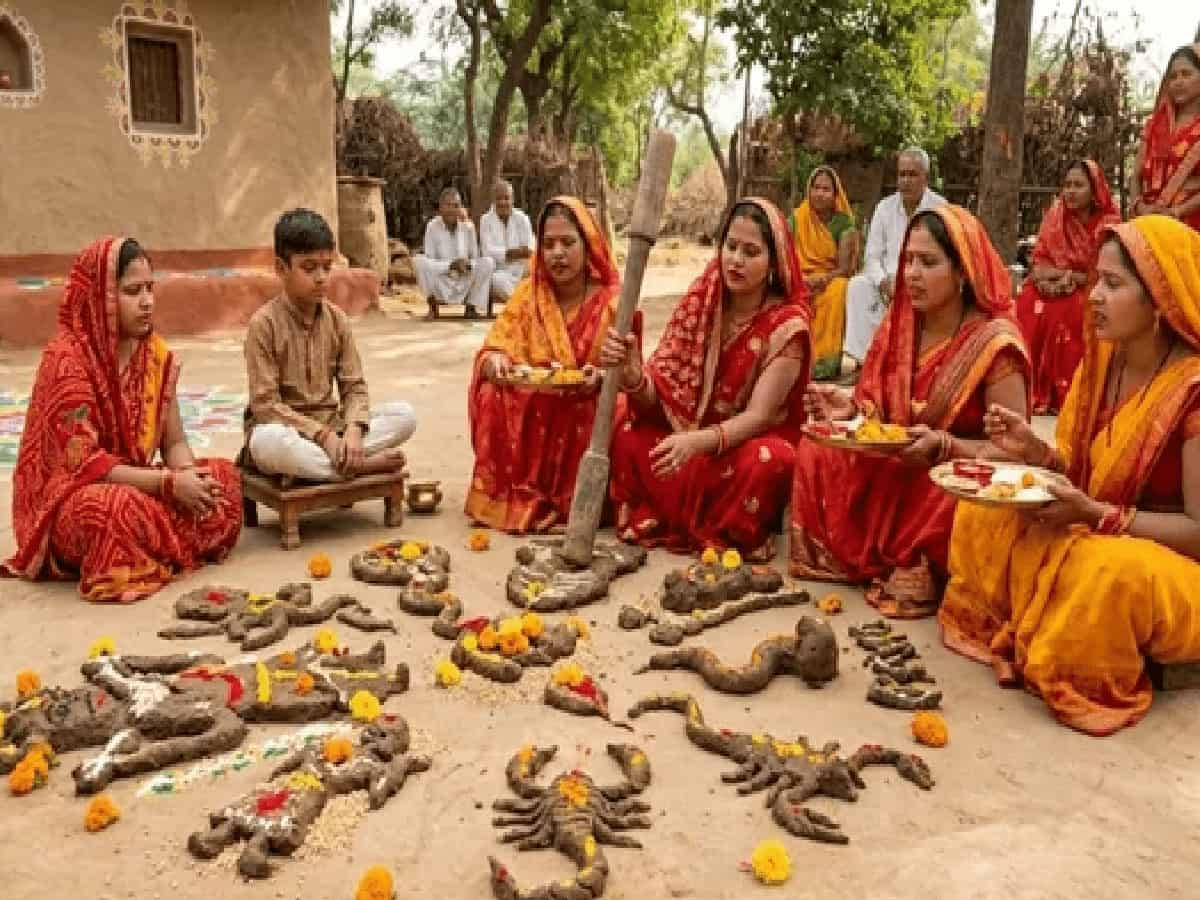
This special festival of cow threshing starts with utmost devotion and collective cooperation. Women and girls, after taking bath and meditation in the morning, make various types of figures on the ground with fresh dung of the sacred cow. In these figures, the god of death Yamraj, his messenger, Chitragupta as well as poisonous creatures considered fatal to human life like snakes, scorpions, lizards and crocodiles are depicted. The group of all these symbols made of cow dung is called ‘Godhan’. Apart from this, statues of characters related to folk tales like Brick-Roda and Chugalkhor are also prepared from cow dung.
As soon as the puja formally begins, a very surprising scene is seen. Sisters start cursing their brothers openly by taking their names and cursing them with untimely death and troubles. According to folk beliefs, it is believed that if on this special day any inauspicious word comes from the sister’s mouth towards her brother, then Yamraj’s attention gets diverted from that person and the heavy possibility of untimely death looming in his horoscope is averted forever. This symbolic curse actually becomes an impenetrable protective shield to destroy every calamity, evil eye and enemy obstacle that comes upon the brother.
As soon as the ritual of cursing the brother is completed, a feeling of repentance awakens in the hearts of the sisters. Since in the Sanatan tradition, abusing one’s brother with one’s own tongue causes severe mental pain, sisters undergo an extremely difficult and painful ritual to atone for their act. The sisters bring a sharp thorn of the thorny plant ‘Rengani’ (Bhatakataiya) and prick it on their tongue as a symbol of repentance. Through this, she atones that the tongue with which she spoke ill of her brother must be punished. After this, a special garland of five turns of cotton is prepared and it is offered to Godhan and a prayer is made for the brother’s long life.
After this the most important and energetic part of the ritual begins, which is called Godhan Kutai. All the sisters hold heavy wooden pestles in their hands and start pounding with full force those figures of Yamraj, Yamdoot, snake and scorpion made of cow dung along with collective singing of folk songs. With each blow of the pestle the sisters declare the withdrawal of all the curses and abuses given by them. By pulverizing the figures of cow dung, the message is given that the wrath of Yamraj, the fear of famine and all the negative forces coming in the brother’s life have been destroyed and now his brother is completely safe and has a long life.
After the successful completion of the cow slaughtering and curse-removal ritual, the sisters feed their brothers specially ‘Bajri’ (soil or small sweet grains of gram size or symbolic grain) and fresh sweets. The meaning of this folk tradition of feeding gravel is that just as gravel is hard and unbreakable, in the same way the brother’s body and age should also become as strong and unbreakable as a thunderbolt. After this, the brother is made to sit respectfully on a wooden platform or seat facing east.
During the auspicious time, sisters apply Vijay Tilak on brother’s forehead with Roli, Chandan, Akshat and Durva and perform his aarti. At the time of Aarti, Kalava is tied in the brother’s hands and he is presented with a dried coconut ball (Gola/Giri). As soon as this ritual of Tilak is completed, brothers touch the feet of their sisters and take their blessings and as per their capacity give gifts, clothes and a sacred promise to protect them throughout their life. This historical tradition of cow threshing teaches us that the rituals of folk faith may appear harsh or strange in appearance, but deep within them lies the unwavering feeling of brother-sister love, sacrifice and security of the family.