 look news india

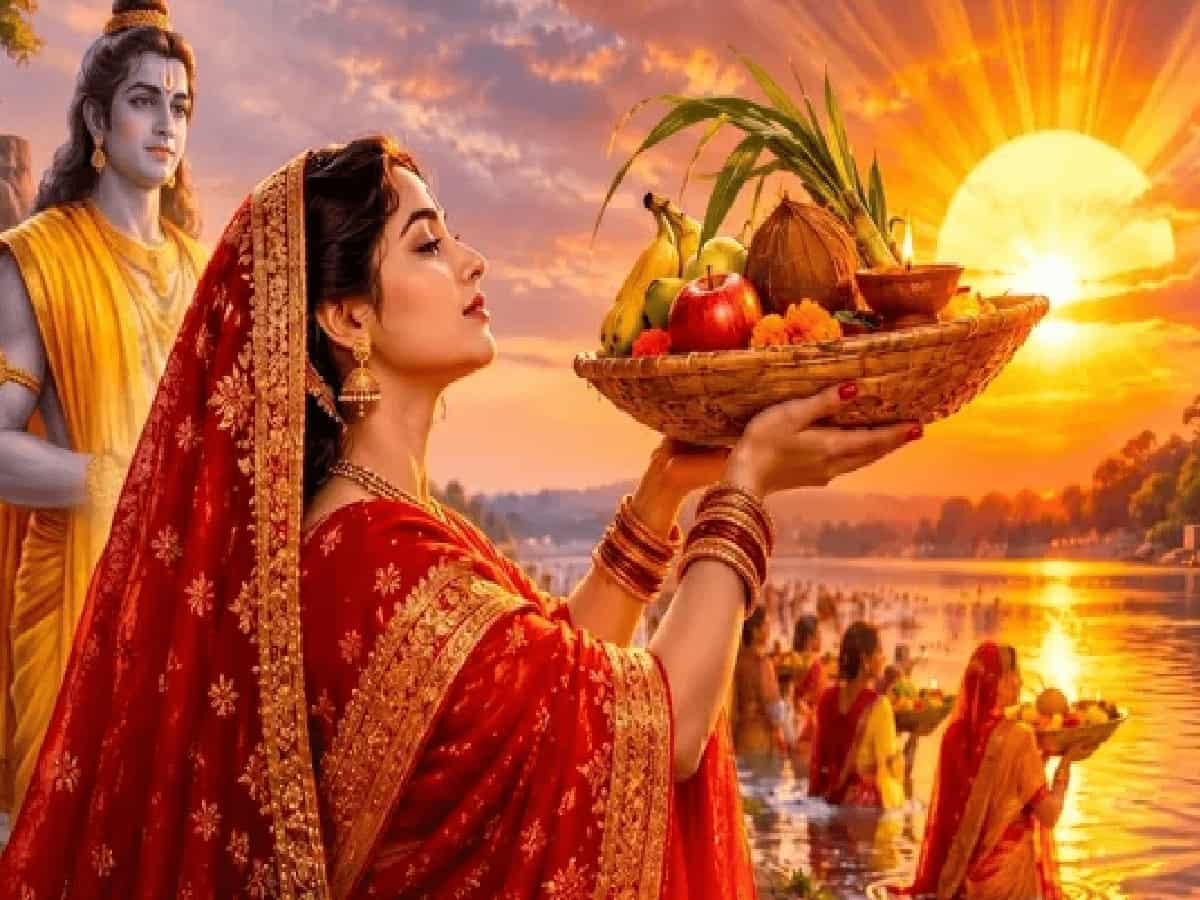
After the conclusion of the holy festival of Diwali, the sacred atmosphere of Chhath, the great festival of folk faith, begins to spread across North India, especially in Bihar, Jharkhand and Eastern Uttar Pradesh. There is unwavering devotion among the people for this extremely difficult, rigorous and self-purifying ritual that lasts for four days. Generally, the origin and tradition of Chhath Puja is linked to the characters of Mahabharata period of Dwapar era like Maharathi Karna and Panchali Draupadi, but very few people know that the historical and spiritual connection of this holy festival is also deeply linked to the holy penance of Mother Sita in Tretayuga.
According to the ancient texts of Sanatan Dharma and local folk memories, Mother Sita along with Maryada Purushottam Prabhu Shri Ram, after conquering Lanka and arriving in Ayodhya, worshiped the Sun God and Chhathi Maiya in person. This event was not just a religious ritual, but an epic saga involving Rajasuya Yagya, Rishi tradition and spiritual atonement. Munger, the holy region of Bihar, has been a direct witness to this supernatural history, where even today the memories of the footprints of Mata Janaki and the Surya Arghya performed by her inspire unwavering devotion in the minds of the devotees.
According to the references of Valmiki Ramayana and the folklore of Munger region, when Lord Shri Ram completed his fourteen years of exile by killing Lankapati Ravana and ascended the throne of Ayodhya, then Vice Chancellor Maharishi Vashishtha and other sages had advised to perform Rajasuya Yagya to atone for the crime of Brahmahatya. For the success of this great ritual and spiritual peace, Lord Ram and Mother Sita were instructed to go to the ashram of the supreme ascetic Maharishi Mudgal situated on the banks of Ganga. Today’s Munger city is famous as the holy place of the same ancient Mudgal Rishi.
When Mother Sita reached the ashram of Rishi Mudgal, the Maharishi told her about the unique effect of Shashthi Tithi of Shukla Paksha of Kartik month. Rishi Mudgal explained to Mata Janaki the method of worshiping the direct deity, Lord Surya Narayan and the presiding deity of nature, Shashthi Devi. Following the sage’s orders, Mother Sita stood in the holy water of the holy Ganga and followed strict rules for six days, kept a waterless fast and by offering Arghya to the setting and rising sun, prayed for the welfare of the entire world and the prosperity of her family. According to local beliefs, it is from here that the eternal form of this Surya Shashthi fast of folk faith on the day of Kartik Shukla Shashthi became a part of the folk tradition.
The ‘Sita Charan Temple’ built on a huge boulder situated in the womb of river Ganga in the historical and mythological city of Munger in Bihar is considered to be a living proof of this. This place is considered extremely sacred at the local level. Situated amidst the ever-flowing water stream of Ganga, two footprints are clearly marked on this rock, which devotees consider to be the sacred feet of Mother Sita.
According to ancient beliefs, when Mother Sita worshiped the Sun God, she was standing on this huge stone and offering water to Surya Narayana with Ganga water. It is said that when he offered the first arghya to the evening sun (setting sun) and the next day he passed away by offering the second arghya to the morning sun (rising sun), the marks of his divine feet got imprinted on that rock forever. Even today, lakhs of devotees from Munger and surrounding areas come to visit this stone site on the occasion of Chhath Puja and worship it as the origin place of Surya Puja.
After Mata Sita, very impressive details of Chhath fast and Sun worship in Dwapar era are also found in the narratives of Mahabharata. Angraj Karna, who is counted among the greatest, generous and brave warriors of Mahabharata, is considered to be the blessed son of Sun God and Mother Kunti. Anga country, which is today recognized as the vast area of Bhagalpur and Munger in modern Bihar, was the birthplace of Karna. Karna used to wake up every day at Brahma Muhurta and stand waist deep in the cool water of Ganga for hours and offer water to Lord Surya and recite Surya Kavach.
Pleased with Karna’s devotion and daily Surya Vandana, Lord Surya gave him the boon of never returning empty-handed and becoming a great donor. According to folk beliefs, the scientific and yogic method of offering Arghya to the Sun by standing in water, which is seen today in the festival of Chhath, has played a major role in making the Surya worship of Karna widespread.
On the other hand, the relationship of Draupadi, the most glorious and loyal woman of the Mahabharata period, is also considered integral to Chhath fast. When the Pandavas were suffering 12 years of hard exile and one year of unknown existence after losing everything in the game of gambling, then they were faced with a dire crisis of the maintenance of their followers, saints and people. In that difficult situation, on the instructions of Maharishi Dhaumya, Draupadi worshiped Lord Bhaskar and performed the rigorous ritual of Shashthi fast. Pleased with Draupadi’s steadfast devotion, Sun God gave her the miraculous ‘Akshaya Patra’, which ended the Pandavas’ food crisis and ultimately they regained their lost kingdom and honor by winning the great war of Mahabharata.
Chhath Puja is not just an individual sadhana or religious ritual, but it is a symbol of the sublime tradition of Sanatan culture which directly connects man with nature. This is the only holy festival in the world where along with the rising sun, Arghya is also offered to the first setting sun i.e. Astachalgami Bhaskar with full respect and reverence. This philosophy teaches that that which is declining in life should be respected as much as that which is rising. Soups made of bamboo, earthen stoves, offerings of new crops like thekua, sugarcane, dabh lemon, water chestnut and ginger plants completely connect this festival with the earth and the farmer’s produce. Eliminating all differences of caste, class and varna, the king and the pauper stand shoulder to shoulder on the same ghat and pay obeisance to the Sun God in the lap of Mother Ganga.