 look news india

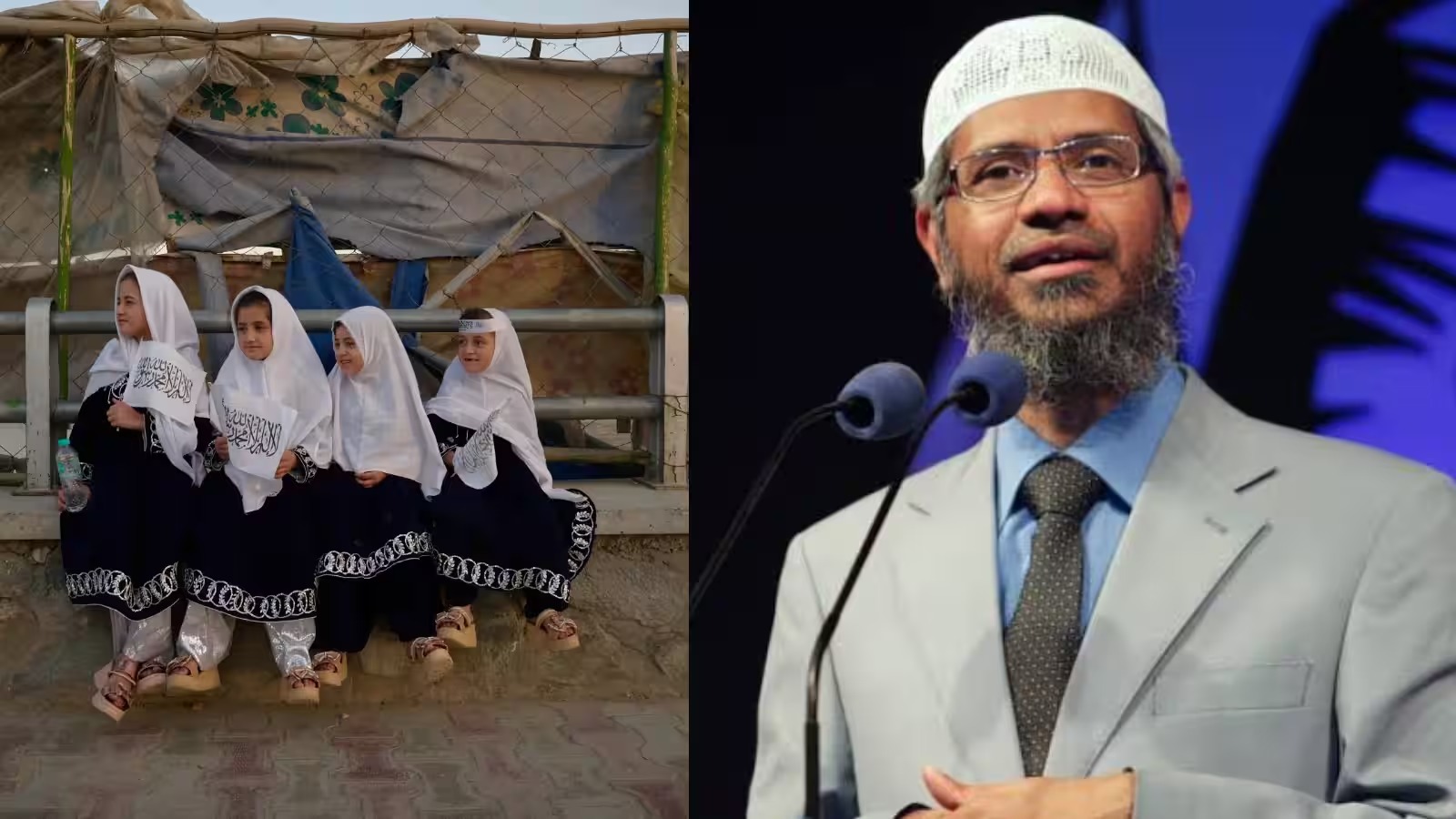
Once again, huge debate and public anger is being seen in international forums regarding the controversial ban imposed on the education of girls and women by the fundamentalist organization Taliban on the soil of Afghanistan. A recent statement given by the controversial Islamic preacher Dr. Zakir Naik, who fled from India and took refuge in Malaysia, has given this whole issue more importance. Zakir Naik has openly defended the Taliban government’s decision to ban girls’ secondary and higher education and tried to justify it. As soon as this objectionable statement of Naik came to light, there has been immense anger not only in Afghanistan and India but also among human rights activists, academicians and citizens all over the world. Afghan citizens and people of the Indian community have come together in protest against this statement and are strongly criticizing the Taliban as well as Zakir Naik.
Fugitive preacher Zakir Naik, in his recent social media video, claimed that the news being shown in the media is not completely true and the Taliban has not imposed any permanent ban on girls’ education. Reiterating the arguments of Taliban spokespersons, Naik said that the security environment in Afghanistan is not good right now and there is a huge shortage of female teachers, due to which higher education has been postponed only for some time. She also argued that there was no harm in postponing school education until suitable environments and female teachers were available. Furthermore, she claimed that women are obtaining PhD and master’s degrees in Islamic studies in Sharia and Quran studies, hence it is wrong to call it a complete ban on education. These arguments of Naik have worked like pouring oil into a burning lamp.
As soon as Zakir Naik’s statement became public, Afghan refugees, exiled Afghan women leaders and Indian scholars collectively rubbished Naik’s claims. Nobel laureate Malala Yousafzai’s father and famous education activist Ziauddin Yousafzai strongly criticized Naik, terming his statement extremely disappointing and promoting gender apartheid. Afghan activists and analysts asked Naik a direct question that when girls will not be allowed to go to school and college, will female teachers drop from the sky in future? Former Afghan women MPs and journalists advised Naik that if he liked Taliban policies so much, then he should leave the comfort of Malaysia and go to Afghanistan himself and live under Taliban rule.
Contrary to Zakir Naik’s claims, the reports of the United Nations and UNICEF present a very horrifying and horrifying picture. According to statistics, more than 2.6 million Afghan girls have been completely excluded from secondary and higher education since the Taliban returned to power. Today, Afghanistan is the only country in the world where the doors to schools, colleges and even medical training for girls and women have been officially completely closed. Naik calling it a mere “delay due to security reasons” makes a mockery of the future and human rights of millions of Afghan girls. This is the reason why the international community is considering this step of Taliban as against human values.
This irresponsible statement of Zakir Naik has given rise to a rare global solidarity, where progressive thinkers and general public from India, Afghanistan and even Pakistan are coming together on one platform to oppose this radical thinking. Indian thinkers and scholars have also raised questions on the Malaysian government for providing a platform for such statements by giving shelter to Indian fugitive accused Zakir Naik in their country. The people protesting say that depriving half the population of education under the guise of religion and security cannot be acceptable for any modern and civilized society. People of the Afghan and Indian communities have appealed to the United Nations and human rights organizations to take strict action against Talibani Tughlaqi orders and personalities like Zakir Naik who spread extremist ideology so that Afghan daughters can get back their fundamental right to study.