 look news india

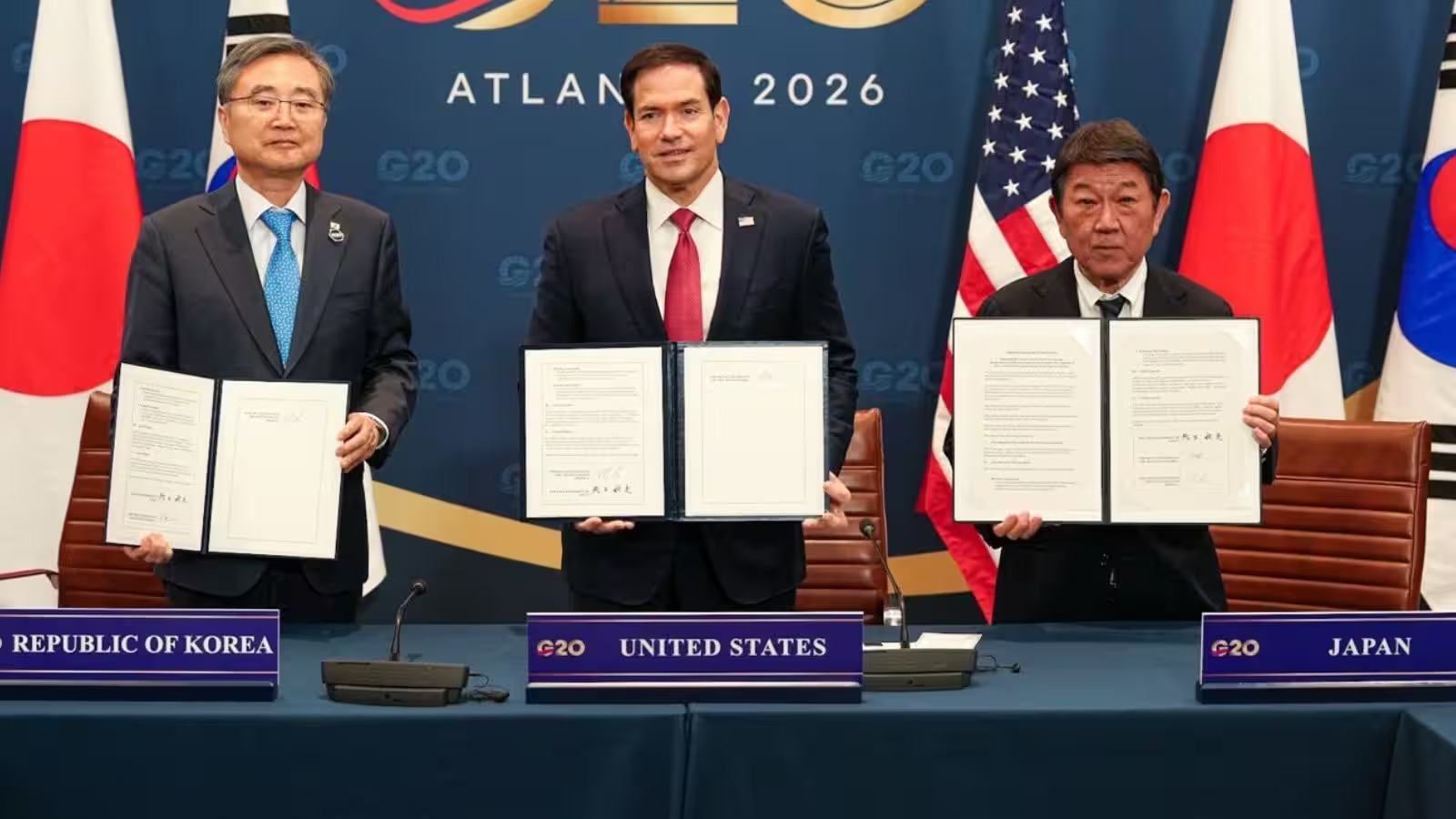
The tension on the Korean Peninsula has once again reached its peak in international politics and geopolitical arena. The aggressive policies of North Korea’s supreme leader Kim Jong Un, continuous sophisticated missile tests and modernization of nuclear weapons have deepened global security concerns. This increasing military power of North Korea has directly given sleepless nights to the superpower America as well as its two closest Asian allies—South Korea and Japan. High-level discussions have intensified among rulers from Washington to Seoul and Tokyo on how to stop Kim Jong Un’s dangerous nuclear expansion. Amidst this strategic concern, the top leadership of the three countries have once again united and reiterated their resolve for complete denuclearization of North Korea. There is a deep discussion going on in the corridors of global diplomacy whether this trilateral alliance will be successful in curbing Kim Jong’s aggression or whether the Cold War-like tension will once again push the world towards a major disaster.
North Korea’s continuous missile tests and Pyongyang’s aggressive stance
The rapid steps taken by Kim Jong Un-led North Korea in expanding its military capabilities during the last few months have put the entire Indo-Pacific region on a firestorm. One after the other, tests of state-of-the-art strategic missiles, multiple rocket launcher systems and AI-supported technology are testifying that Pyongyang is engaged in increasing its military strength manifold, regardless of international sanctions. The Pyongyang administration has recently rejected the statements of Western countries and UN sanctions monitoring groups and made it clear that it is not going to come under pressure from any power in the world. This tough stance of the North Korean rulers and legally declaring itself an established nuclear nation is a clear indication that Pyongyang is not ready to follow the path of diplomacy. Due to this uncontrolled situation, the concerns of America and its neighboring Asian democratic countries have reached such a high level that any small strategic mistake can lead to a major regional war.
The trio of America, South Korea and Japan geared up
America, South Korea and Japan have further strengthened their strategic partnership to give a befitting reply to Pyongyang’s nuclear ambitions and ever-increasing threats. Recently, in high-level meetings held between top officials and diplomatic representatives of the three countries, there has been complete agreement that North Korea will never be accepted as a legitimate nuclear state. The trilateral forum has given a clear message that complete denuclearization of North Korea is the only last option to maintain the security and stability of the region. These three countries have taken a strong pledge to more easily share their intelligence and to give a joint and prompt military response to any emergency missile attack or provocation. Along with tightening the noose of economic sanctions on international forums, joint exercises by the armies of these countries are also being continuously increased so that a strong message can be given to Kim Jong Un that any of his adventurous actions will be given a befitting and decisive reply.
Clouds of uncertainty looming between diplomacy and possible talks
On the one hand, while America, South Korea and Japan are fully alert on the military front and remain firm on their insistence on nuclear disarmament, on the other hand, there are speculations in international politics whether a round of top-level talks can begin between Washington and Pyongyang in the coming times. Diplomatic analysts believe that in view of the turmoil happening on global forums and the upcoming international conferences (such as the APEC summit), there may be efforts to establish behind-the-scenes contacts between the US and North Korea. However, the other harsh reality is that North Korea is refusing to easily agree to any agreement that includes the condition of eliminating its nuclear arsenal. North Korean rulers consider their nuclear power as their biggest security shield, which they are not ready to give up at any cost. In such a situation, the hopes of opening the way for diplomacy appear very dim and both the sides are once again seen standing face to face on the verge of a test of strength.
Korean Peninsula becoming a warning for global security and regional stability
This huge tension brewing in the Korean Peninsula is not limited to Asia only, but it can also have far-reaching and deadly consequences on the global economy and international security. Due to the direct or indirect strategic diplomacy support of countries like Russia and China, North Korea’s morale is increasing continuously, due to which the alliance led by Western countries has become more worried. The joint resolution of the US, South Korea and Japan to completely free the Korean Peninsula from nuclear weapons may further intensify diplomatic conflicts in the coming days. On one hand, Kim Jong Un is trying to subdue the world on the basis of his military power, while on the other hand, this tripartite alliance of democratic countries seems to be standing like a rock to protect international rules and sovereignty. Amidst this great conflict, it will be very interesting and worrying to see whether diplomacy wins in the future or whether the arms race drags the entire world towards a new and terrible crisis.