 look news india

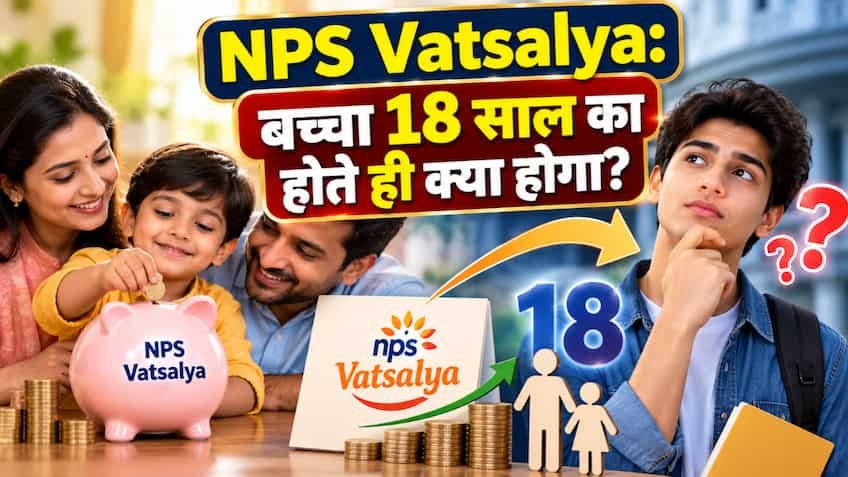
The ‘NPS Vatsalya’ scheme launched by the Central Government and Pension Fund Regulatory and Development Authority (PFRDA) allows parents to create pension and long-term wealth in the name of their minor children. As long as the child is under 18 years of age, this account is managed by his/her parents or legal guardian. But as soon as the child completes 18 years of age (adult), the legal status of this account changes completely. After the 18th birthday, this account is no longer just a scheme run by the parents, but its complete control and ownership goes directly into the hands of the youth. In such a situation, this question definitely comes in the minds of family members and youth whether this account can be closed after 18 years, how it is converted into regular NPS, or what are the conditions for withdrawing the deposited capital from it.
As soon as the child turns 18, the first legal and administrative process is to get fresh KYC done. As per PFRDA rules, the child has to submit his/her personal identity documents within 3 months from the date of attaining majority. This includes the child’s new PAN card, Aadhar card, his own bank savings account and passport size photo. Along with this, the name of the parents who were running the account as guardian till now gets removed and they can be made nominees in this account. Unless this fresh KYC is completed, there may be a ban on withdrawal of money from the account or further major transactions, hence it is mandatory to update it first as soon as you turn 18 years of age.
The most natural and beneficial option after attaining adulthood is that the NPS Vatsalya account is automatically converted into a normal citizen ‘NPS Tier-1’ (All Citizen Model) account. Once the new KYC is completed, the same old PRAN number of the child remains active and he can operate it independently like an adult citizen. After this, the account holder can continue this till the age of 60 by depositing a minimum of ₹ 1,000 every year as per his wish starting his studies or job. The biggest advantage of choosing this option is that the cycle of compounding created from childhood till 18 years does not break and the youth gets a strong pension portfolio of 18 years in his first job itself, which he can increase manifold till retirement.
If the child has turned 18 but is still pursuing higher education and the family is unable to decide whether to continue contributing further to this account, PFRDA has provided a special ‘Deferment Window’. According to the rules, even after the customer has completed 18 years of age, he can postpone his decision till the age of 21 years. During this period, the account will remain active with fresh KYC and if any emergency arises, the rules of Partial Withdrawal within the prescribed limit can be availed for higher education or special needs even between 18 to 21 years. This window gives additional time to the youth to take a final decision as per their career and financial situation.
If on completion of 18 years the youth decides that he does not want to continue in the NPS scheme and wants to completely exit (close) the account, then for this the pension regulator has made some strict rules, which are very important to know. The main objective of the government is to keep this money safe for pension, hence in case of premature exit, the entire money is not available in hand. Its rules are as follows:
-
If the total deposited fund is ₹2.5 lakh or less: If the total corpus deposited in the account till the age of 18 years is ₹2.5 lakh or less, then the account holder can withdraw the entire amount (100%) in lump sum to his bank account and the account will be completely closed.
-
If total deposited fund exceeds ₹2.5 lakh: If the total corpus is more than ₹2.5 lakh, the account holder will receive only a maximum of 20% of the total deposited amount as lump sum cash. With the remaining 80%, he will have to compulsorily buy an ‘Annuity Plan’ of an insurance company, through which he will get regular monthly pension in future.
According to financial planners, exiting the NPS Vatsalya account at the age of 18 is not considered a financially beneficial deal. Because if the fund is more than ₹ 2.5 lakh, then 80% of the money gets locked in the annuity, which usually gives a fixed return of 6% to 7%. Instead, the wisest decision is to get a fresh KYC done as soon as you turn 18 and continue in regular NPS Tier-1. With this, the youth will continue to get long-term market returns of 10% to 12% through equity allocation. In future, if there is a need for something like higher education, serious illness or marriage, partial withdrawal can be made from the accumulated capital as per the rules of the scheme, while the principal fund will continue to grow with compound interest till retirement.