 look news india

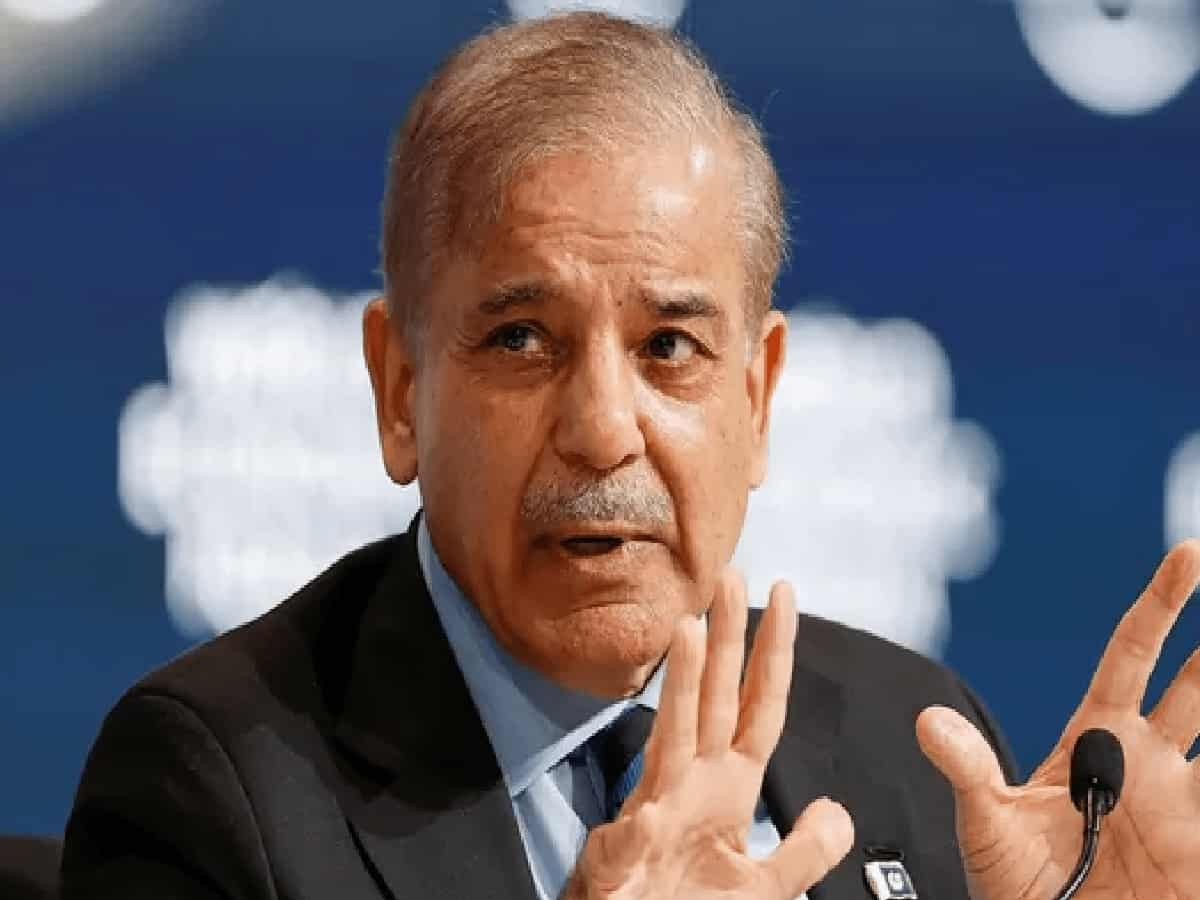
Amidst the ongoing geopolitical tension in West Asia and the increasing conflict between America and Iran, a major international revelation has come to light regarding Washington’s foreign policy. A detailed strategic report by ‘Real Clear Defence’, a prestigious platform on global defense and security affairs, has clearly warned that making Pakistan a pawn to implement its tough sanctions and diplomatic pressure on Iran on the ground would prove to be a very flawed and suicidal strategy of America. According to the report, Pakistan’s own internal security, deteriorating economy and serious energy crisis are completely dependent on its stable working relations with Tehran. If the White House pressures Islamabad to take tough action against Tehran or engage in an economic blockade, it may cause limited damage to Iran, but Pakistan itself will be plunged into a huge energy crisis, border civil war and economic devastation.
The report underlined that Pakistan’s most troubled and sensitive province, Balochistan, shares a more than 900 kilometer long border with Iran. If Islamabad, under pressure from Washington, adopts an anti-Iran stance, its first and most lethal impact will be on this border area. Separatist insurgent organizations and extremist groups are already active in Balochistan, which has become a headache for the cross-border security mechanisms of both the countries. In the event of any diplomatic acrimony with Tehran, border management could collapse completely and cross-border clashes could escalate due to increased distrust between the two armies. Apart from this, Pakistan’s old defense commitments and financial dependence on Saudi Arabia also complicate its situation further. For Pakistan, which is torn between the traditional pressure of Riyadh on one side and the sanctions of America on the other side, directly enmity with a neighboring power like Iran would be a suicidal step like opening a new war front on its western border.
Pakistan is currently facing the most serious economic and energy crisis in its history, with severe shortages of electricity and natural gas for industries and domestic consumers. In such a critical situation, the Pakistan-Iran Gas Pipeline (IP Pipeline) project has been considered a lifeline for Islamabad. Iran had completed its share of pipeline infrastructure several years ago, but Pakistan could not proceed with the construction work within its border due to fear of US sanctions (CAATSA). Due to this, Tehran is already putting legal pressure on Pakistan to impose a huge fine of billions of dollars through the International Arbitration Court. The presence of Beijing in this equation has further complicated the matter. China imports large quantities of subsidized crude oil from Iran and wants to secure its energy supplies from the Gulf region at all costs. Also, the center point of China-Pakistan Economic Corridor (CPEC) is Gwadar Port of Balochistan. In such a situation, any anti-Iran step taken by Pakistan at the behest of America will directly affect China’s strategic interests, which Beijing will never accept.
The most shocking aspect of the strategic report is the ground economic reality of Pakistan’s border areas. The daily livelihood of millions of people living in the vast desert and border areas of Balochistan is completely dependent on the informal (smuggling) trade of petrol and diesel from Iran. Iranian fuel reaches the Pakistani border at low prices, fueling local transport, small factories and traders. If Pakistan, under US pressure, imposes strict controls on this cross-border fuel trade, it will partially affect Iran’s revenues, but thousands of families in Balochistan will become unemployed overnight, which may further fan the flame of rebellion and discontent among the local population. Additionally, a large portion of the daily electricity supply in Balochistan’s coastal Makran region, which includes the strategically important Gwadar port, is directly dependent on power grid transmission from Iran. If Tehran retaliates by switching off electricity or blocking cross-border movement, the entire Makran coast will be plunged into darkness and life there will come to a standstill.
In conclusion, the report makes it clear that America will have to understand the ground reality of South and West Asia. The stringent economic sanctions imposed by the US have certainly put pressure on Tehran’s financial position, but the idea of using Pakistan as an enforcer is fundamentally flawed. Pakistan today stands at a point where it can neither afford the displeasure of the International Monetary Fund (IMF) and Washington, nor can it bring darkness and unrest in its home by spoiling relations with its neighboring country Iran. If America unnecessarily insists on imposing its policy on Pakistan, then this strategy will backfire and instead of establishing peace in the region, Pakistan’s internal structure will collapse, which will directly benefit the anti-American forces in the region.