 look news india

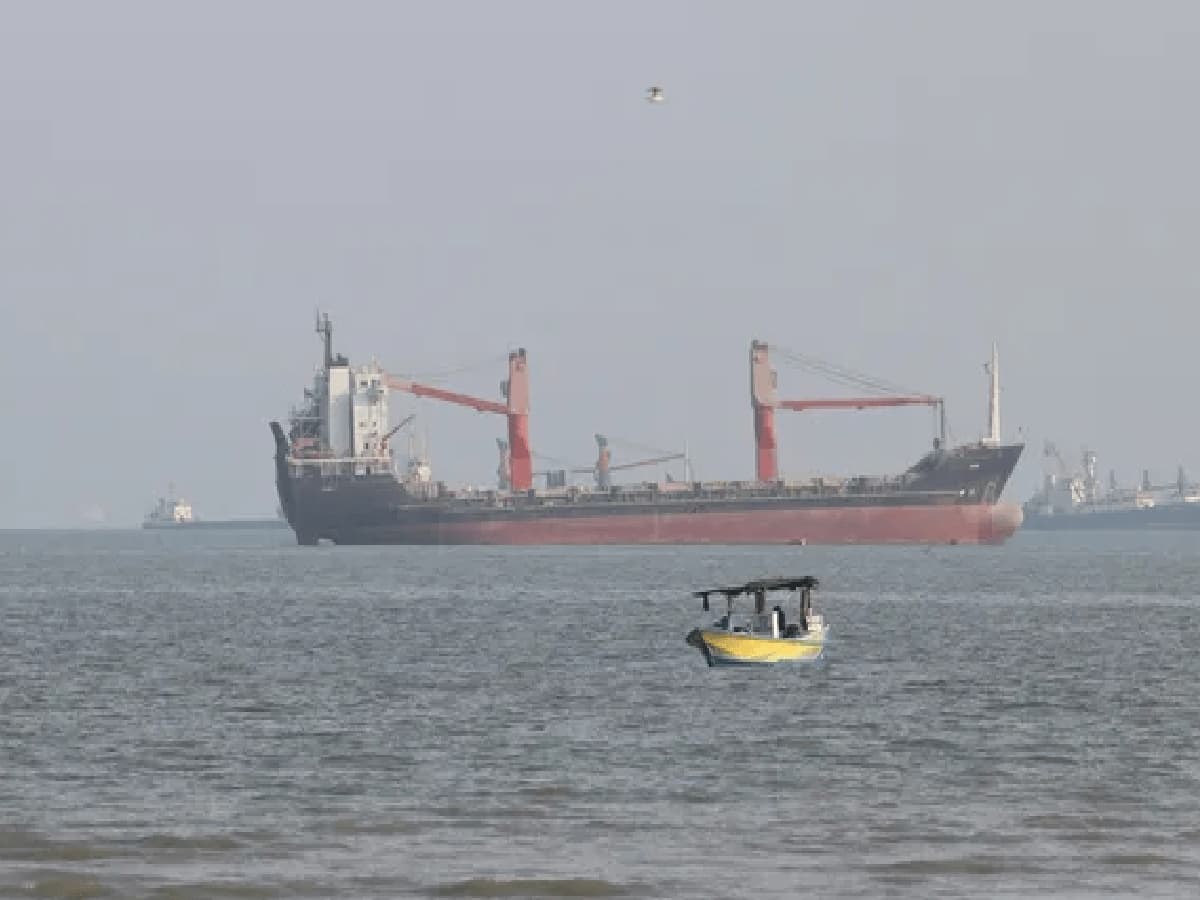
Amidst the ongoing heavy military conflict in West Asia, the biggest and most devastating development so far has come to light in the ‘Strait of Hormuz’, the world’s most sensitive oil supply lifeline. Iran’s Islamic Revolutionary Guard Corps (IRGC) navy has made a sensational claim of targeting and seriously damaging seven giant crude oil tankers in overnight offensive operations. According to an official statement broadcast by Iranian state television, four tankers carrying crude oil through the narrow sea corridor were hit with direct precision strikes, causing massive fires, while three other ships were completely crippled and immobilized by powerful underwater naval mines. If this incident is officially confirmed by independent sources, it will prove to be the largest and most catastrophic incident of damage to ships in the Strait of Hormuz in a single day since the Iran war broke out on February 28. Immediately after this incident, Tehran has given an open ultimatum to Washington and issued a warning to carry out destructive attacks on all American military bases present in the region.
The official statement issued by the Iranian Navy states that this action was carried out in a planned manner in the darkness of night in the waters of Hormuz. Although the statement did not reveal the exact number of sailors killed or the identity of the countries of registration (flag states) of the damaged ships, the simultaneous immobilization of seven ships at a strategic chokepoint of the waterway is likely to shake the global energy transportation network. The IRGC has made it clear that the network of mines laid in the sea is so dense that it is impossible for any oil tanker to pass safely without the formal permission of Tehran. The four ships that were hit directly by rockets or drones were reportedly unloading crude oil in defiance of Western sanctions. Following the attack, international marine insurance companies have unexpectedly increased war-risk premiums for commercial ships sailing to the Gulf region, threatening to deepen the worldwide energy crisis.
Tehran has not only targeted the ships, but has also issued a direct military warning to America and announced to expand the scope of the confrontation. The top leadership of the IRGC has warned that if the US Navy or the Pentagon make any attempt to escort oil tankers or facilitate their safe movement through alternative waterways of the strait, all US military bases located in the Gulf countries will be directly targeted by Iranian ballistic missiles and drone attacks. The IRGC has been carrying out regular attacks on US bases, radar stations and airbases in Bahrain, Qatar, the United Arab Emirates and Iraq since the beginning of the war. Iranian military commanders have made it clear that if Washington directly intervenes in the maritime war, American troops and bases will have to pay a heavy price.
Major General Mohsen Razai, the powerful secretary of Iran’s Supreme National Security Council, has issued a very harsh political statement after this military action. Mohsen Razai said that this double standard will no longer be tolerated at all, that on the one hand, Western countries continue to consider Iran’s oil refining facilities, ports and commercial shipping as legitimate military targets, while on the other hand, the economic infrastructure of Western countries that support the war financially and with weapons remains completely safe. Razai said clearly that Tehran is no longer interested in agreements based only on paper or political goodwill. He reiterated that the Strait of Hormuz will be reopened for safe navigation only when Tehran’s basic conditions, previously communicated to the US, are fully implemented.
In his address, General Razai also hinted at considering a comprehensive and shared security framework with the regional neighbors of the Gulf. He said that only if regional countries give mutual guarantees that energy plants, international shipping lanes and civilian infrastructure will be completely protected from attacks by both sides, a permanent solution can be found. This entire incident has come to light at a very critical juncture when the forces of Washington and Tel Aviv are completing final strategic preparations for new and large-scale air strikes on Iran. Iran, on the other hand, has vowed to respond to any new misadventure by directly cutting off energy supplies to the Middle East and destroying US strategic assets. The damage of seven tankers in Hormuz is being considered as a clear indication of the beginning of this great war.