 look news india

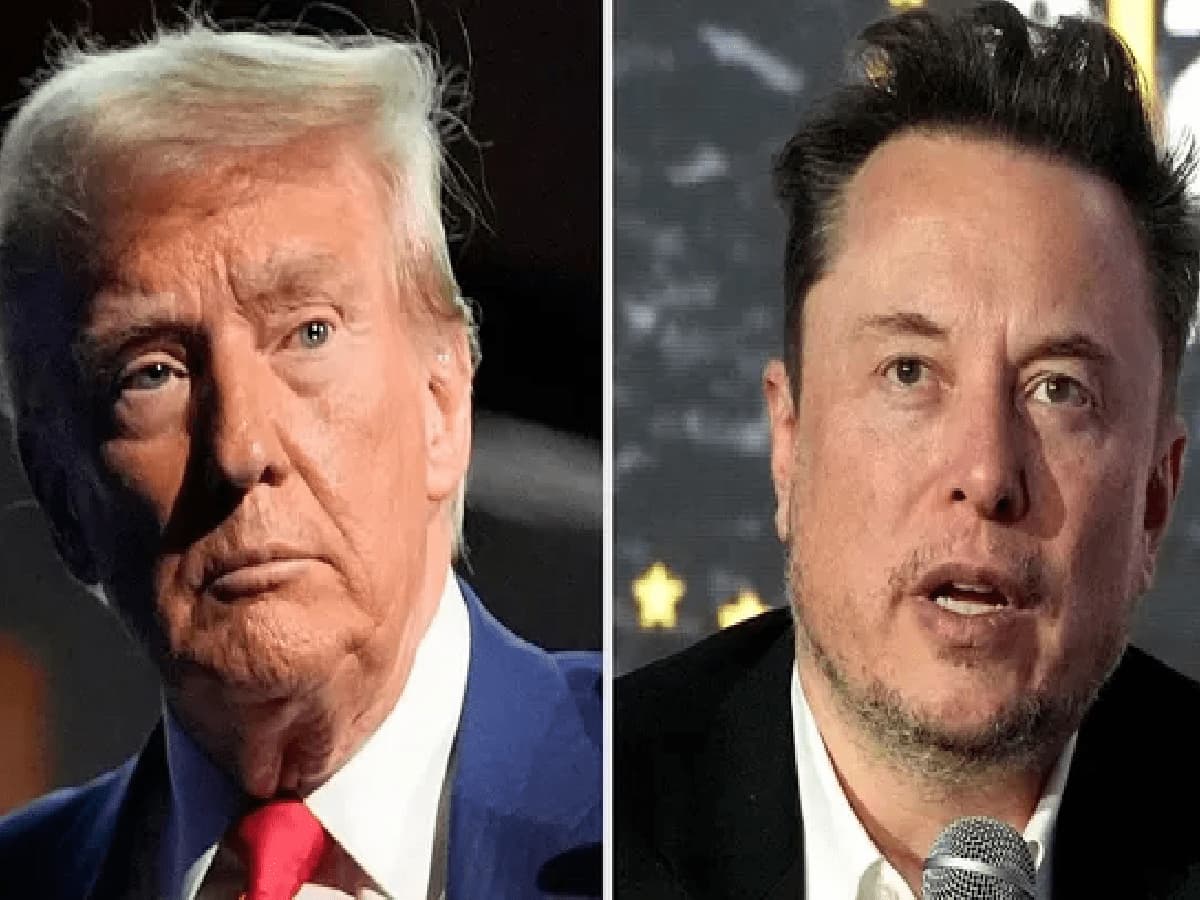
Amidst the Russia-Ukraine war, a very dramatic and major development has come to light regarding global geopolitics and state-of-the-art satellite communication systems. US President Donald Trump has directly called SpaceX and Tesla chief Elon Musk and given strict instructions to remove the restrictions and speed capping imposed on Starlink satellite internet service in Ukraine with immediate effect. The American newspaper ‘Wall Street Journal’, quoting top American officials, has revealed that President Trump was extremely unhappy with the slow speed and technical limitations of Starlink in the Ukrainian battlefield. Shortly after this heated phone conversation between Trump and Musk, a major improvement was seen in the functioning of the disrupted Starlink network in Ukraine and the system started gaining normal speed. This development has once again proved how decisive the role of satellite connectivity and big tech giants has become in modern digital warfare.
According to the Wall Street Journal report, President Trump expressed his deep displeasure in clear words during his conversation with Musk. In fact, the Internet speed of active Starlink terminals in Ukraine was deliberately reduced to a very low level of about 160 Kbps (insignificant compared to about 100 Mbps). Due to such low bandwidth, secure military communications, live video feeds and real-time data transfers to Ukrainian forces deployed on the front lines of the battlefield were virtually halted. Trump bluntly told Musk that such unilateral sanctions are unacceptable and not in line with American strategic interests. As soon as the phone call ended, SpaceX engineers removed the technical limitations, after which an improvement in the network was recorded. Although many Ukrainian field officers say the service is still not 100 percent back to normal as before the war, speeds are significantly faster than previously imposed speed caps.
Ukraine’s military strategy rests entirely on SpaceX’s Starlink network. The Ukrainian military uses Starlink satellites to maintain secure encrypted communications between its military units on the battlefield, precisely coordinate artillery strikes and, above all, conduct unmanned reconnaissance and suicide drone missions. When Starlink’s speed was suddenly dropped, Ukraine’s counter-attacks and air defense drone missions against Russia were severely affected. The Ukrainian air defense system, which tracks and kills Russian missiles and kamikaze drones in the air, started getting delays in receiving radar data. The technical disruption forced Ukrainian troops to retreat on several front lines, raising concerns among military strategists in both Washington and Kiev.
Ukrainian President Volodymyr Zelensky had also openly expressed his views on this entire matter. Zelensky said publicly on Thursday that Starlink speeds on Ukraine’s key fronts had still not been fully restored to normal levels, causing bottlenecks in military operations. He hoped that in the coming days, he will hold high-level talks with US Secretary of State Marco Rubio on this sensitive topic so that permanent guarantee of satellite connectivity can be provided. Just before this, on Wednesday, US Secretary of State Marco Rubio had given a very shocking statement on this controversy. Rubio had said that all rights related to giving Ukraine access to Starlink or setting conditions on it are completely in the personal hands of SpaceX and its CEO Elon Musk, with no direct interference from the White House. However, within twenty-four hours of Rubio’s statement, President Trump himself took charge and turned the phone to Musk and resolved the matter directly.
This confrontation between Trump and Musk has put defense experts at the international level into a new debate. This is not the first time that Elon Musk has set conditions for the use of Starlink in the Ukraine war; Even before this, controversy has arisen over shutting down Starlink coverage during Ukrainian drone attacks in Crimea and the Black Sea. Musk has consistently argued that his satellite network is designed for civilian and humanitarian use, and not for offensive military attacks or instigating World War III. But when a sovereign country becomes completely dependent on the infrastructure of a single private company for its national security and defense operations, such uncertainties are bound to arise in times of crisis. The immediate crisis has been averted after Trump’s strong intervention, but it has once again made European countries and NATO allies feel the need to develop their own independent military satellite networks.